
Info:
- Dates: march 2024 – 2.09.24
- Curator: Jean-Marie Gallais
- Where: Pinault Collection – Bourse de Commerce
- Price: 14 euros / 10 reduced
Similar to Babouc, who discoveres human controversies and excesses in Voltaire’s philosophic fable, visitors here explore the depths and complexities of the world described through the pieces of the Pinault Collection on display. This exhibition, titled after Voltaire’s tale “Le Monde comme il va” (The World as it Goes), presents iconic pieces from the collection that engage in a mutual dialogue, prompting reflection on contemporary society. The selection of artworks spans from the 1980s to today; installations, tapestry, sculptures, paintings, video… Each offering a lens through which to interpret our times.
“Il résolut de ne pas même songer à corriger Perspepolis, et de laisser aller le monde comme il va. Car, dit-il, si tout n’est pas bien, tout est passable.” *
– Voltaire, “Le monde comme il va”
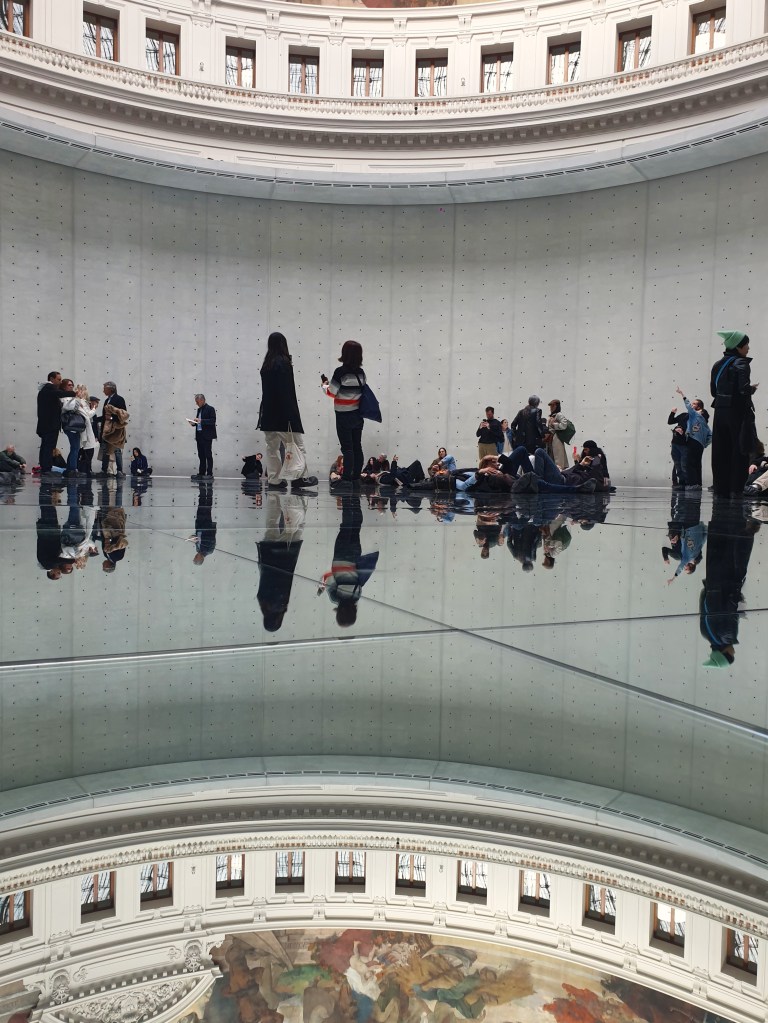
Entering in the exhibition is from the first moment a unique sensory experience, with the installation To Breathe- Constellation by the artist Kimsooja. Spectacular in its effect, the installation is made of mirrors posed on the Rotonde’s floor, reflecting the iconic majestic dome of the Bourse de Commerce. The visitor can walk freely in the space, with the illusion of walking suspended in the air. The artworks aims to be a contemplative environment where the void, created by the illusion of being inside a sphere, becomes the protagonist.
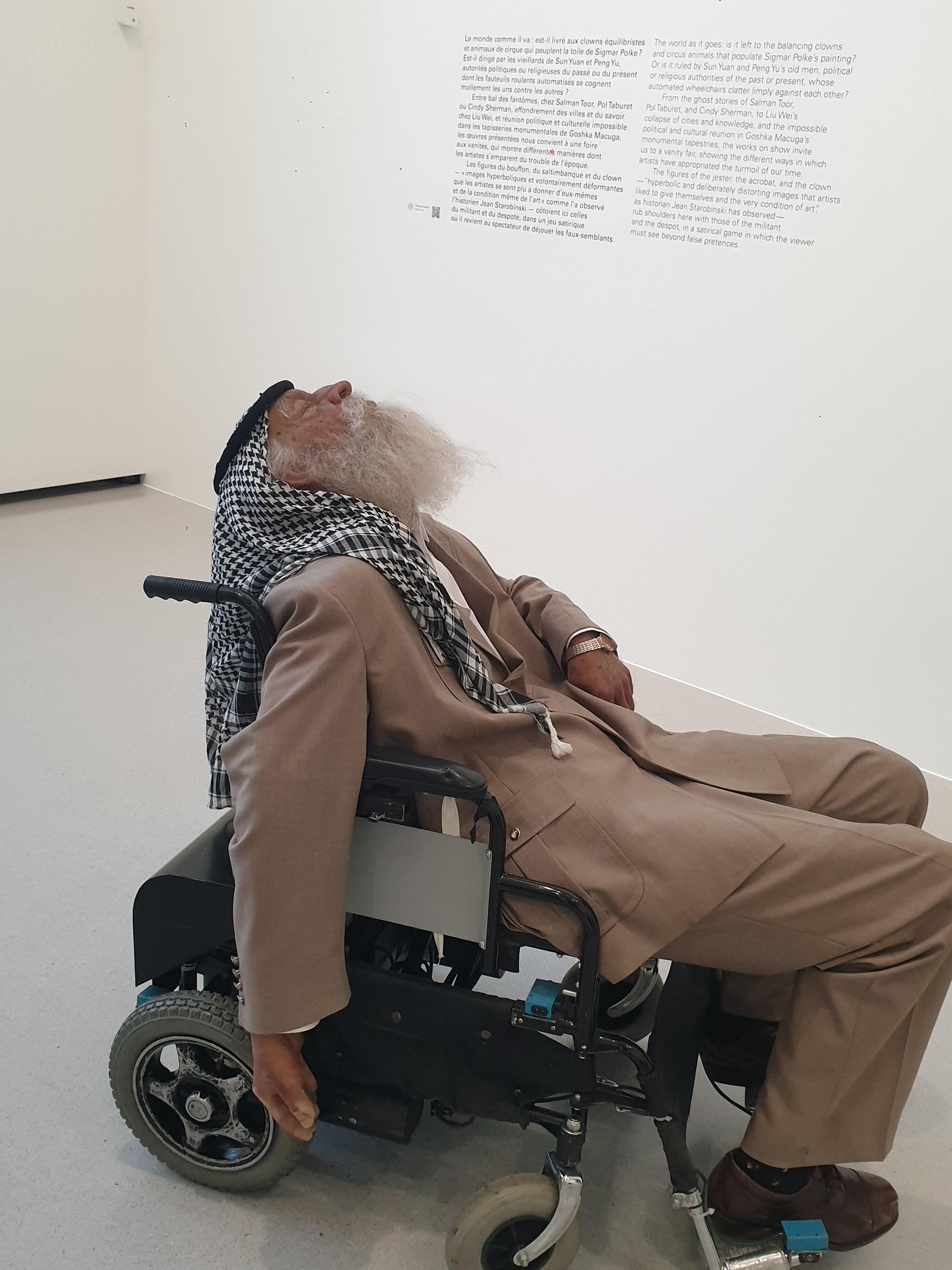
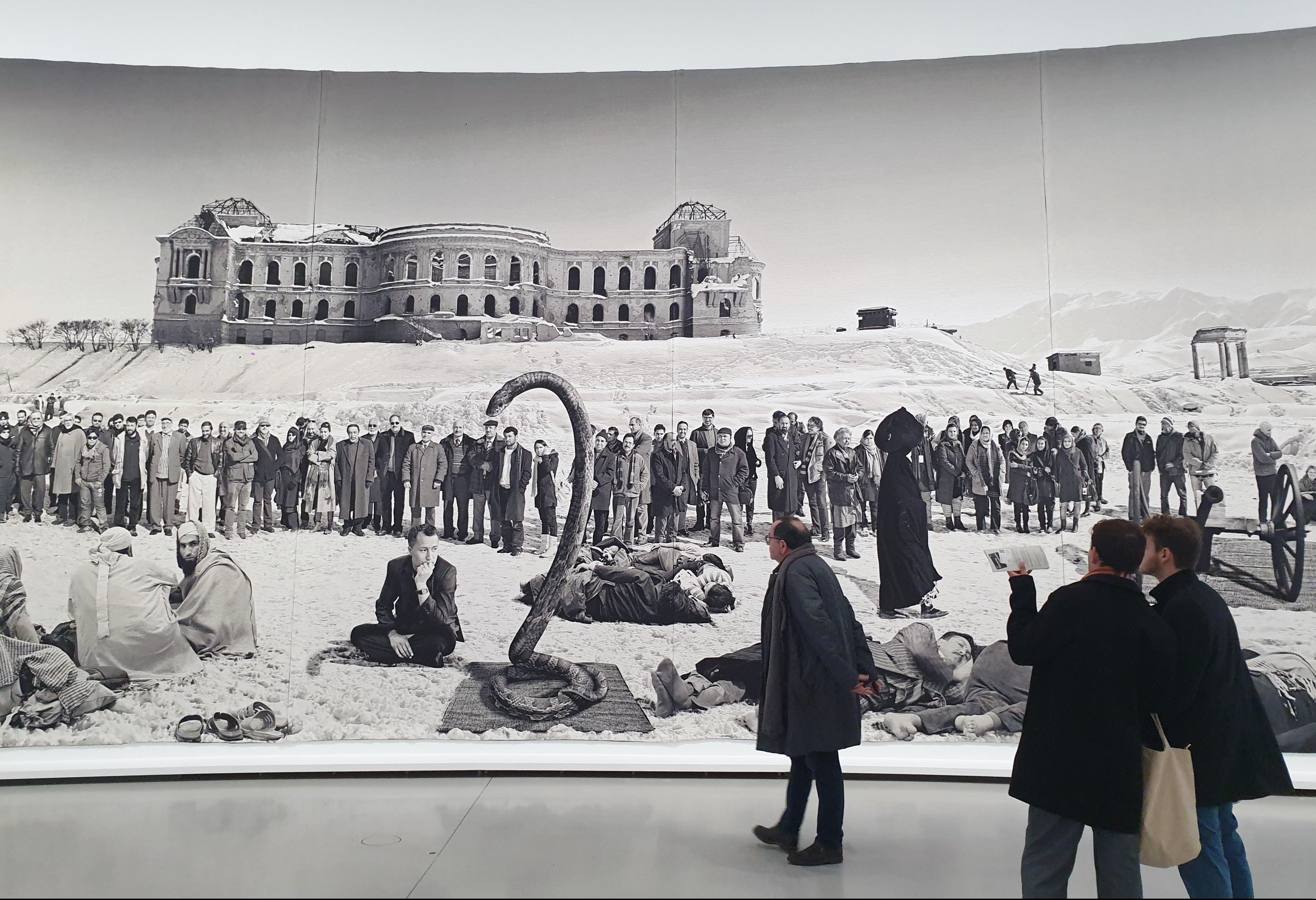
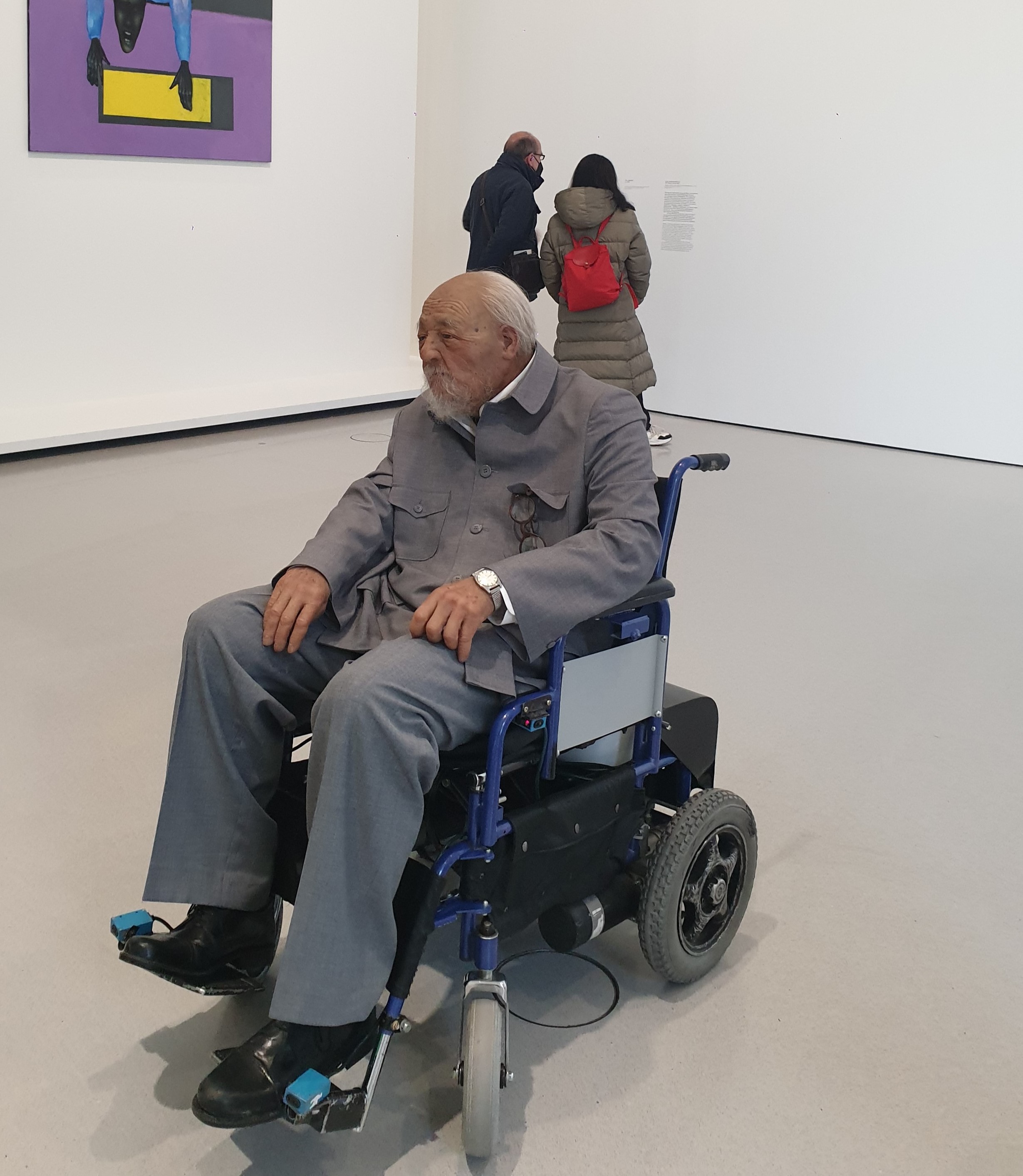
The exhibition spans all over the surfaces of the Bourse, including the auditorium and the basement, divided thematically to explore various aspects of the human experience in our contemporary world. On the ground floor, the section called “La comédie humaine” (The Human comedy) proposes satirical reflections on the vanities of our era. Monumental tapestries by Goshka Macuga depicting improbable meetings of political and cultural figures immediately capture attention. Automated hyper-realistic sculptures by Sun Yuan& Peng Yu add to the strange surreal atmosphere, featuring elderly figures in wheelchairs resembling political and religious authorities aimlessly wondering among visitors
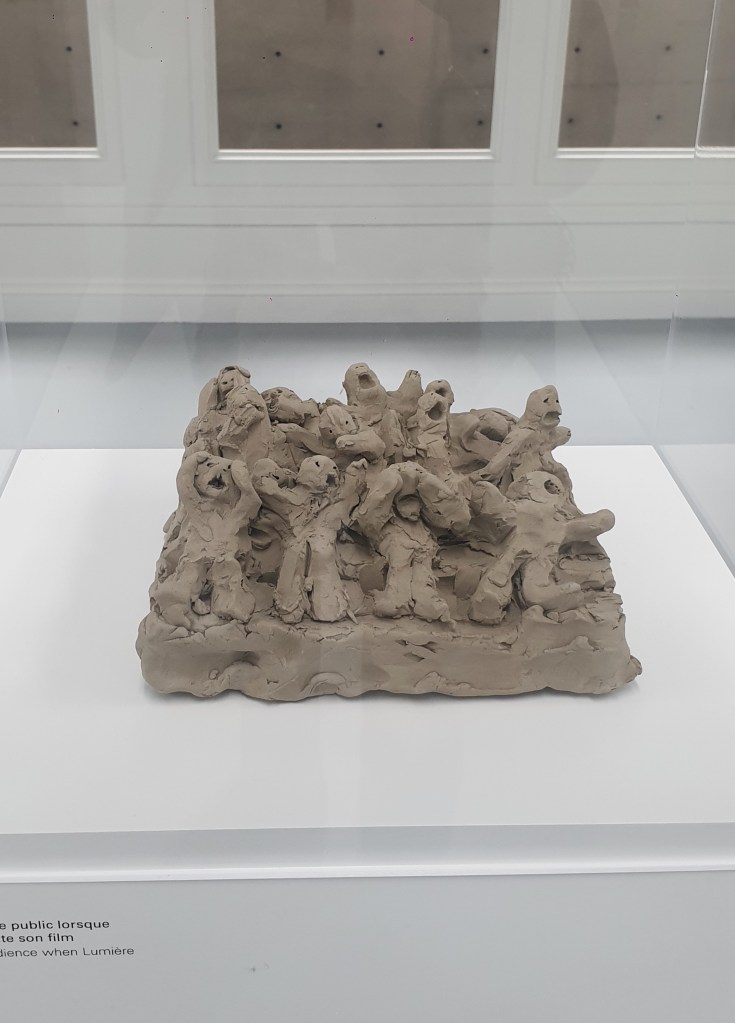
The exhibition questions also contemporary art practices, exemplified through the works of the duo Peter Fischli and David Weiss. The series Plotzlich diese Ubersicht (Suddenly this overview) try to sculpt their version of human history, blending personal experiences to iconic or meaningless historical episodes. The use of clay and irony makes these sculptures accessible to exeryone, and their simplicity allows the viewer to focus on their meaning; laugh often occurs, thanks to an immediate and open language.


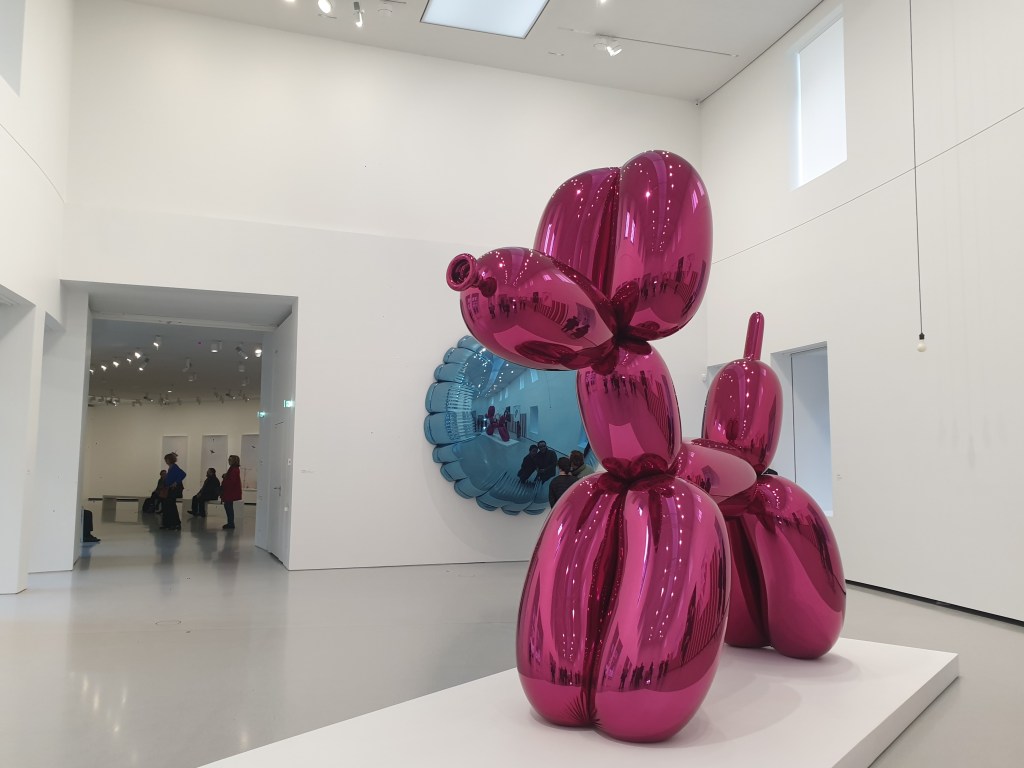
Some pieces question even the definition of art, following the tradition established from Duchamp onwards. Duchamp himself is even represented in the exhibition, through the monumental installation by de Sturtevant that reproposes the display that Duchamp presented at the International Exhibition of Surrealism in 1938. Artists question the act of art-making, elevating everyday objects to the status of art and prompting reflections on contemporary society. In this section, it pops out the room featuring Baloon Dog (Magenta) by Jeff Koons, that immediately catalize the attention with the disproportion between its majestic dimensions and the childish subject matter. Similarly, The Fragile Truth by Damien Hirst by simply presenting shelves filled with hundreds of medications, encourages a reflection on human’s pursuit of eternal life through pharmaceutical advancements, a pointless battle to fight what’s inevitable.

Some rooms invite a closer look to the artworks, encouraging a dialogue. An example of this is the small alcove dedicated to the famous hyperralystic sculpture by Maurizio Cattelan, Him. Presented in the darkness, with the face turned against the wall, the visitor is pushed to approach what it’s apparently innocent, only to reveal with a closer look its face and all the associated meanings. A similar dark room features the work by Doria Salcedo, whose piece reflect Colombia’s dark recent history. Untitled suggest violence without showing it, an installation that symbolizes two massacres happened in 1988 in some banana plantations in the country. A pile of white shirts, the typical outfit of plantation workers, is pierced through with two steel sticks, methaporically echoing the anonymousness of the victims of those massacres at the time.


Overall the exhibition is expansive and fullfilling, leaving the visitor with ample food for thought. It also serves as a journey across recent art history, showcasing pieces issued from the Pinault Collection that collect some of the most renowned names in contemporary art.


My personal highlights:
- Kimsooja, To Breathe (2024)
- Goshka Macuga, Of what is, that it is; of what is not, that it is not (2012)
- Anne Imhof, Untitled (2017)
- Doris Salcedo, Untitled (2023)
*EN trad: “He decided not even to think of correcting Persepolis, and to let the world go on as it is. Because, he said, if all is not well, all is passable.”
 MUSEmemoirs