Info:
- Dates: 9.10.24 – 02.02.25
- Curator: Cecilia Braschi
- Where: Musée du Luxembourg
- Price: 14 euro/ 10 euros reduced
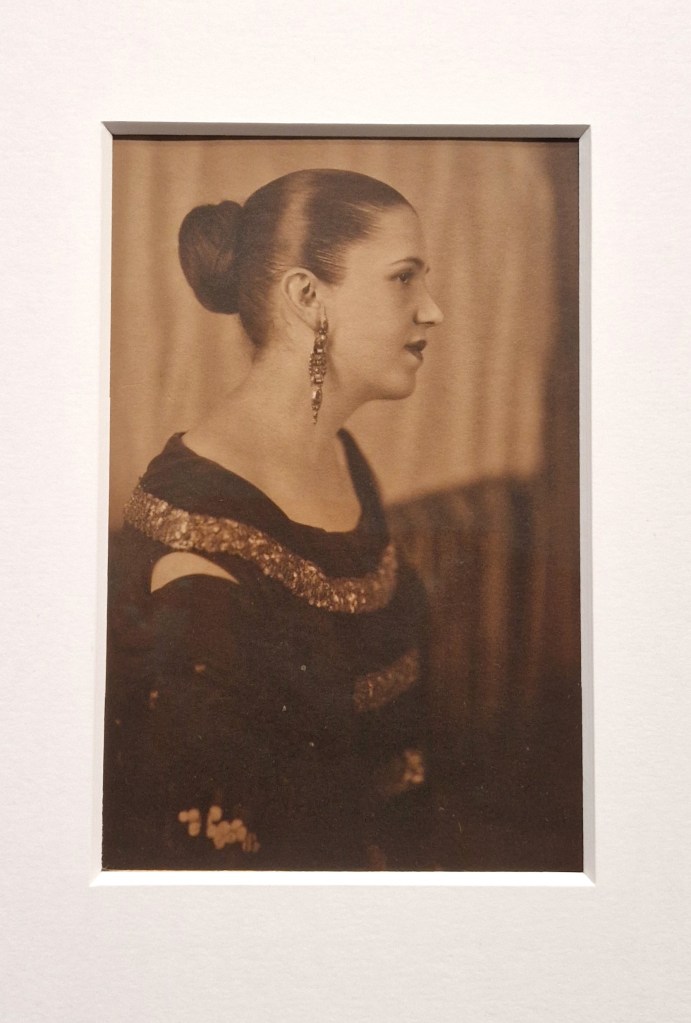
The Musée du Luxembourg presents the first major retrospective in Paris dedicated to Tarsila do Amaral, one of Brazil’s most celebrated modernist painters. This exhibition offers an in-depth exploration of her artistic evolution and her pivotal role in shaping a distinct Brazilian cultural identity.
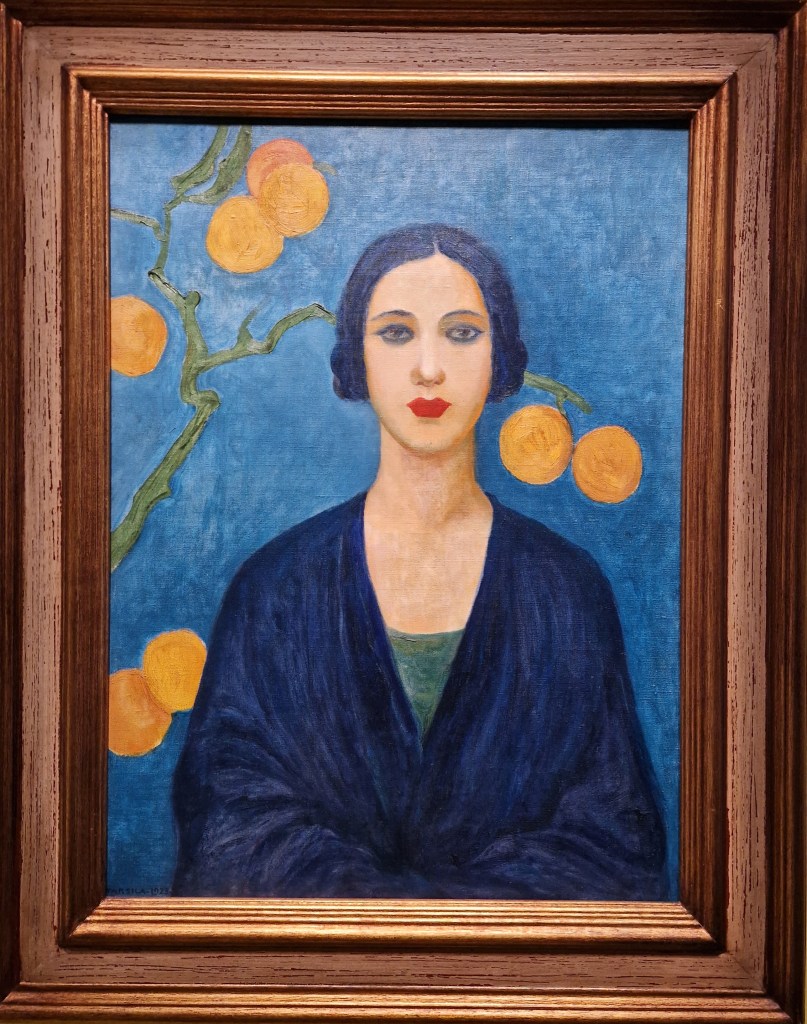
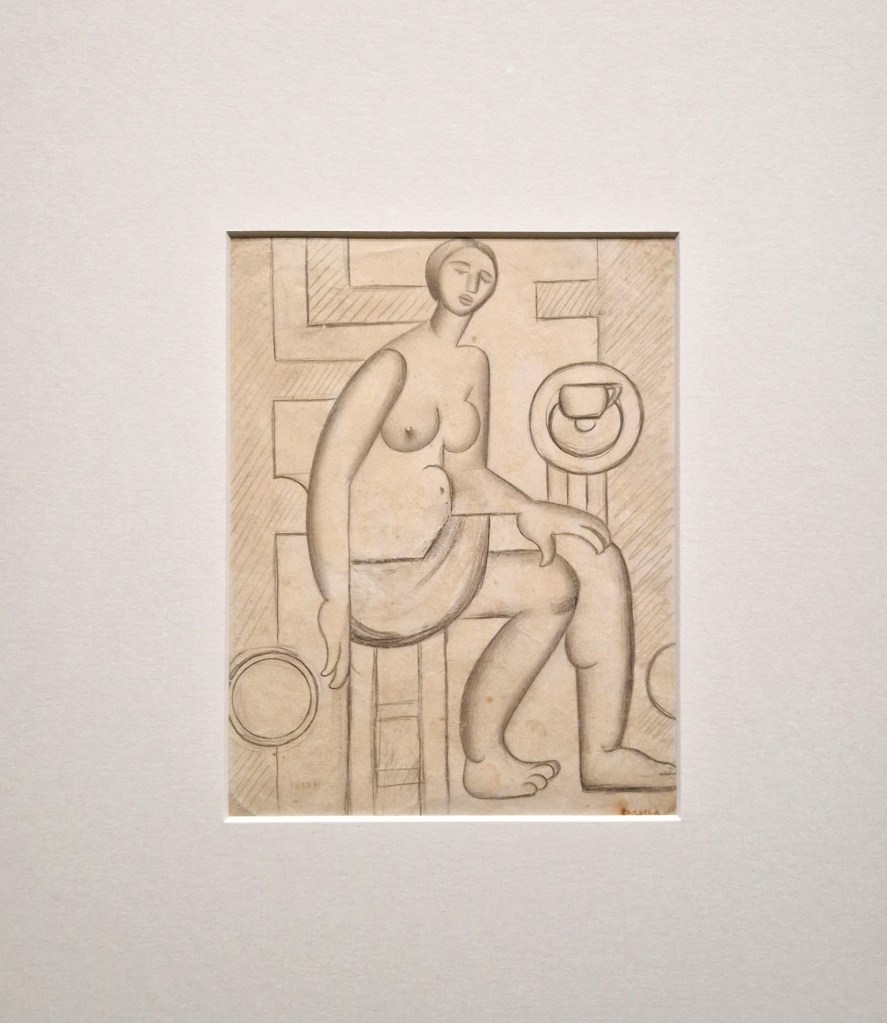
Born into a wealthy family of landowners, Tarsila do Amaral was immersed in European culture since her youth, studying French and reading European literature. She moved to Paris to pursue an artistic education, to absorb what at the time was the world’s art capital. Initially drawn to traditional academic painting, Tarsila was then profoundly influenced by Cubism and the avant-garde movements emerging in Paris. The first room of the exhibition reflects this early phase, showcasing works that align with the broader trends of modern art.
A pivotal moment in Tarsila’s career came in 1922 when she participated in the Semana de Arte Moderna in São Paulo, the first relevant event of art and culture in Latin America. Tarsila joined the Grupo dos Cinco (The Group of Five), alongside Anita Malfatti, Mário de Andrade, Oswald de Andrade, and Menotti Del Picchia. Together, they sought to explore and define a distinctly Brazilian identity.
“Paris has had enough of Parisian art (…) What people desire here is that everyone brings the essence of their own country. This explains the success of Russian ballets, Japanese prints, and African music.”
-Tarsila do Amaral, letter to Lydia Dias do Amaral and José Estanislau do Amaral Filho(1923)
Returning to Paris for a year with this new perspective, Tarsila began blending European modernist techniques with Brazilian themes, not without knowledge. At the time, fascination for primitivism and other cultures was major in the French capital and she pleased this taste, conceiving artworks that were then well-received by critics; she was soon renowed in the Parisian artistic cirle. A Negra is a perfect example of paitings from this period, although she also painted portraits that have different syles.
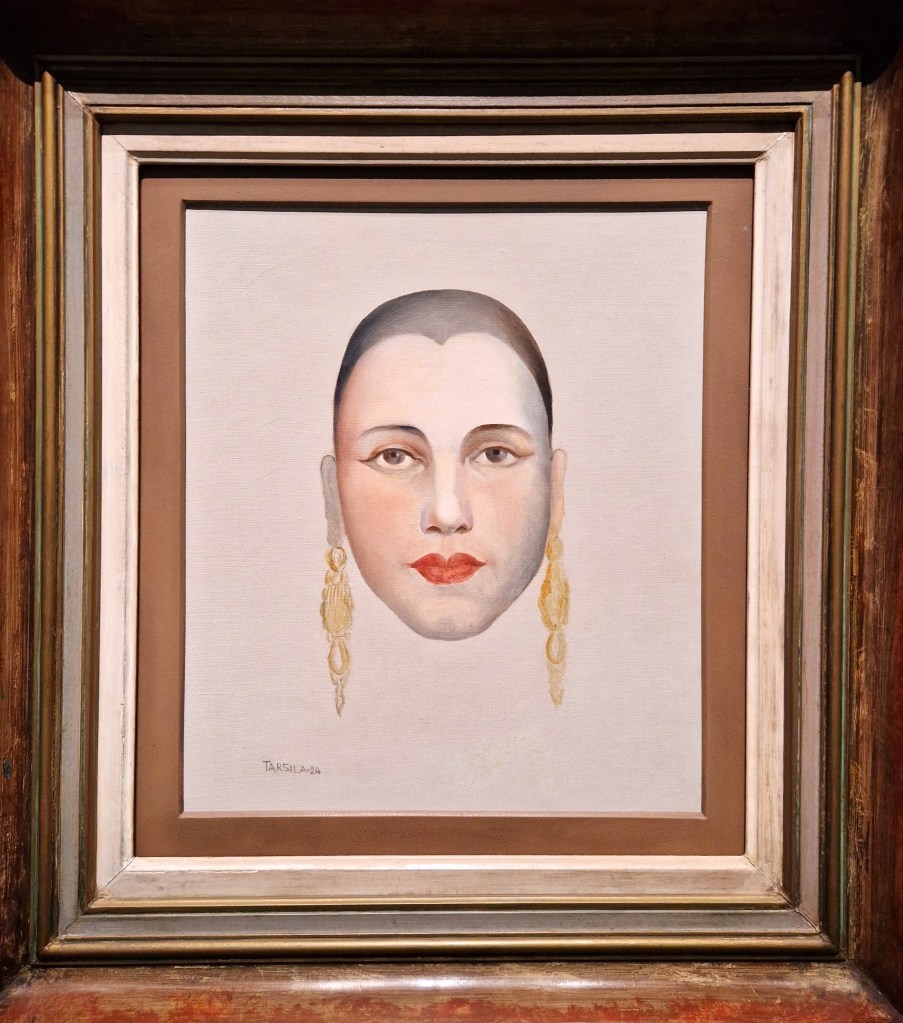
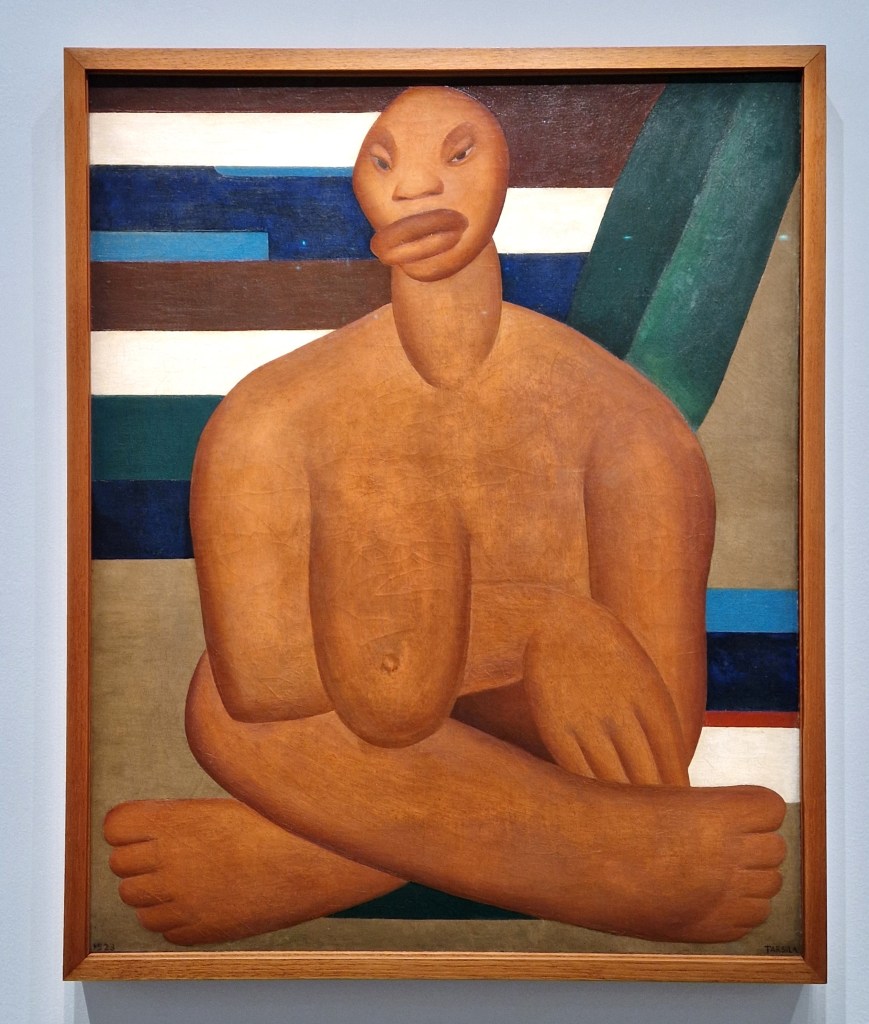
Back in São Paulo, Tarsila embraced the ideas of Oswald de Andrade’s Manifesto da Poesia Pau-Brasil (1924). The movement aimed to export Brazilian culture, subverting the colonial model that had long positioned European culture as the standard. Her paintings from this period displayed in the exhibition, feature symbols of Brazilian life rendered in a playful, seemingly naive aesthetic, showing the melted culture of the country.
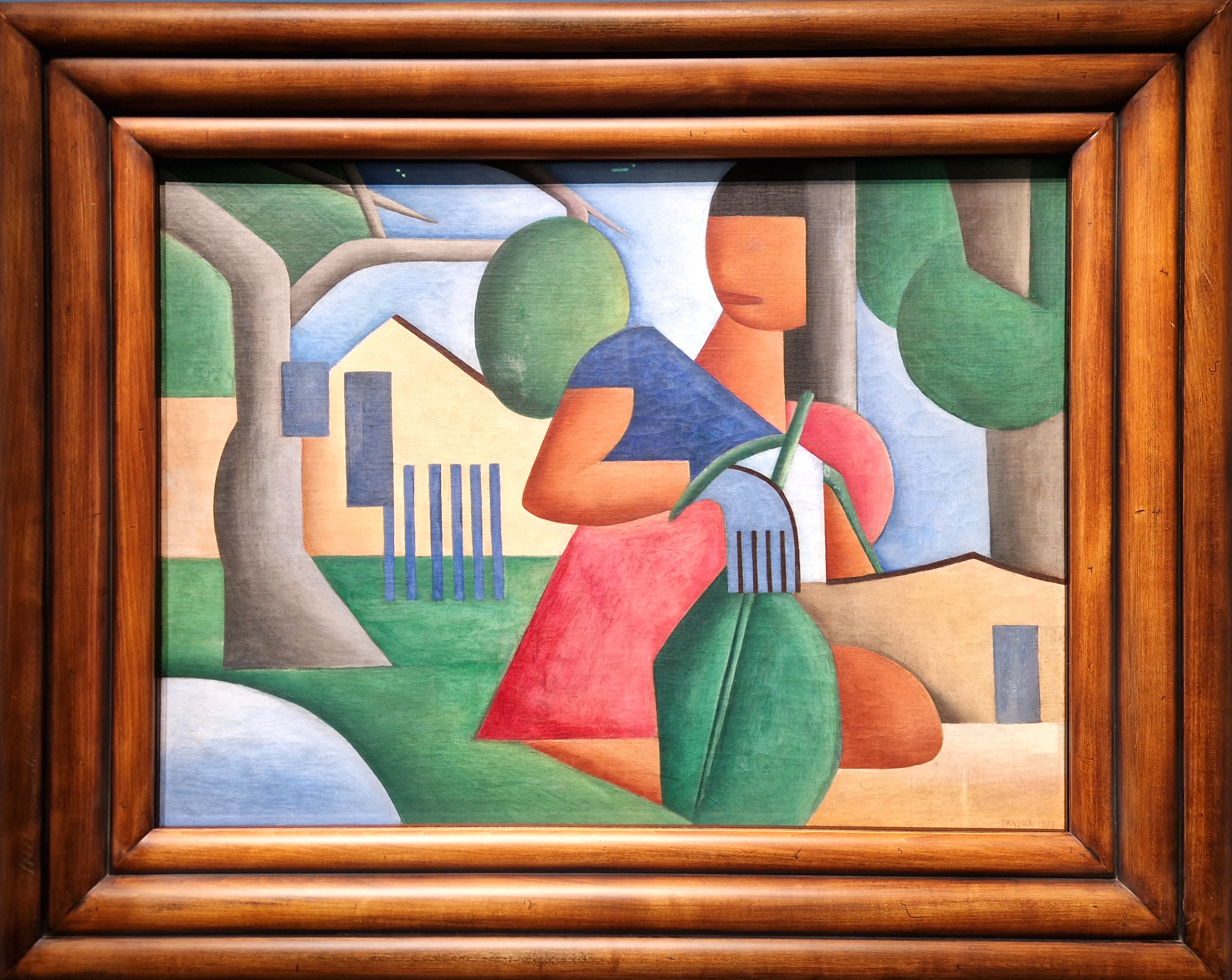
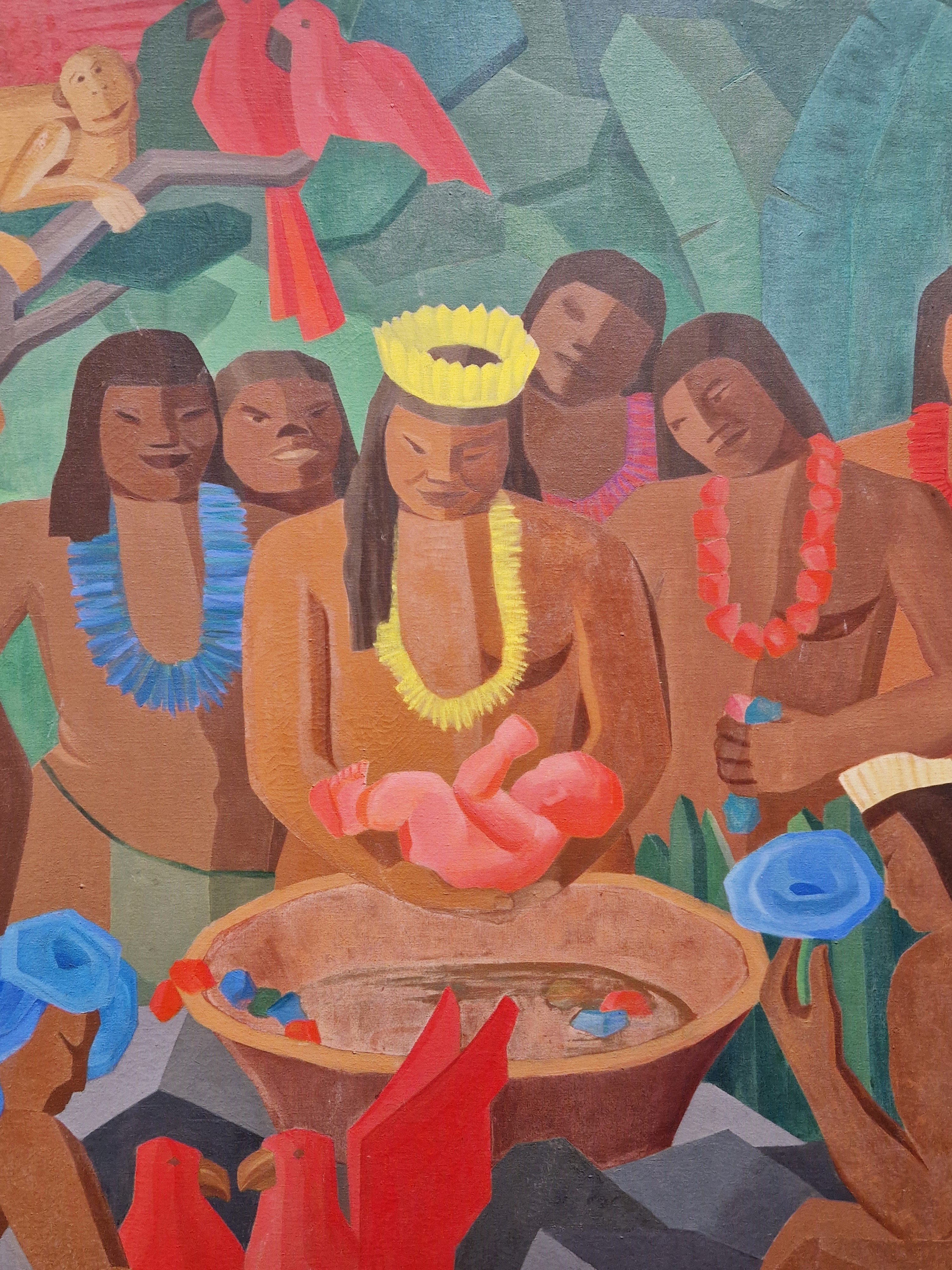
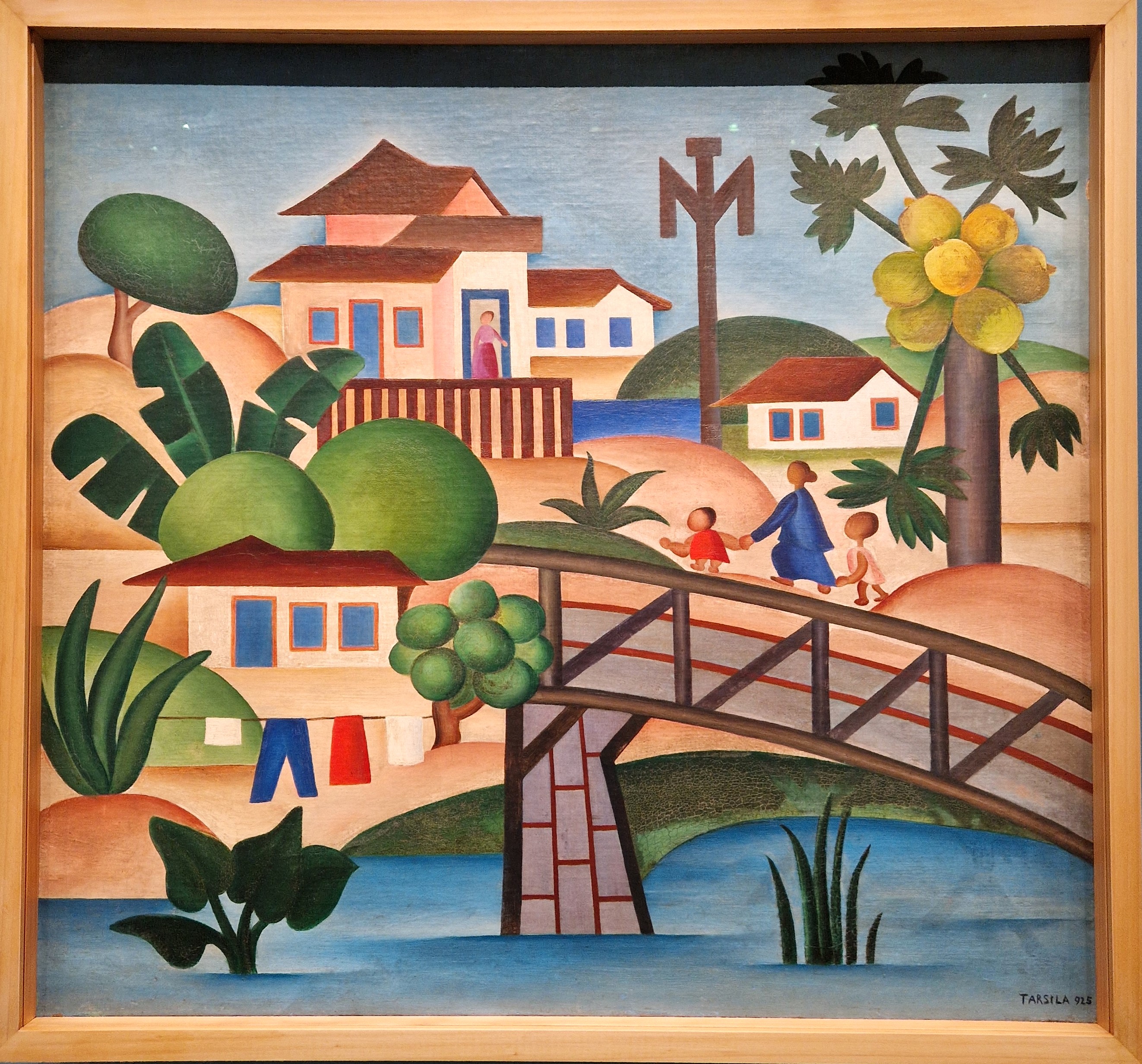
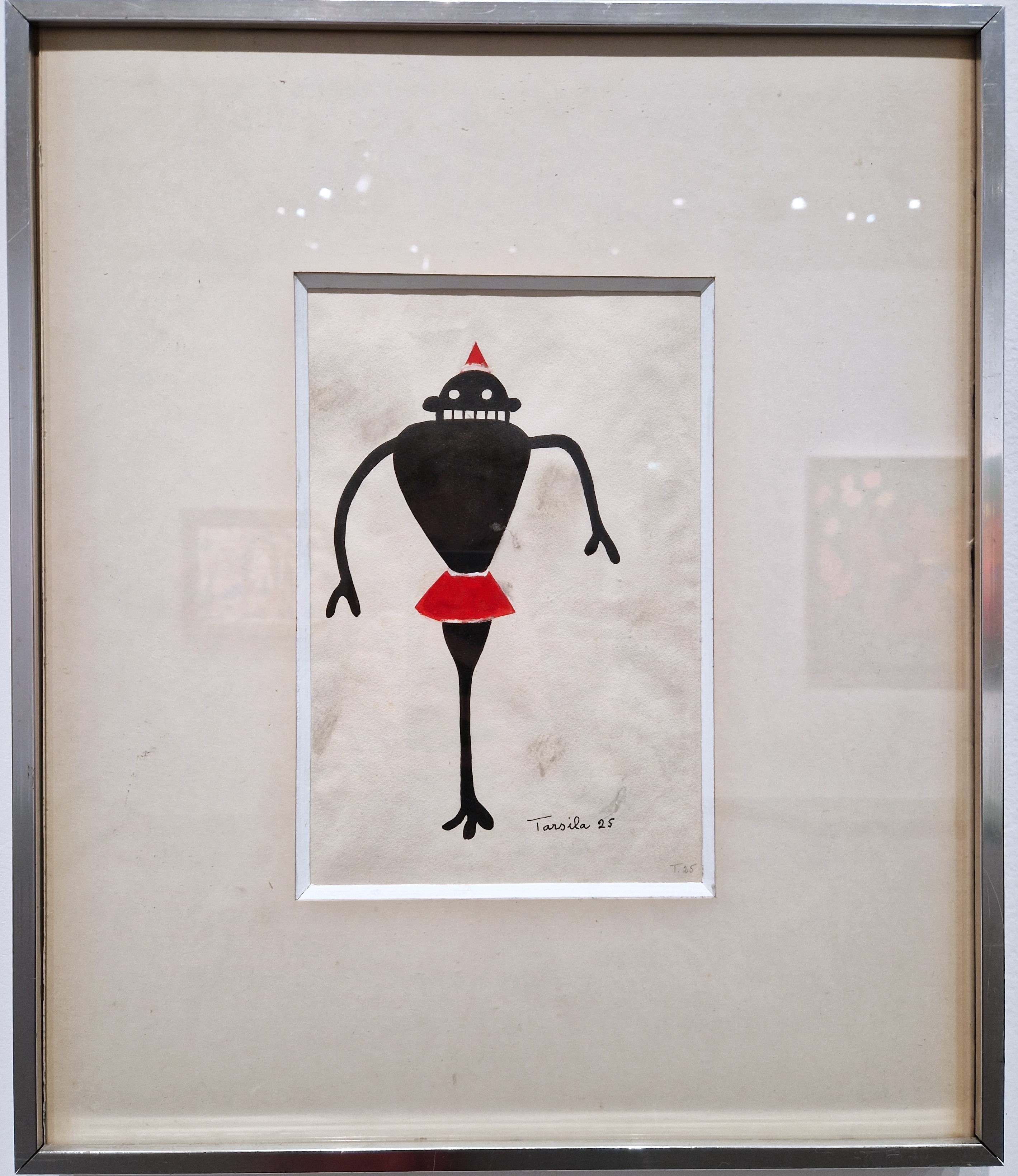
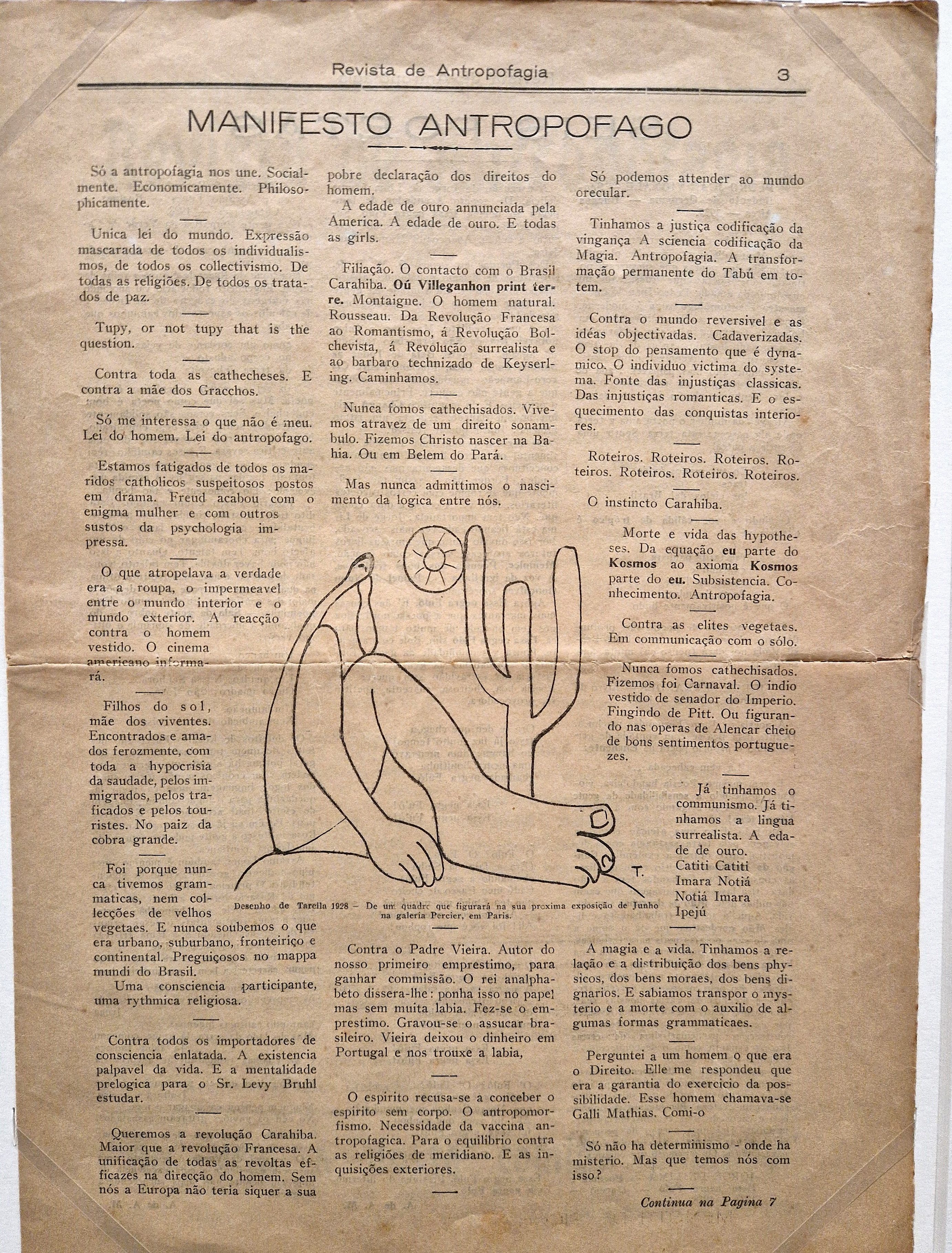
In 1928, Oswald de Andrade published the Manifesto Antropófago (1928). Tarsila do Amaral signed the manifesto as the only representative for painting. The manifesto used the metaphor of cultural “anthropophagy” (cannibalism) to describe Brazil’s ability to absorb and transform external influences into something new. It is impossible, looking at the canvases of Tarsila from this period, to recognize which and what influences she took: the result is simply unique, and this part of the exhibition, the core of Tarsila’s practice, is an ensemble of bizarre animals, colourful and undefined landscapes, naturalism spirit.

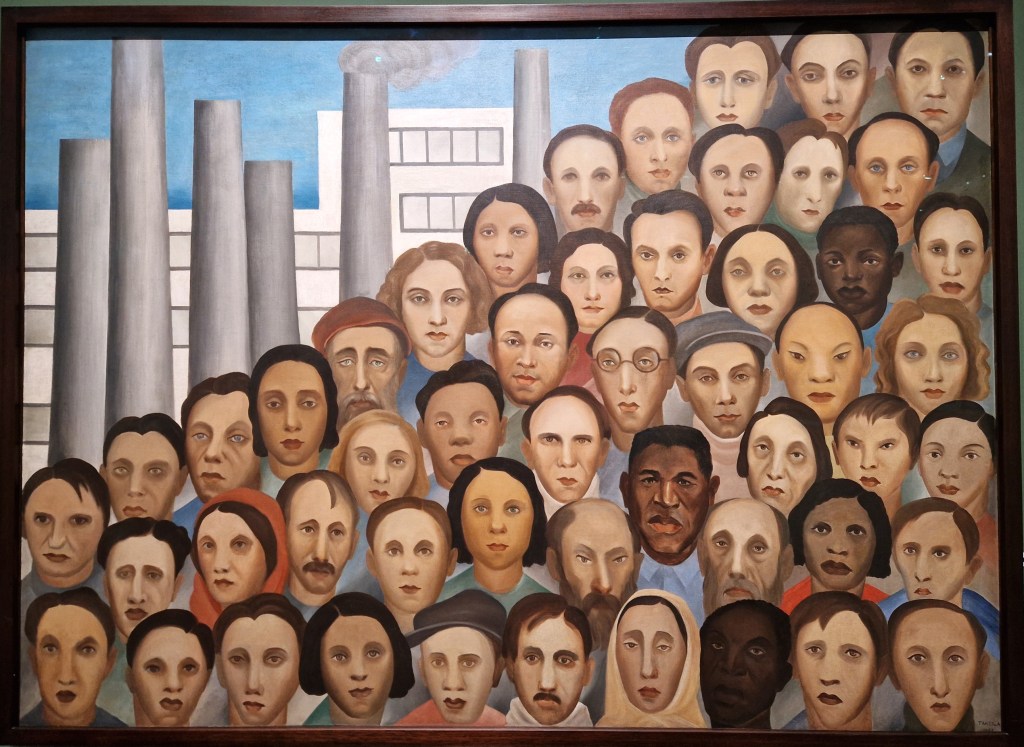
The exhibition’s final rooms reveal another shift in Tarsila’s practice. Influenced by the Mexican muralists and responding to Brazil’s socio-political upheavals during the dictatorship that began in 1937, she devoted her art to activism and her works elevated the working class as the foundation of society, particularly in the industrial city of São Paulo.
The retrospective is concise yet thorough, allowing visitors to trace the key phases of Tarsila’s life and work and her evolution offers a compelling narrative. Tarsila do Amaral stands as one of the few women artists whose talent was recognized and celebrated during her lifetime; this exhibition not only honors her legacy but also highlights her influence on modern art and Brazilian culture.
My personal highlights:
- Auto-retrato I, 1924
- Operários, 1933
- Religião brasileira I, 1927
 MUSEmemoirs