Info
- Dates: 5.03.25 – 25.08.25
- Curator: Emma Lavigne
- Where: Bourse de Commerce – Pinault Collection
- Price: 15 euros / 10 euros reduced
As clearly suggested by its title, this exhibition centers on the representation of the body in art, drawing from the pieces of the Pinault Collection, the body that becomes a powerful tool to explore identity, social issues, and contemporary concerns. A wide range of mediums is on display: sculpture, photography, film, painting, and many renowned names resonate throughout the Bourse de Commerce. A recurring focus is the representation of Blackness, with a significant number of featured artists being African or African American.
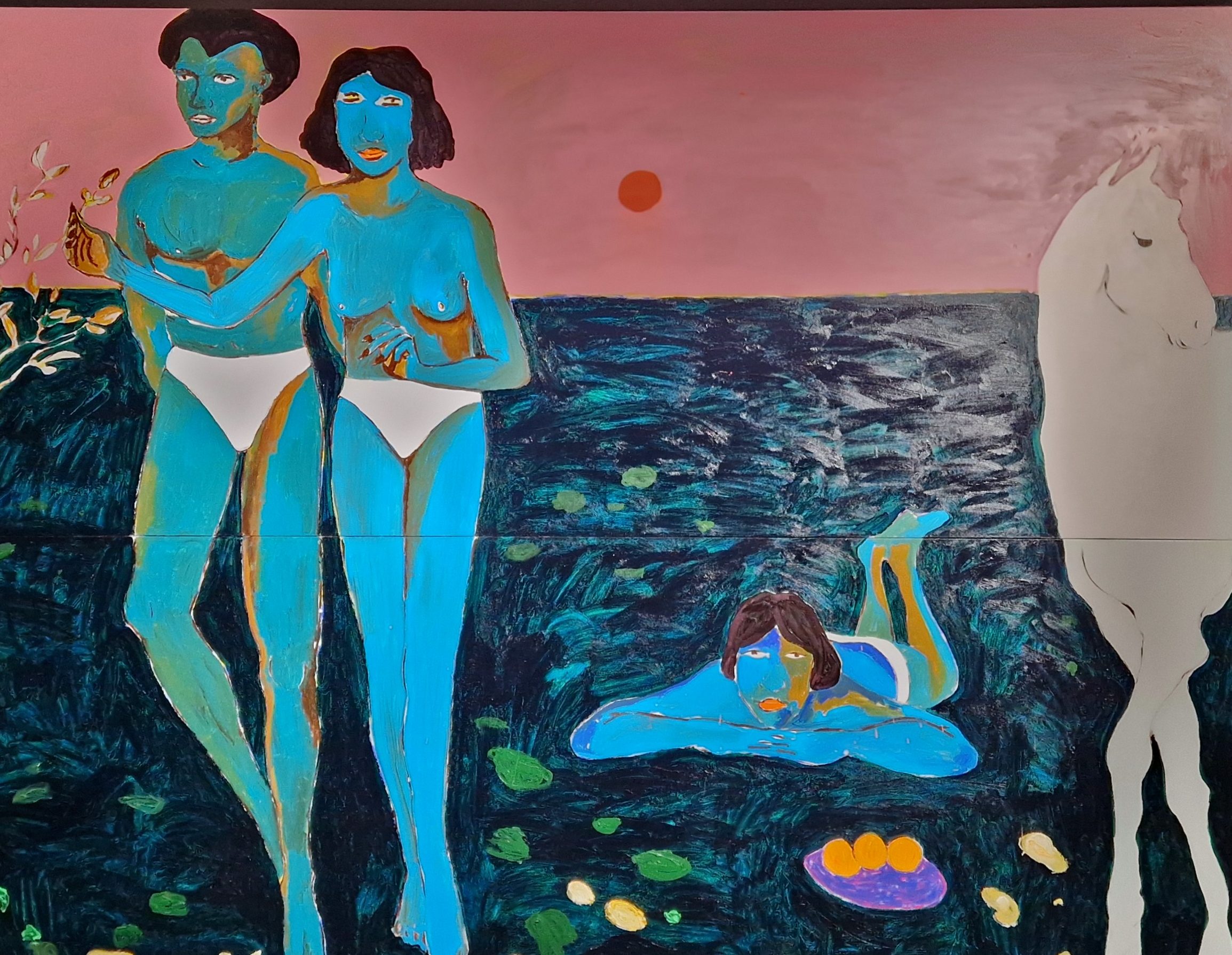
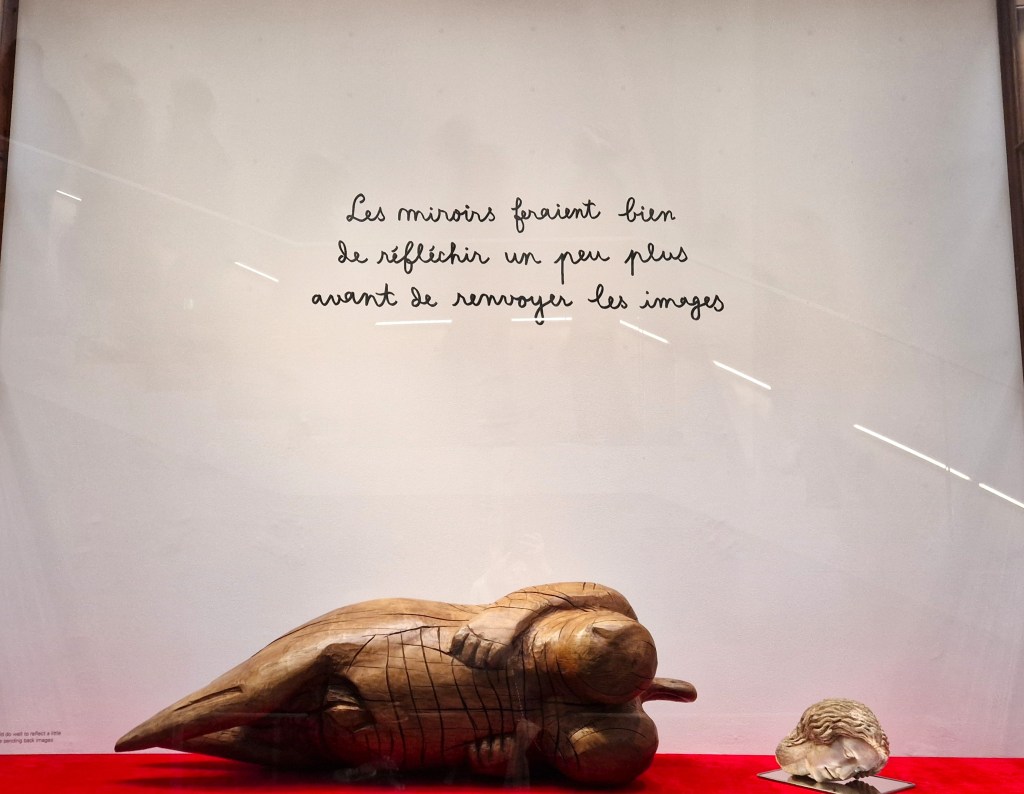
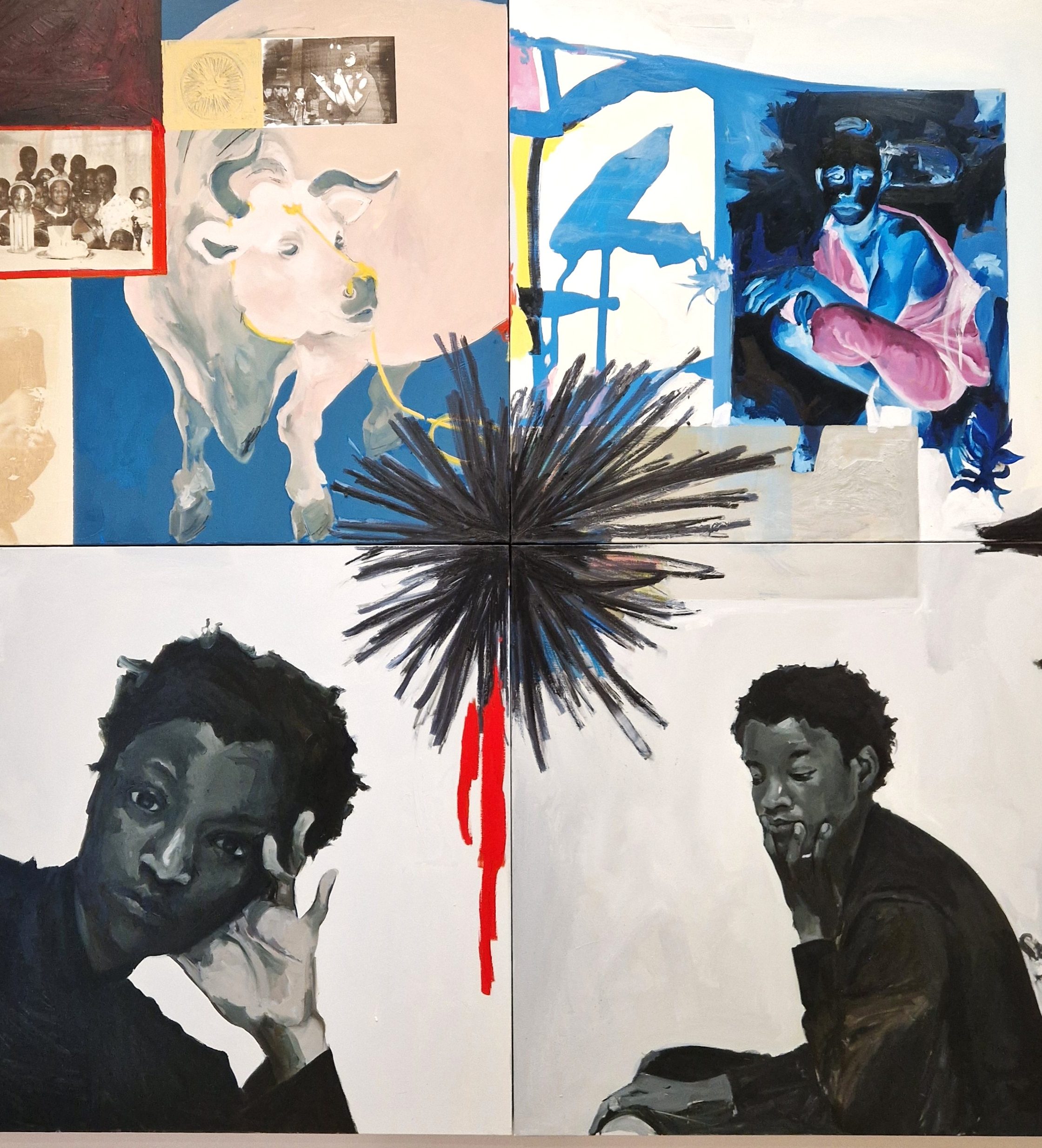
This focus is immediately apparent in the Salon, where visitors are greeted by two large-scale canvases by Ghanaian painter Gideon Appah. Next, surrounding the Rotonde, the vitrines are occupied by works from Ali Cherri, who assembles archaeological fragments with newly created elements, crafting fictive artifacts. This gesture invites reflection on the manipulation of artifacts and cultural heritage and proposes alternative, personal mythologies—echoes of Cherri’s own fragmented identity, shaped by Lebanon’s history of instability and conflict. The sculptures are accompanied by quotes from Jean Cocteau’s Le Sang d’un poète, infusing the installations with a surreal, dreamlike atmosphere.
As is often the case at the Bourse de Commerce, the exhibition is structured by theme, with each section introduced by a short curatorial text. The Rotonde is entirely dedicated to Arthur Jafa, whose work holds a prominent place in the show. His video Love is the Message, the Message is Death (2016) revisits the history of African Americans, blending found footage, personal recordings, and iconic moments into a compelling montage. Set to a Kanye West track interwoven with gospel influences, the work is immersive, oscillating between joy and pain, and invites visitors to sit and absorb its emotional resonance.

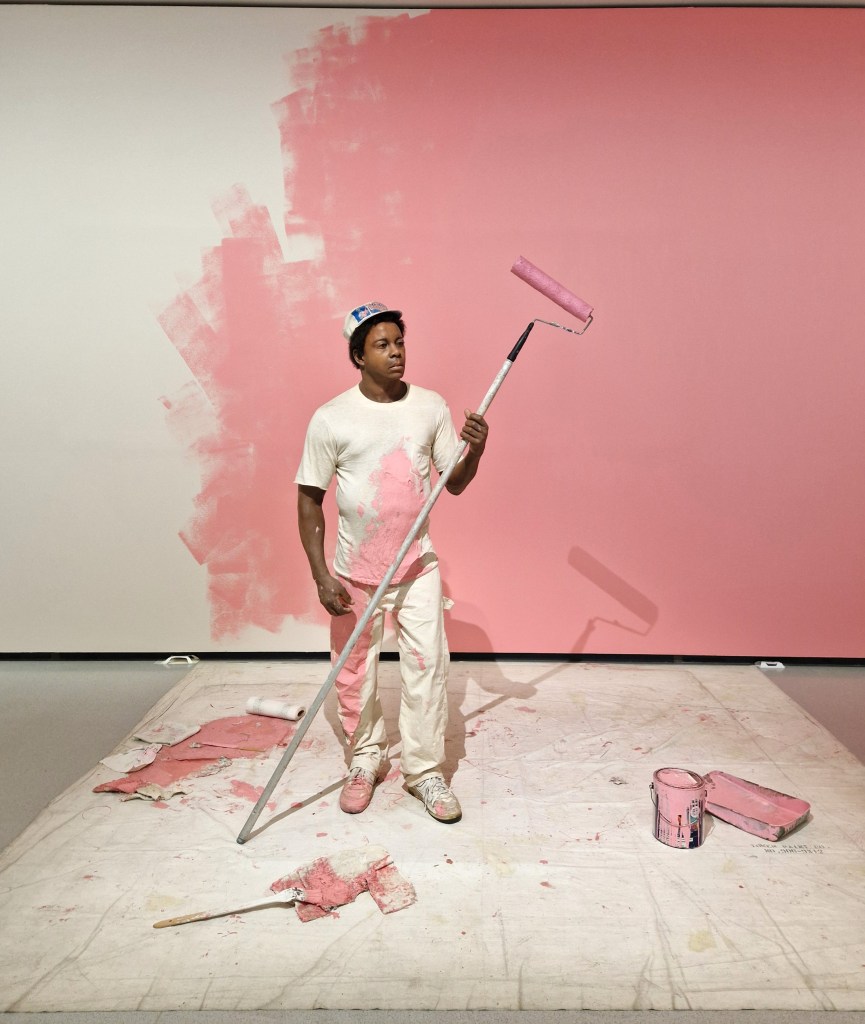
The first floor’s gallery is devoted entirely to Deana Lawson’s powerful photographic practice, while the second floor opens into a collective display, featuring many major voices. History appears here, with artists reflecting on or having lived through the upheavals of the 1960s: the assassinations of Martin Luther King Jr. and John F. Kennedy, the legacy of Malcolm X, the Vietnam War… Many works question or subvert the idealized American Dream, as seen in Duane Hanson’s hyperrealist sculptures or Kara Walker’s monumental drawing. This section gives visibility to bodies historically marginalized—those often rendered invisible.

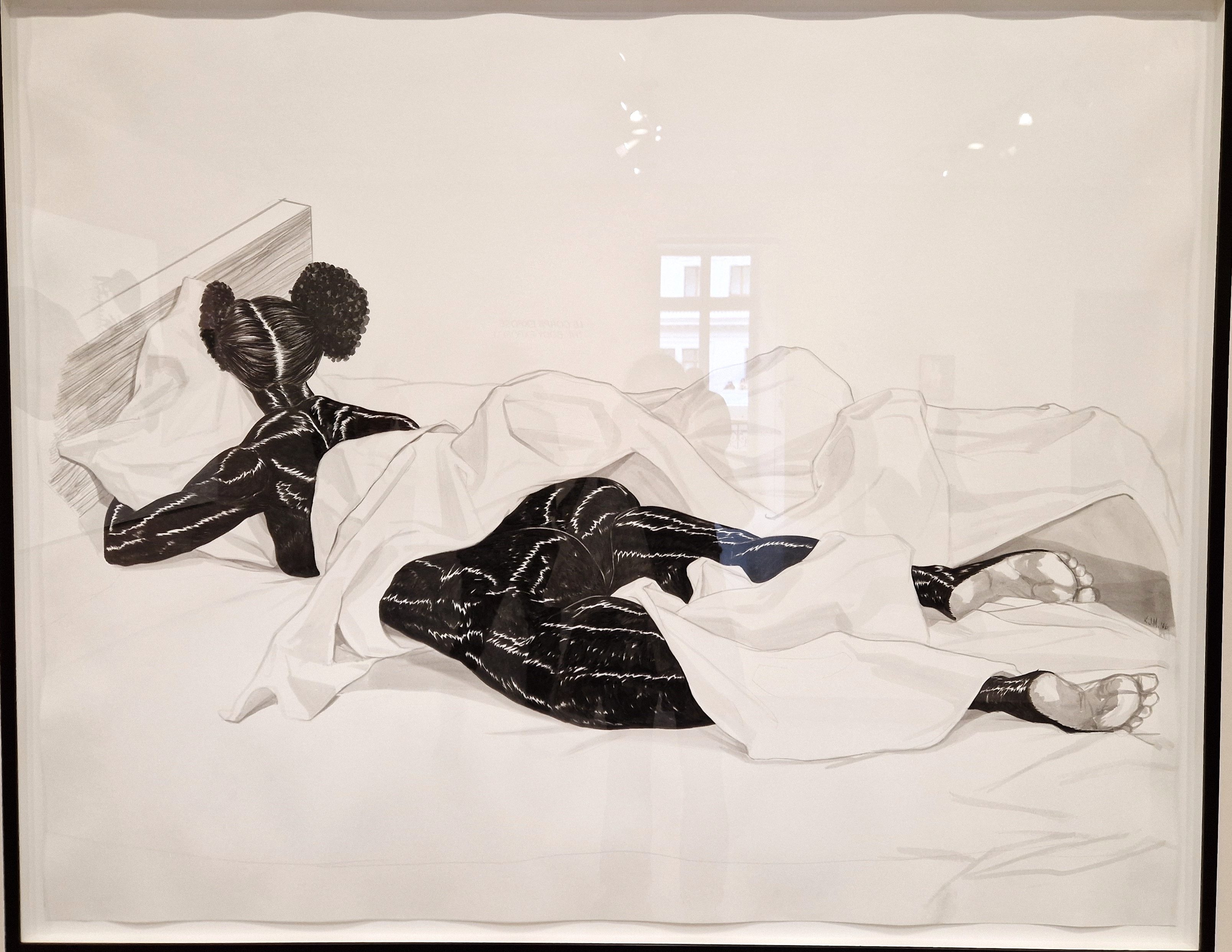
The female body is also reimagined: Zanele Muholi’s iconic self-portraits become acts of resistance and empowerment, while Niki de Saint Phalle’s exuberant Black Nanas celebrate femininity in all its forms. Art historical references are revisited and reframed, notably in Kerry James Marshall’s Beauty Examined. Two enclosed cabinets bring together works that juxtapose modern icons like Man Ray with contemporary artists, engaging with themes such as segregation, intimacy, and the tactile dialogue between Black and white bodies.
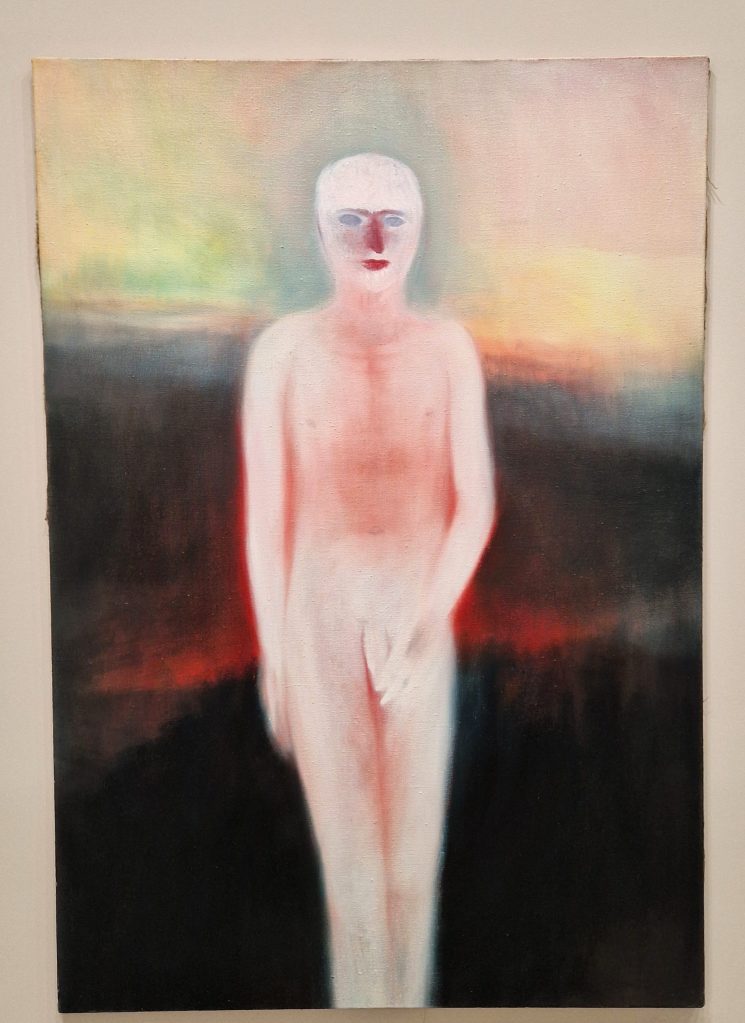
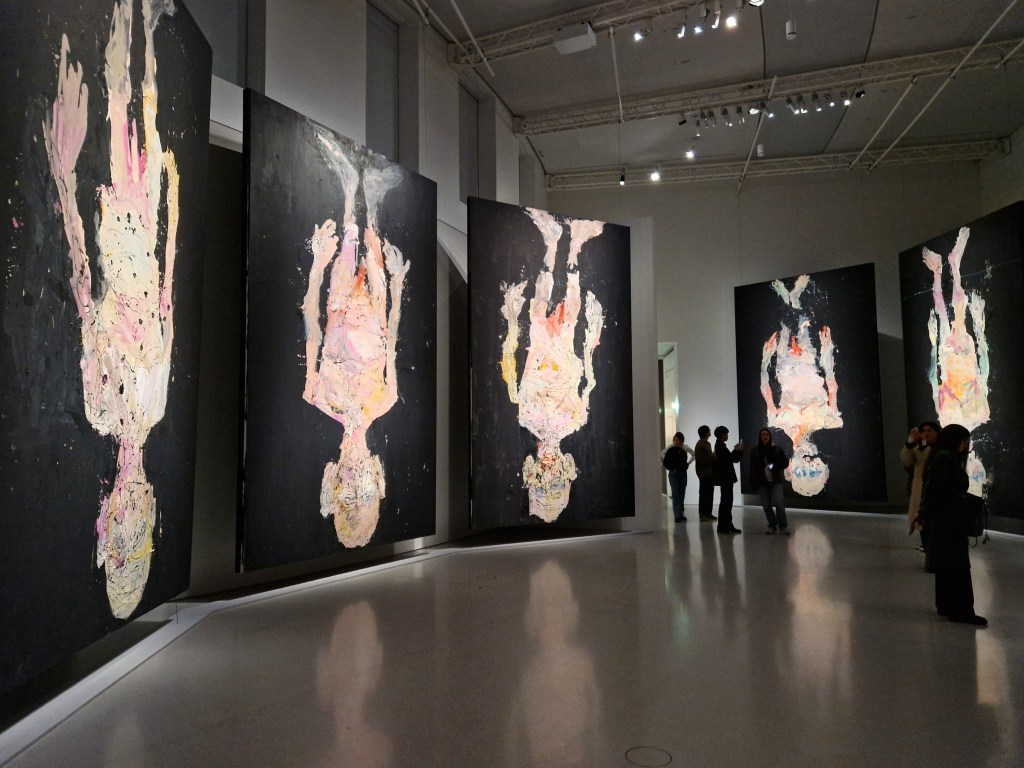
The “soul” invoked in the exhibition’s title finds its most evocative expression in the works of Miriam Cahn. Her installation Ritual reflects on the ephemerality of human existence and the artist’s personal experience accompanying her father through illness and death. This section leads to what is arguably the most spectacular piece in the exhibition: Georg Baselitz’s Avignon. Known for his upside-down figures, Baselitz here presents eight monumental canvases in a dimly lit room, creating an immersive and suggestive space. The viewer is overwhelmed by the scale and gravity of these presences.
Overall, the exhibition presents an impressive selection of impactful and high-quality works. However, the curatorial purpose sometimes feels lost, with a few thematic deviations that slightly dilute the initial focus set out at the entrance. Despite this, the exhibition remains a compelling exploration of corporeality and its power to express both personal and collective truths.
My personal highlights :
- Georg Baselitz, Avignon series (2014)
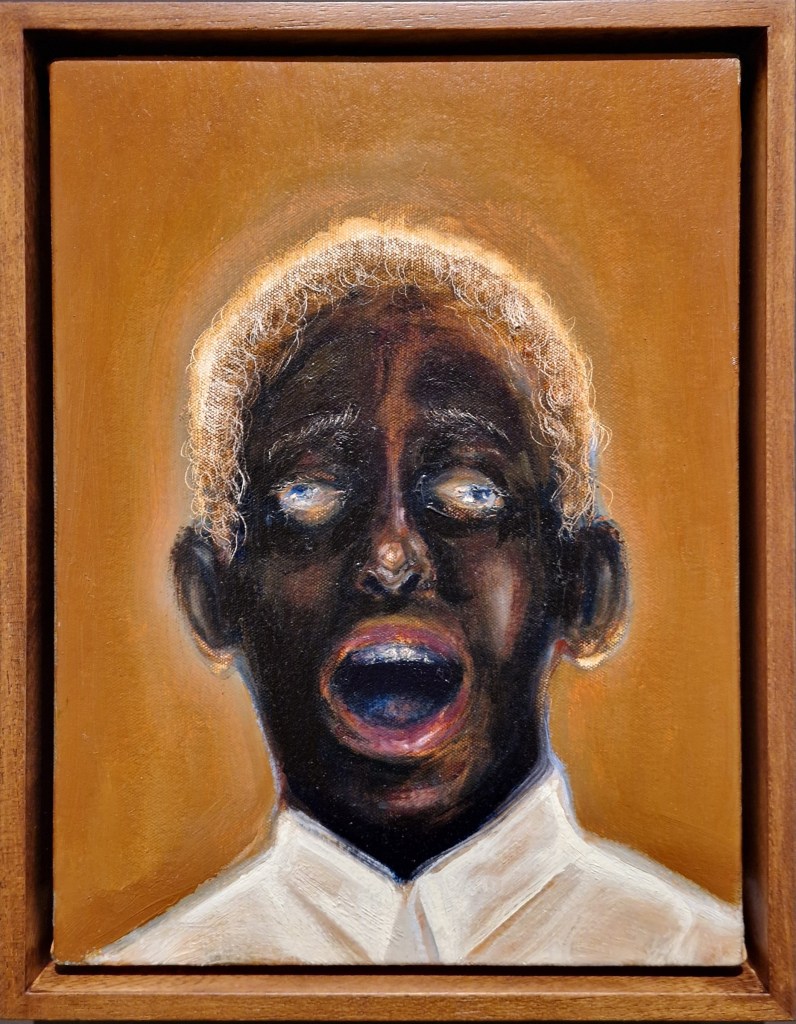
- Antonio Obà. Cantor de coral – estudo (2023)
- Lynette Yiadom-Boakye, Light of the Lit Wick (2017)
- Irwing Penn, The hand of Miles Devis (C), New York (1986)
 MUSEmemoirs