Info :
- Dates : 30.06.25 – 30.09.25
- Curator : Tanvi Mishra
- Where : Neimënster Cultural Centre (Luxembourg)
- Price : Free
Fume, Root, Seed highlights the photographic work of Ecuadorian artist Isadora Romero, recently awarded the Discovery Award at Les Rencontres d’Arles (2023), the Open Format Award from World Press Photo (2022), and the Marilyn Stafford Award (2021). Presented at the Neimënster Cultural Centre in Luxembourg, the exhibition is the result of a long-term research project conducted over six years across four Latin American countries—Mexico, Paraguay, Ecuador, and Colombia—documenting the gradual disappearance of seed biodiversity.
The exhibition unfolds across four chapters, each tied to a specific territory and structured around a photographic series, complemented by videos, cyanotypes, anthotypes, and installations. From one country to another, the artist bears witness to the resilience of rural communities that, in the face of the extractivist logic of agribusiness, strive to preserve traditional agricultural practices.
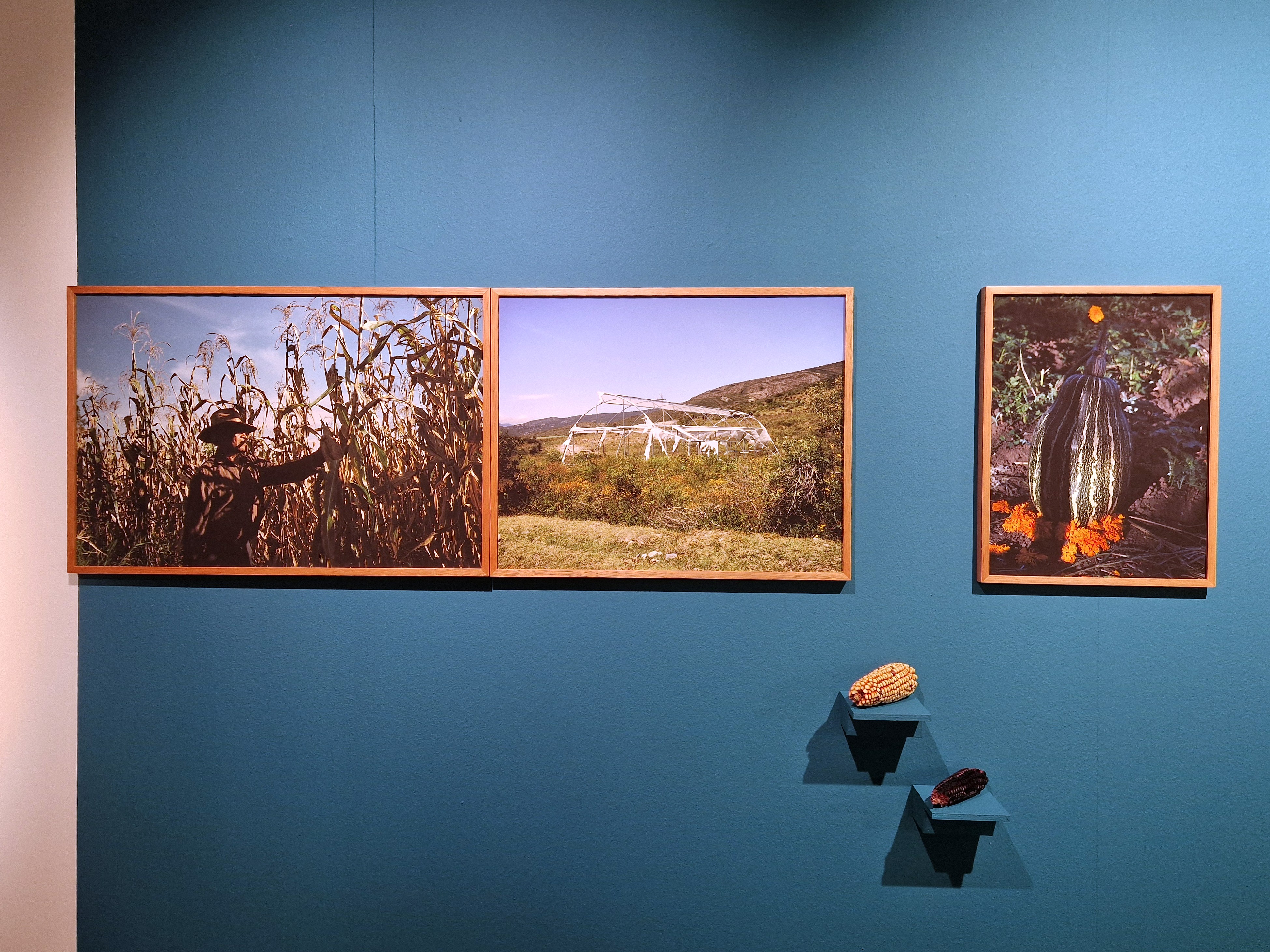
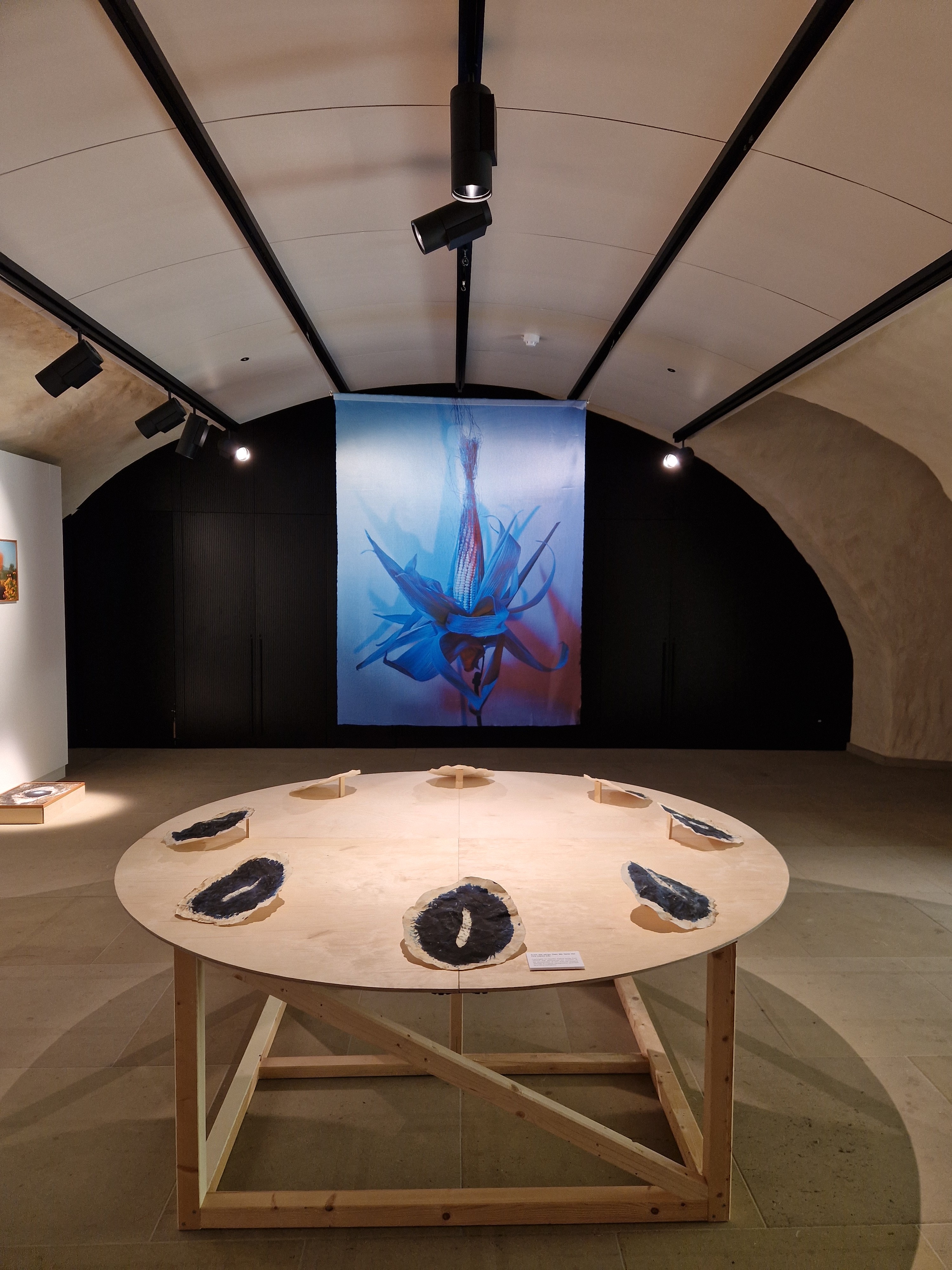
In Mexico, Romero focuses on corn plant, an emblematic crop whose cultivation in Oaxaca has been based for millennia on ancestral knowledge. Today, however, this diversity is threatened by the proliferation of agave, a plant grown for the production of tequila and much more profitable for agro-businesses to export. The photographic series is accompanied by a circular table displaying cyanotypes printed on tortillas, poetically evoking the evolution of maize through time—even incorporating speculative forms generated by artificial intelligence.
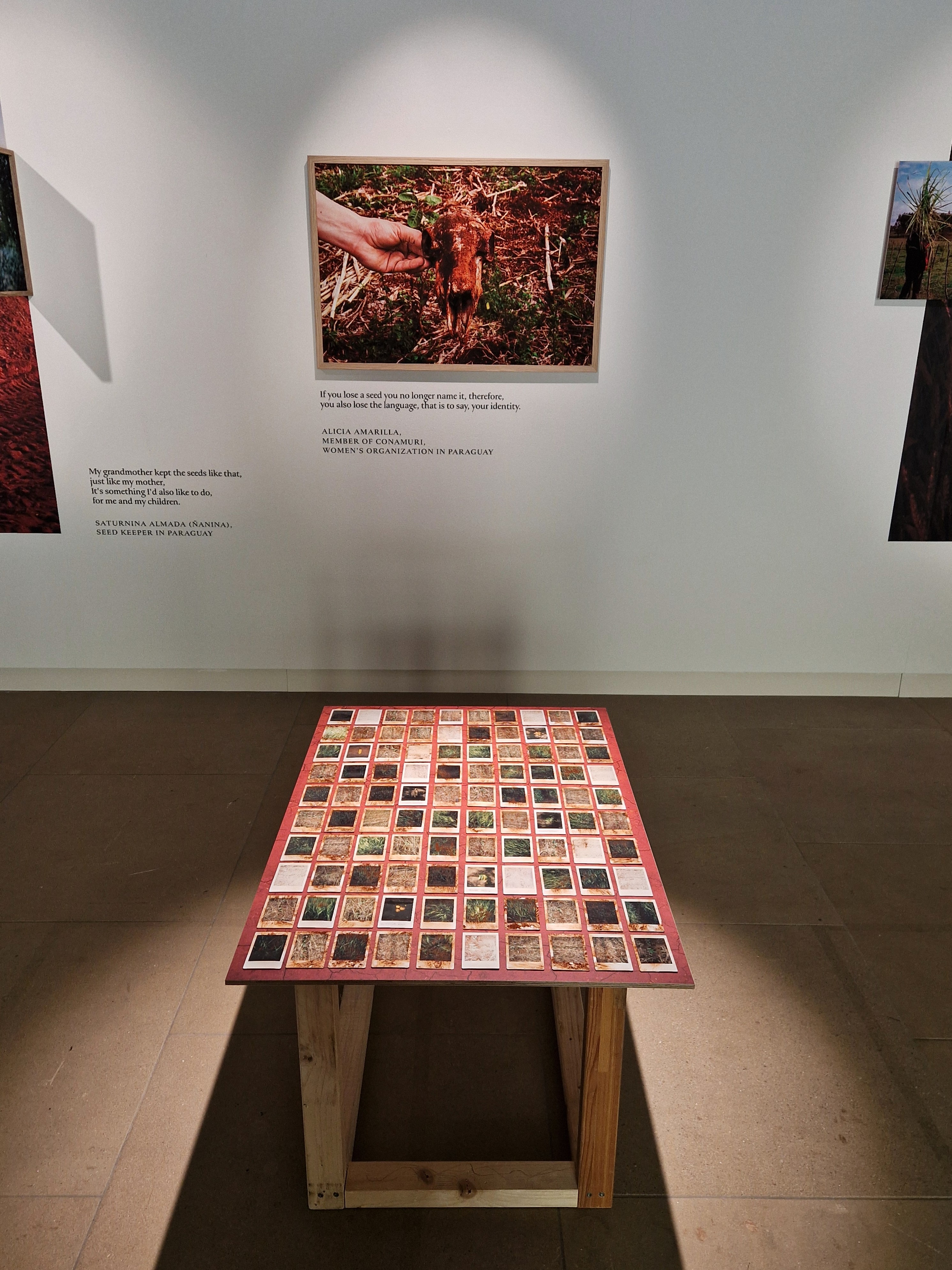
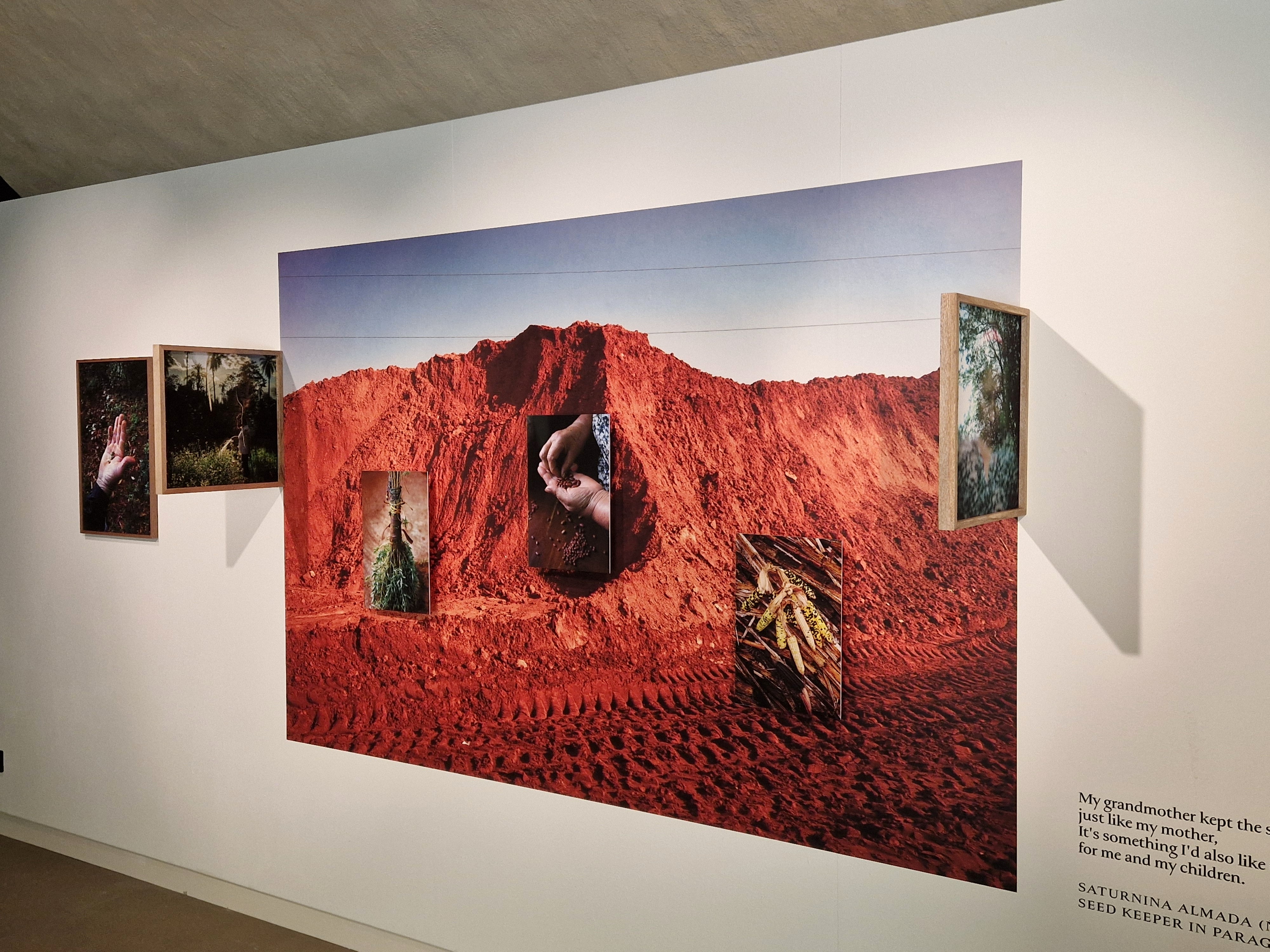
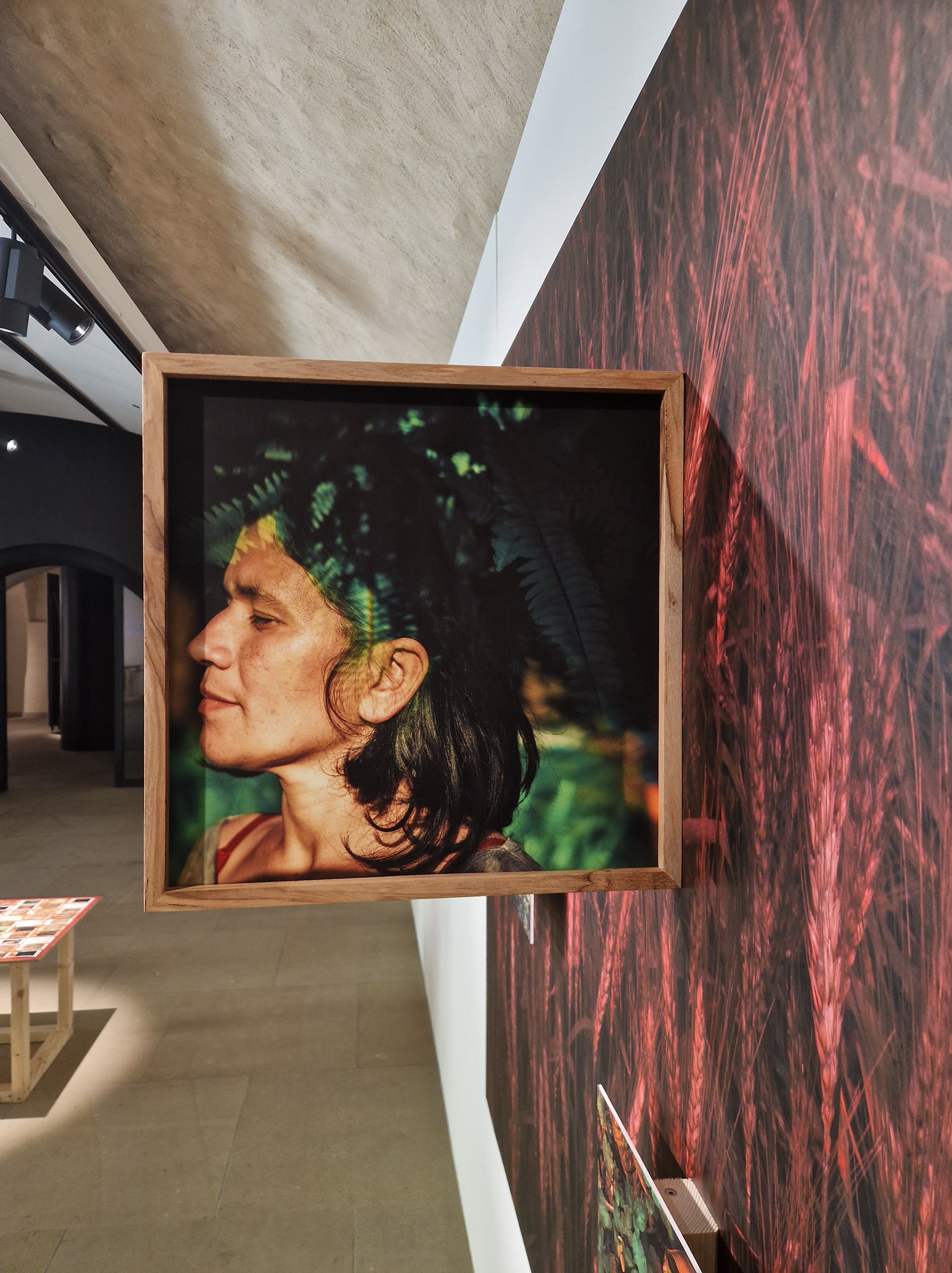
The second room transports us to Paraguay with the Ra’yi series, which addresses the country’s extreme land inequality: 2.5% of the population owns 85% of arable land, primarily devoted to transgenic monoculture for the export market. Through an installation of one hundred seed polaroids, the artist materializes this staggering statistic : 94 lots of land are own today by agri-businesses which export transgenic plants, while just 6 lots are left for local farmers to cultivate traditional seeds destined to the country. Yet Romero also highlights the resistance of women’s groups in Altos, who cultivate, exchange, and protect native seeds as acts of identity and linguistic preservation inherited from the ancestrors.
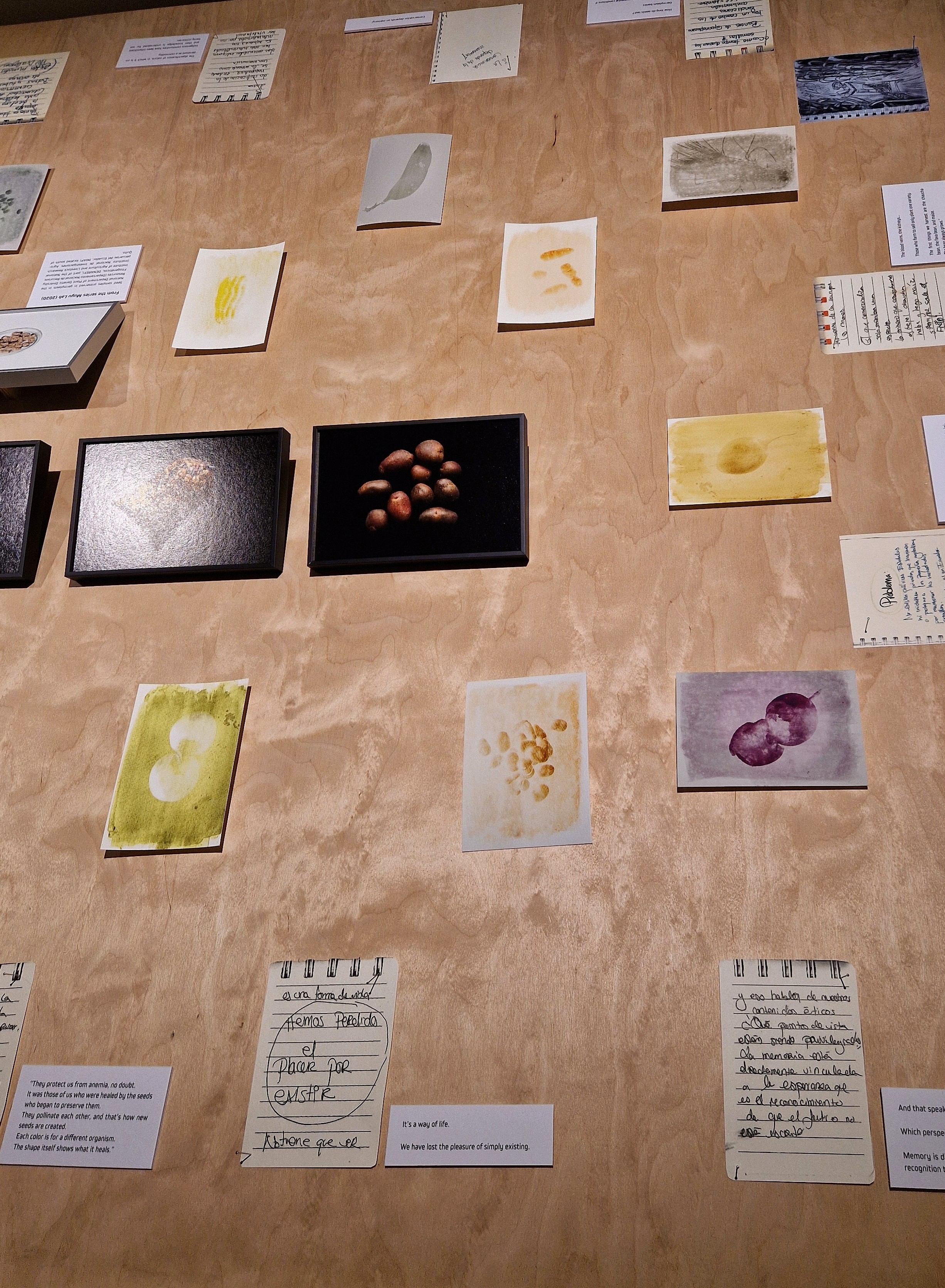

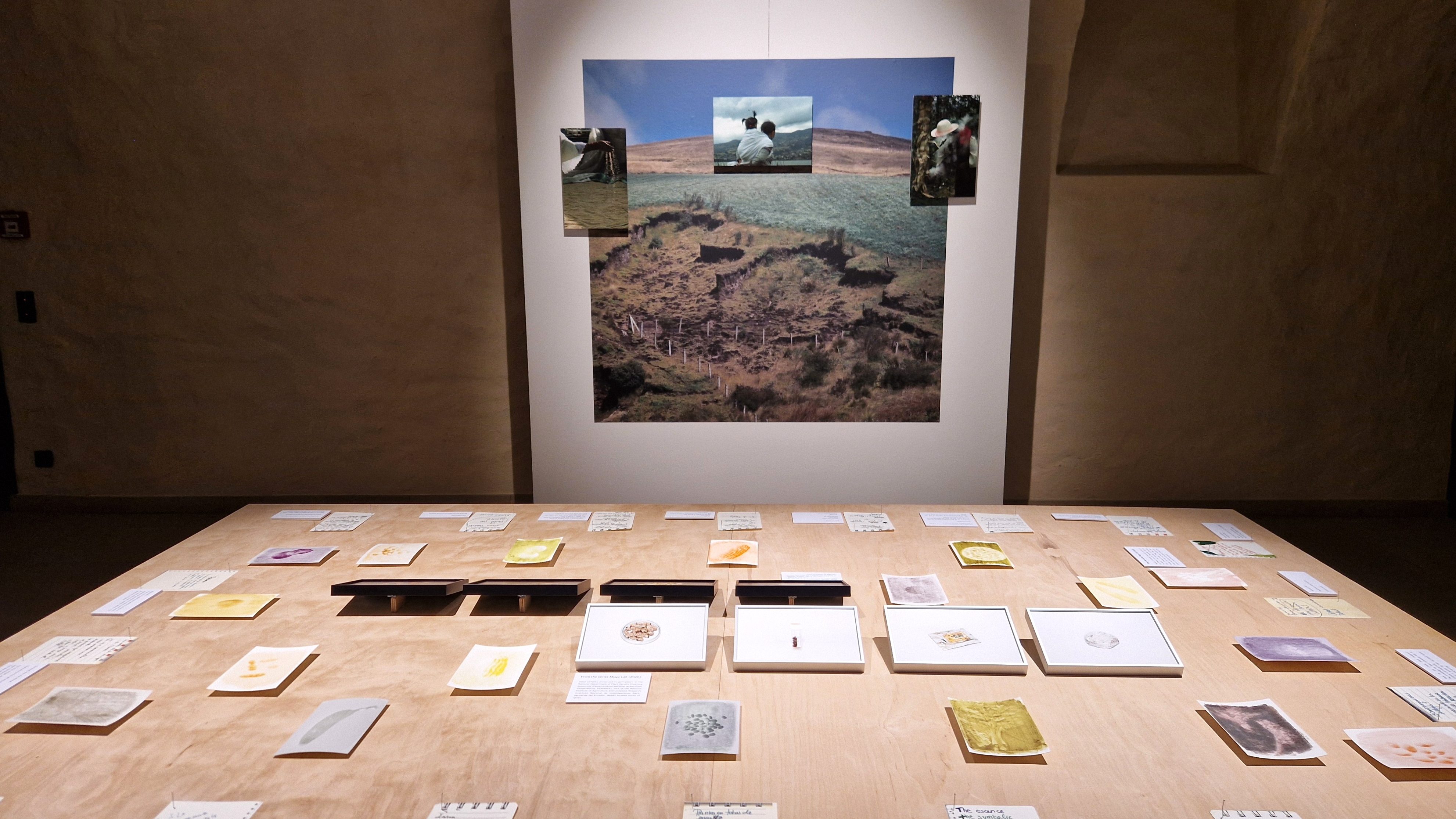
With Muyu Lab, the artist takes us to her native Ecuador, where two visions of conservation are contrasted. On one side, official seed banks catalog thousands of samples for laboratory study; on the other, Indigenous women of the Camuendo Chico community rely on empirical knowledge grounded in the forms, colors, and cycles of plants to preserve traditional cultivation. At the center of the room, a table gathers anthotypes, field notes, and portraits all made by the artist, testifying her deep work of research behind all these photos, even in a scientific perspective, and her dialogue with the communities she’s been in contact with.
Finally, Colombia—the country of Romero’s grandparents—is approached from a more personal angle in the video Blood is a Seed, the central work of the exhibition’s final section. In it, Romero explores family memory and discovers that her great-grandmother was herself a “seed keeper.” The film, created with expired 35mm film, unfolds as a dialogue between the artist and her father, reflecting on the transformation of Colombia’s agricultural landscape. This sensitive work concludes the exhibition on an introspective note, interweaving personal legacy with collective memory.
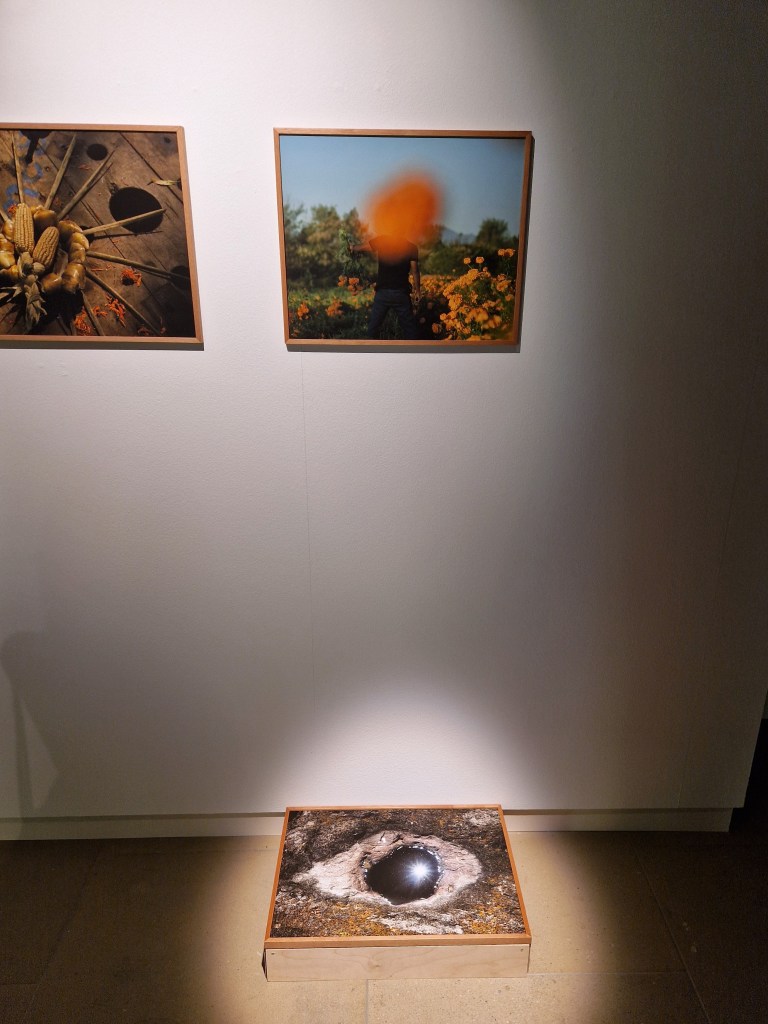

Fume, Root, Seed emerges as both a political and poetic work. Far from delivering a merely militant discourse, Isadora Romero proposes an aesthetics of resistance, deeply rooted in territories and bodies. Her gaze, never paternalistic, highlights modest gestures, agricultural rituals, and marginalized voices. By focusing on seeds, she touches on what underpins the memory of peoples: a fragile heritage, passed from hand to hand, from mouth to ear, and now threatened by global systems of domination. The exhibition challenges our relationship to the land, but also to the image itself: what can photography do in the face of erasure? In Romero’s hands, it becomes a tool of reappropriation, a medium for plural narratives, and a seedbed for possible futures.
My personal highlights :
- Ra’yi series
- Table of research within the Muyu Lab
- Blood is a Seed
 MUSEmemoirs