
Info:
- Dates: 8.10.25 – 19.10.25
- Curator: Jessica Morgan
- Where: Bourse de Commerce, Pinault collection
- Price: 15 euros / 10 euros reduced
The Bourse de Commerce celebrates the Minimalist movement through an ambitious and wide-ranging exhibition, uniting artists from around the world. Divided into thematic sections, the exhibition explores the different facets of Minimalism, focusing on colour, light, materiality, balance, and perception. Alongside these thematic groupings, several spaces are dedicated to individual artists, allowing for a more focused presentation of their practice. This extensive overview is made possible through major international loans as well as the richness of the Pinault Collection.
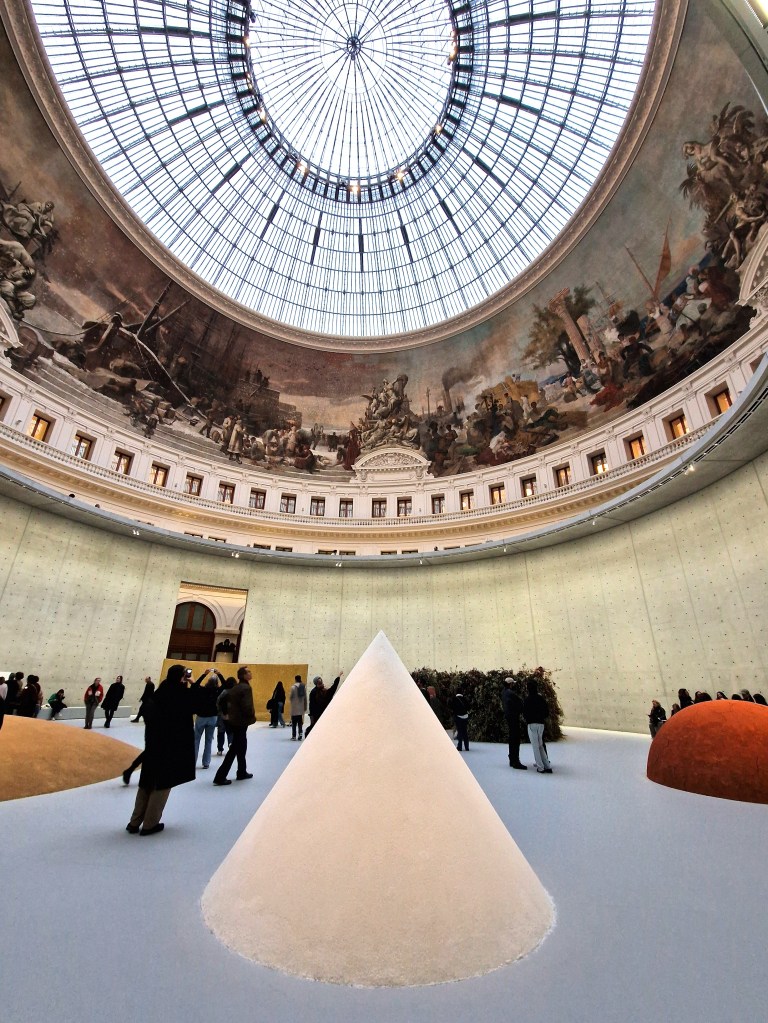
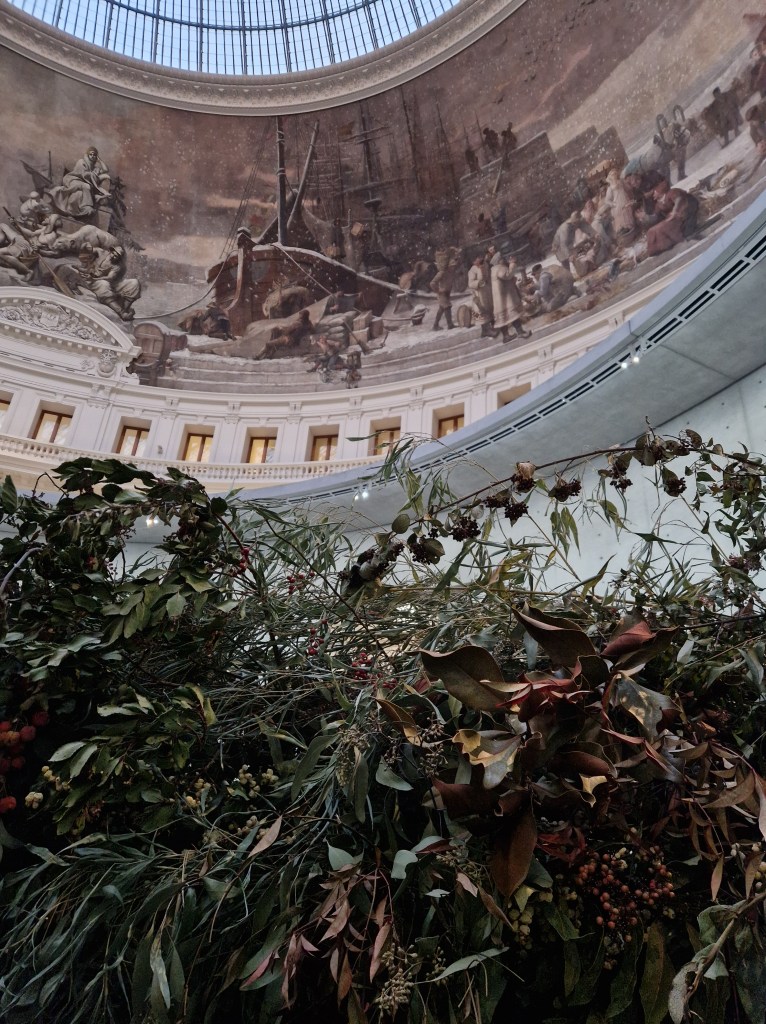
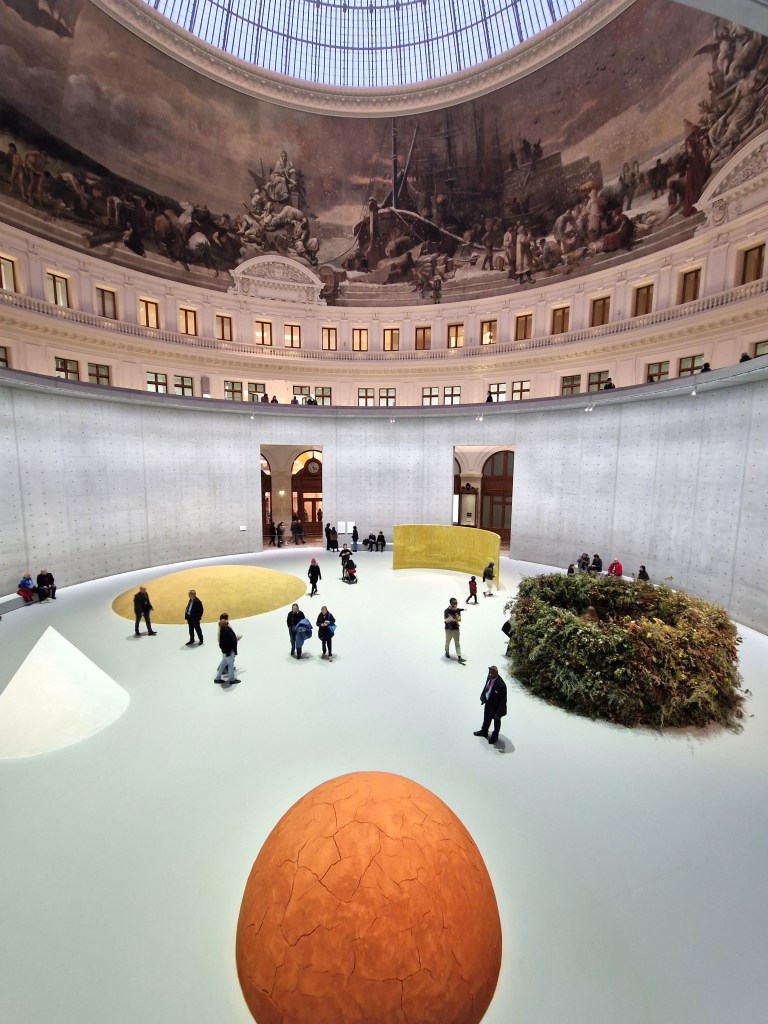
From the outset, the exhibition immerses the visitor in the cultural and artistic atmosphere of the 1960s and 1970s. The journey begins with Robert Ryman’s canvases, whose subtle explorations of whiteness introduce a sense of silence and restraint, setting the tone for the exhibition. In the Rotunda, geometric sculptures by Meg Webster surround the visitor, encouraging slow movement and physical engagement. Her works silently invite viewers to walk around them, observe them closely, or even enter them. Circle of Branches, for instance, envelops the visitor within an organic structure that softens perception, creating an almost garden-like environment. Looking upward, the monumentality of the cupola fresco reminds visitors of the architectural context in which these minimalist interventions unfold.
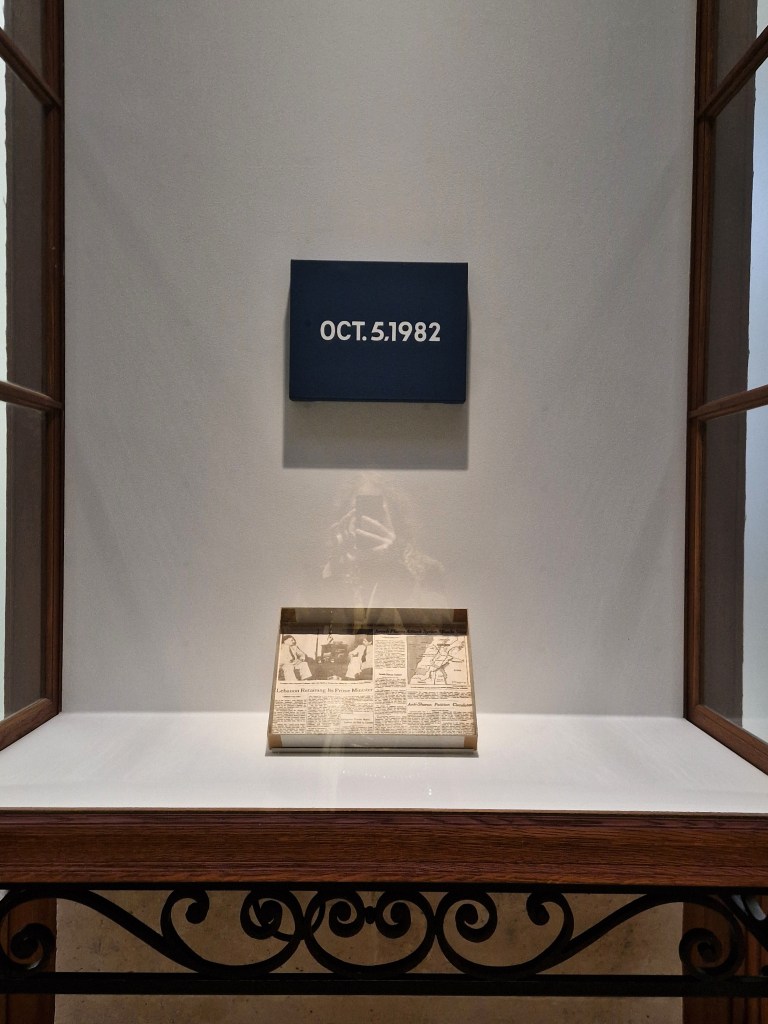
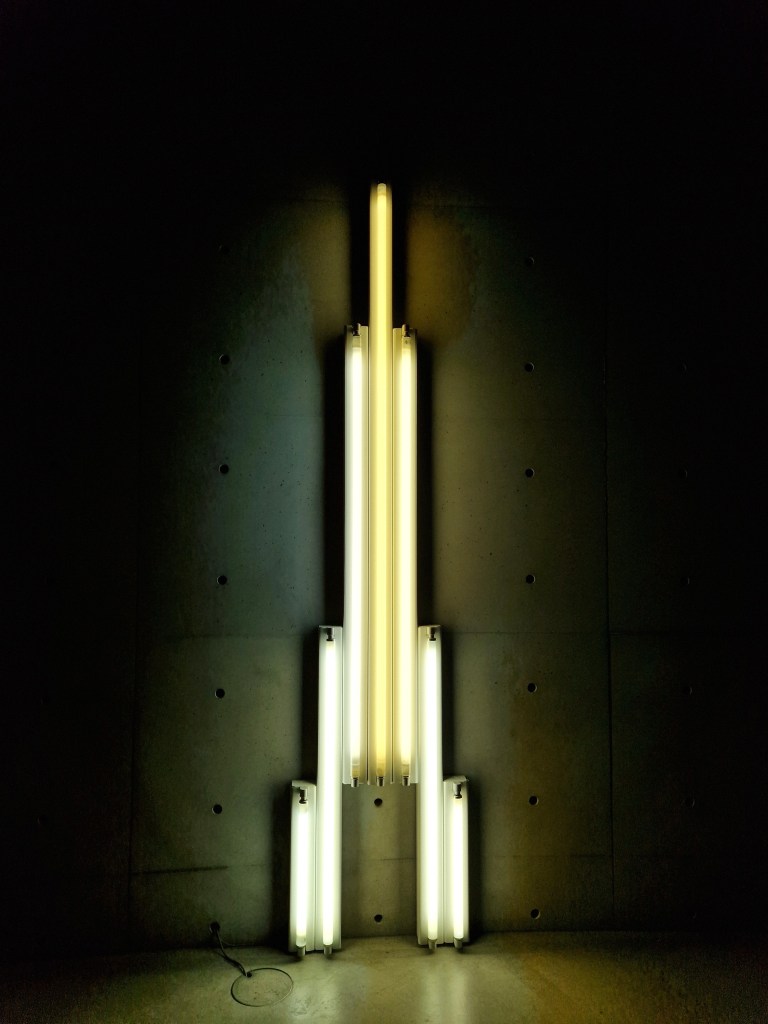
Encircling the Rotunda, the original display cases host a selection from On Kawara’s Date Paintings series. Twenty-seven works form a powerful archive of time and place, emblematic of both Minimalism and Conceptual Art. Reduced to the simple inscription of a date, these paintings invite reflection on presence, temporality, and historical context. As the visitor descends the stairs, the first thematic section unfolds, dedicated to the theme of light. From the 1960s onward, artists increasingly treated light as a material in its own right, either by manipulating perception or by incorporating literal light sources such as neon. This section highlights the diversity of approaches that challenged traditional ways of seeing and experiencing art.
On the second floor, additional sections focus on notions such as balance, surface, grids, and monochrome. Across these rooms, the emphasis lies on the relationship between the artwork and its surrounding space: how a piece occupies a given context, how it activates the environment, and how perception shifts according to spatial conditions. Materiality plays a central role, particularly in works that integrate organic elements within rigid geometric forms, bringing natural materials into dialogue with anthropic and industrial shapes.
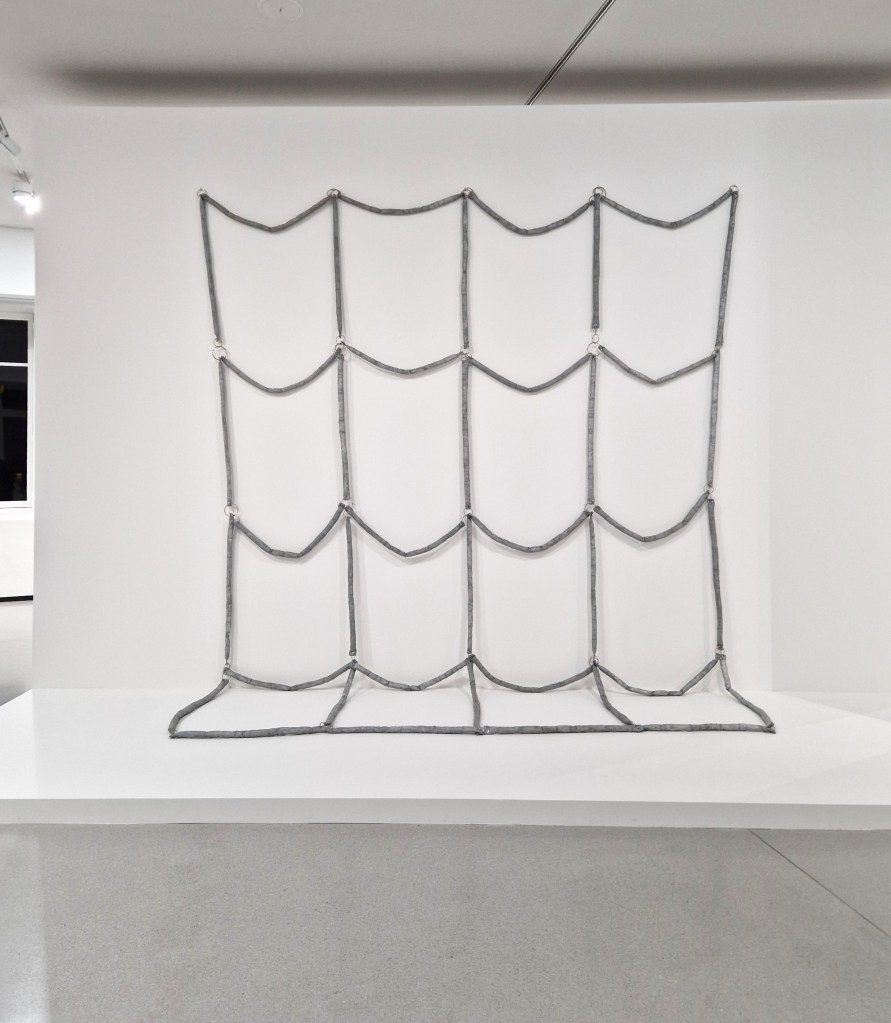

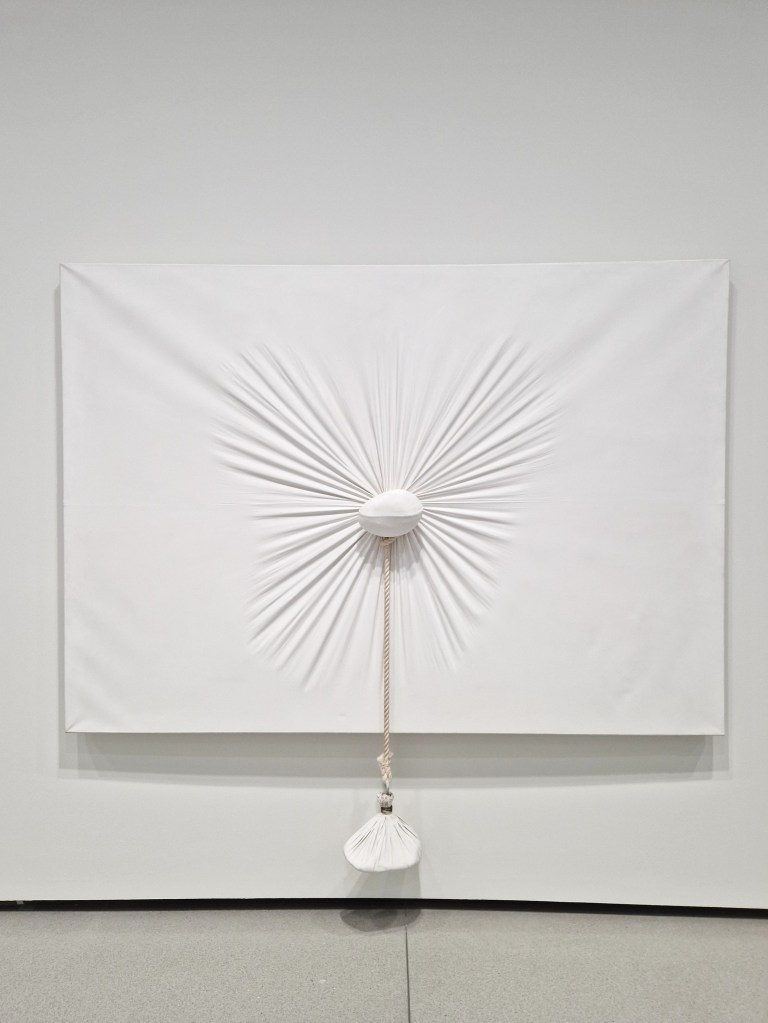
Several spaces are devoted to artistic movements and figures not immediately associated with Western Minimalism, underscoring the global diffusion of the movement. Notably, the first floor features a section dedicated to Mono-ha, the Japanese “School of Things.” Emerging in the late 1960s, Mono-ha artists developed a language marked by simplicity, linearity, and a heightened attention to materials and their physical properties. By placing industrial and natural elements in direct relation to space, these artists invite a reconsideration of sculpture as an experiential encounter rather than a fixed object.
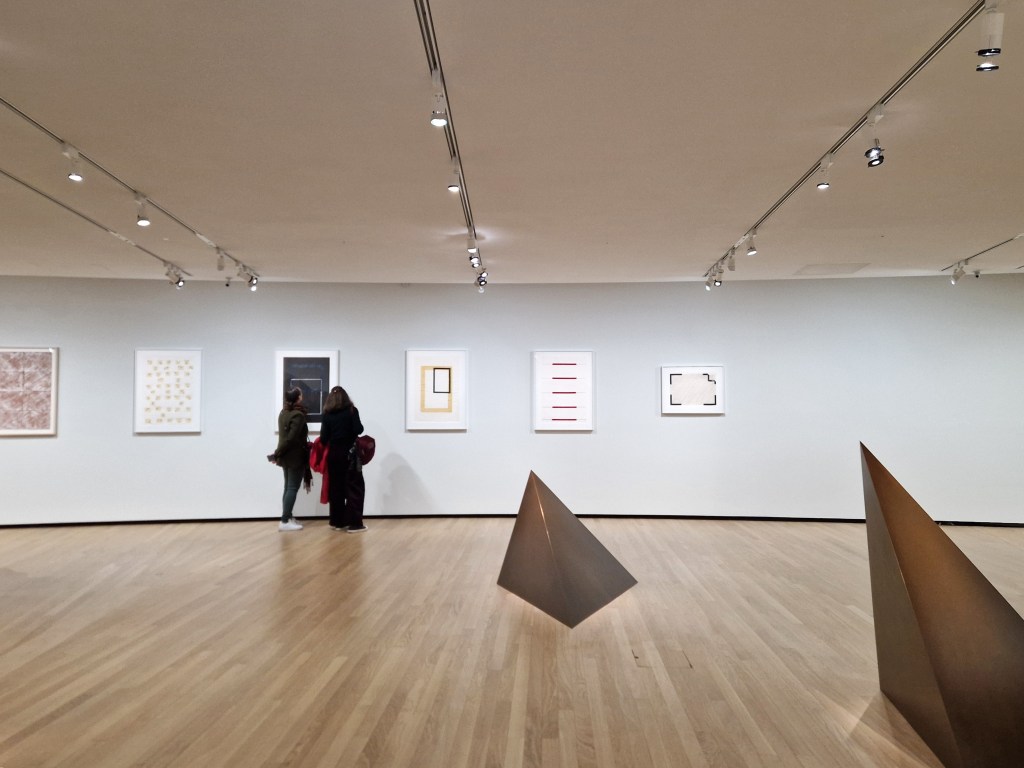
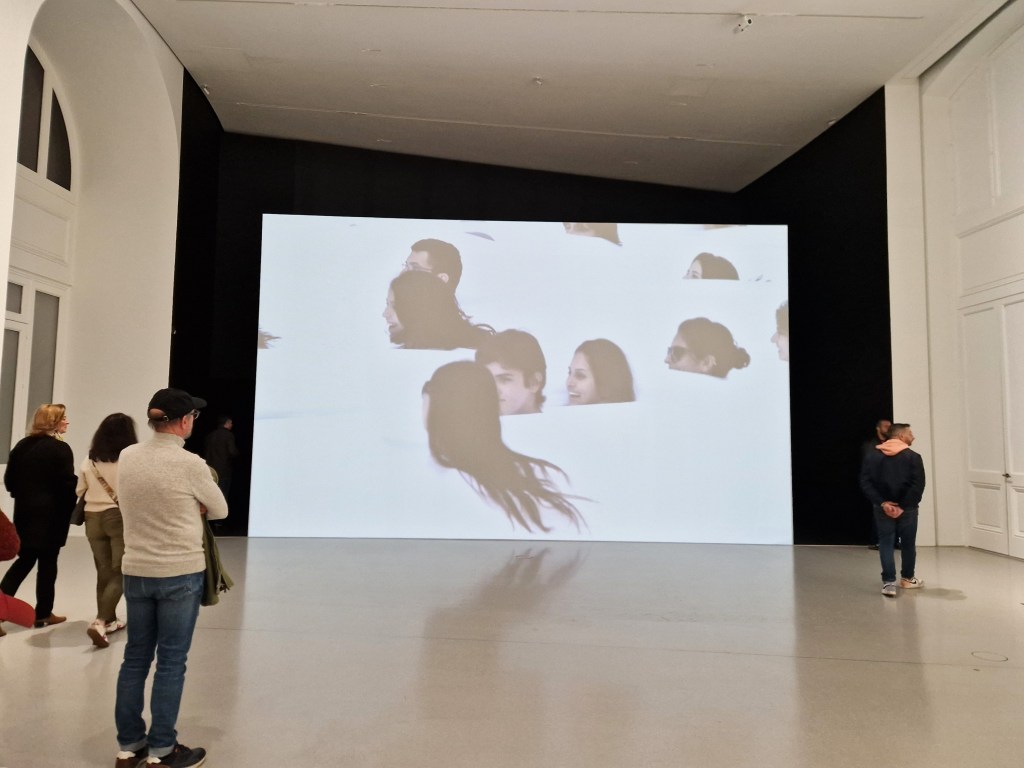
Other rooms function as monographic spaces, such as the section dedicated to Brazilian artist Lygia Pape (1927–2004). Her work bridges Minimalism, Conceptual Art, and performance, and she was a key figure of the Neo-Concrete movement, which understood the artwork as a living entity activated by the viewer. Her installation Ttéia 1, C (2003), here reimagined for the Bourse de Commerce, exemplifies this approach: golden threads catch and reflect light, creating an immersive environment that encourages contemplation and spatial awareness. A selection of her films, books, and poems further enriches this presentation, offering what amounts to a first retrospective introduction of her work in France.
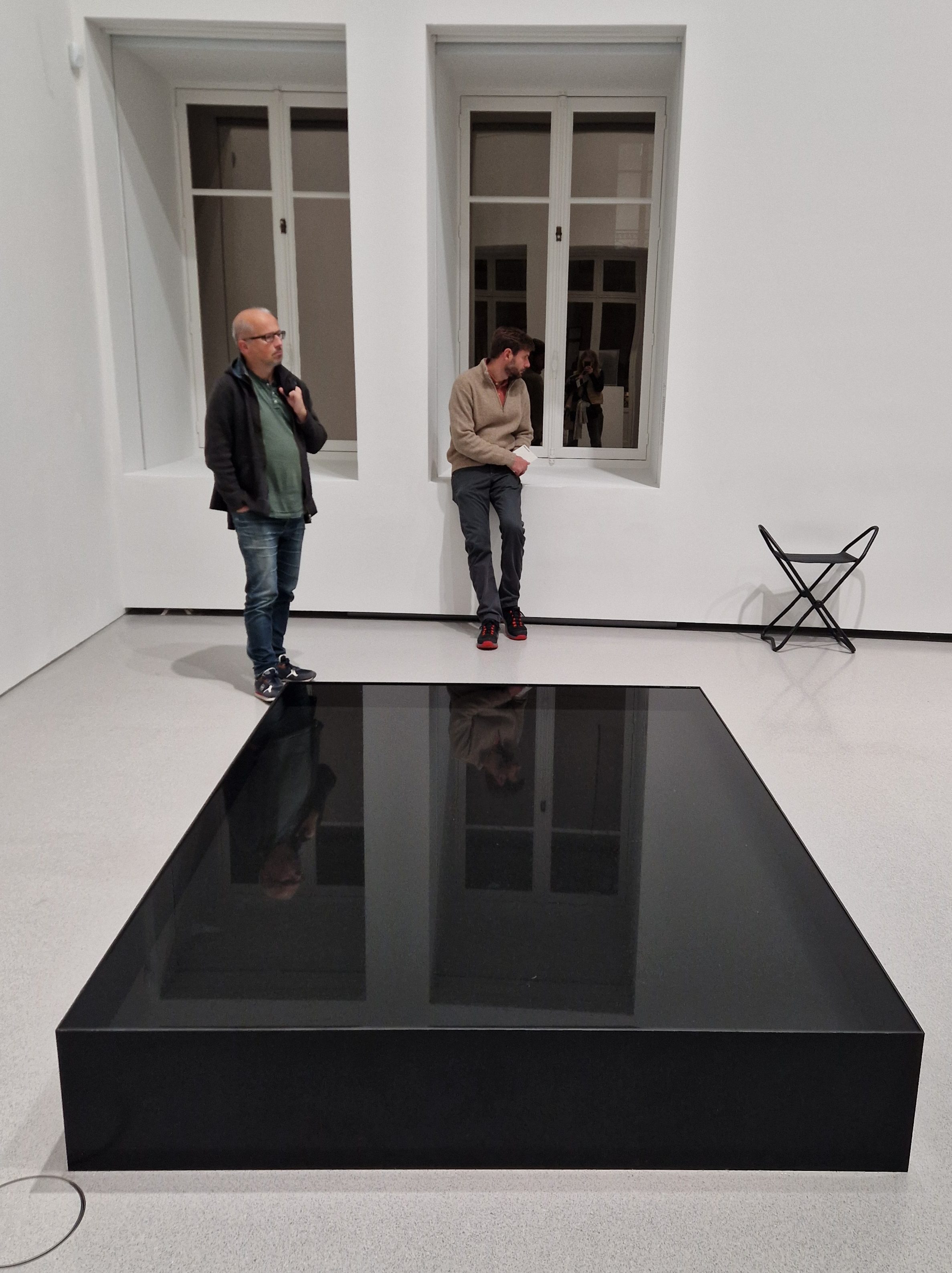

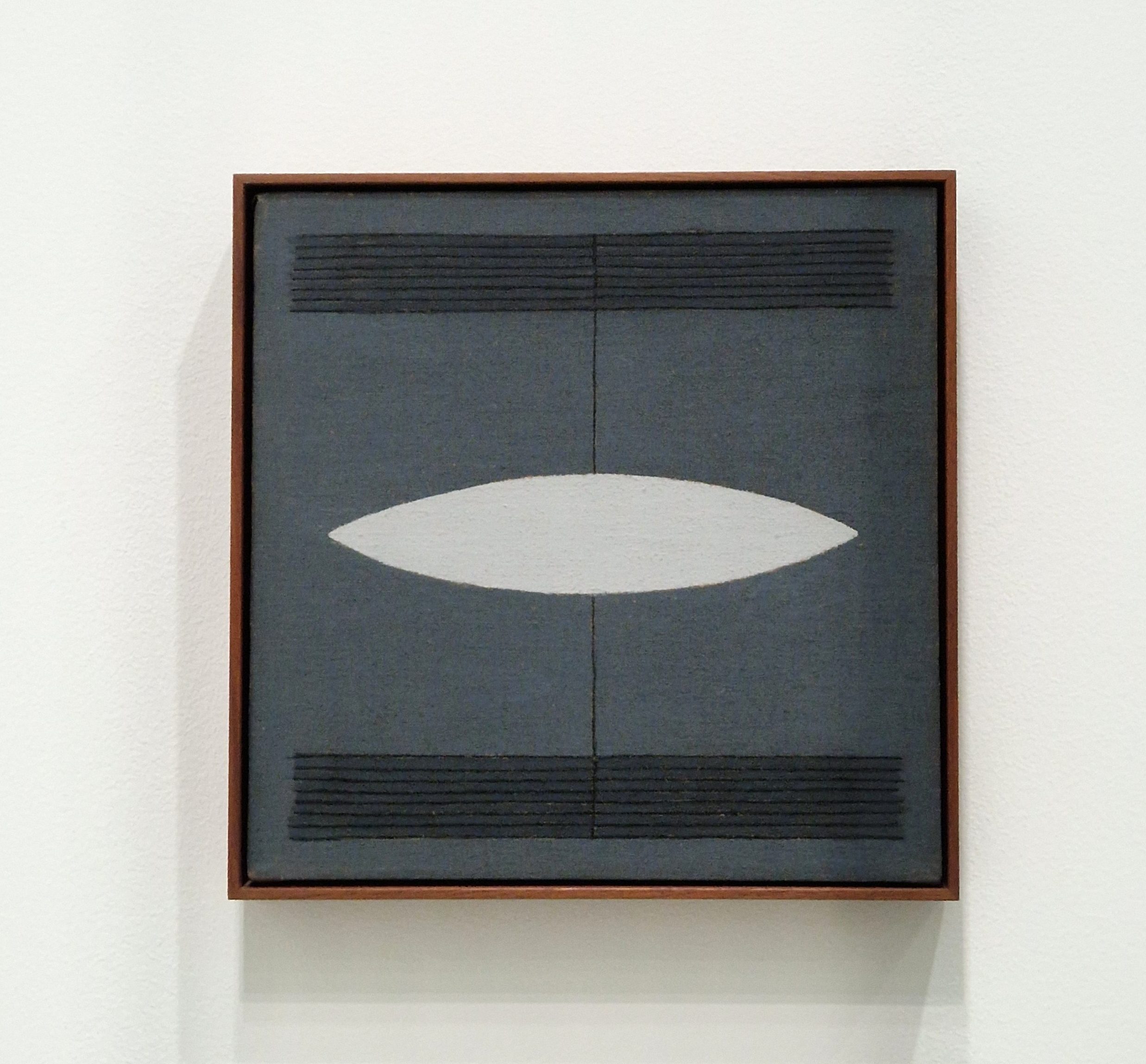
Overall, the exhibition succeeds in providing visitors with essential interpretive keys to a movement that not only shaped the artistic landscape of the 1960s and 1970s, but also profoundly influenced later artistic practices, design, and visual culture. By foregrounding spatial interaction and material presence, Minimalism proposed a radically new way of understanding artworks—not as autonomous objects, but as entities in constant dialogue with their environment. The diversity of artists and geographies represented reinforces the movement’s global resonance, highlighting how its legacy continues to shape both artistic production and our everyday surroundings today.
My personal highlights:
- Lygia Pape, Ttéia 1, C, 2003
- Lygia Pape, Ballet Neoconcreto I, 1958
- On Kawara, Today‘s series
 MUSEmemoirs