Info:
- Dates: 20.09.25 – 11.01.26
- Curator: Tere Arcq & Carlos Martín
- Where: Palazzo Reale (Milan)
- Price: 15 euros / 13 euros reduced
Palazzo Reale presents the first retrospective exhibition dedicated to Leonora Carrington in Italy, renowned Surrealist artist whose work gained renewed visibility in Italy in 2022, when the title of the 59th Venice Biennale was inspired by one of her books. This exhibition shines a light not only on Carrington’s artistic production but also on her intellectual practice, including her literary work and writings.
“If I am my thoughts, then I could be anything from chicken soup to a pair of scissors, a crocodile, a corpse, a leopard or a pint of beer.
If I am my feelings, then I am love, hate, irritation, boredom, happiness, pride, humility, pain, pleasure, and so on and so forth.
If I am my body, then I am a foetus to a middle-aged woman changing every second.
Yet, like everybody else I yearn for an identity although this yearning mystifies me always. If there is a true individual identity I would like to find it, because like truth on discovery it has already gone.”– Leonora Carrington
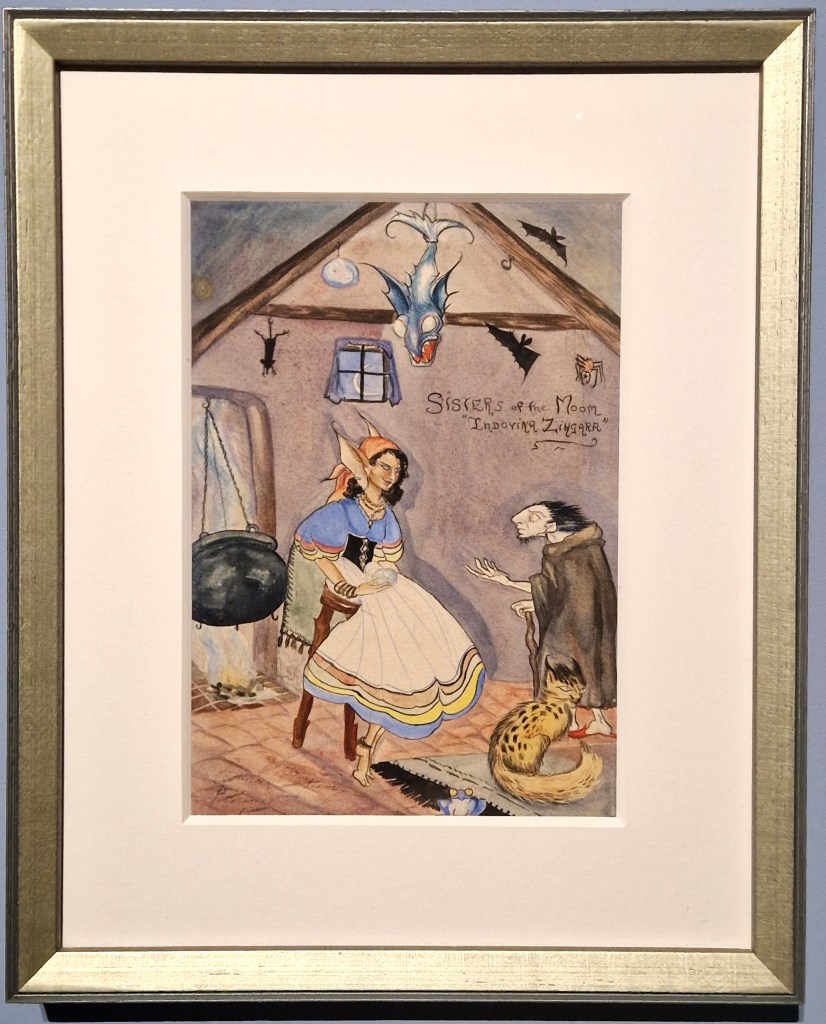
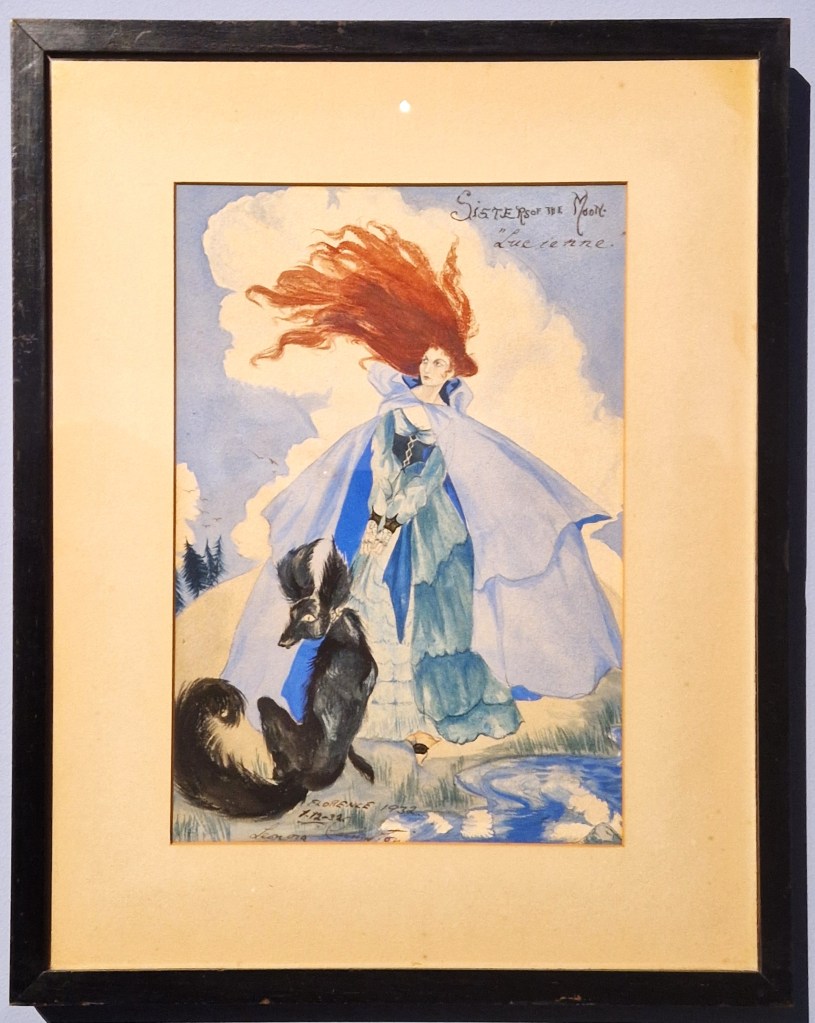
The exhibition opens with an insightful overview of her life and career, two dimensions that are deeply intertwined, as Carrington’s nomadic and often turbulent life profoundly shaped the evolution of her work. A contextual wall text immediately situates the visitor historically, highlighting the key moments of her biography. Nearby, her earliest artistic experiments are presented, including a sketchbook from her childhood that already reveals her vivid imagination, alongside an extensive series of watercolours produced during her time in Florence. It was in this city that Carrington decided to pursue an artistic career, against her father’s wishes and following years of rebellion against a traditional education. These early works already introduce the major themes that would run throughout her career: female figures, mythological beings, magic, and undefined, dreamlike landscapes.
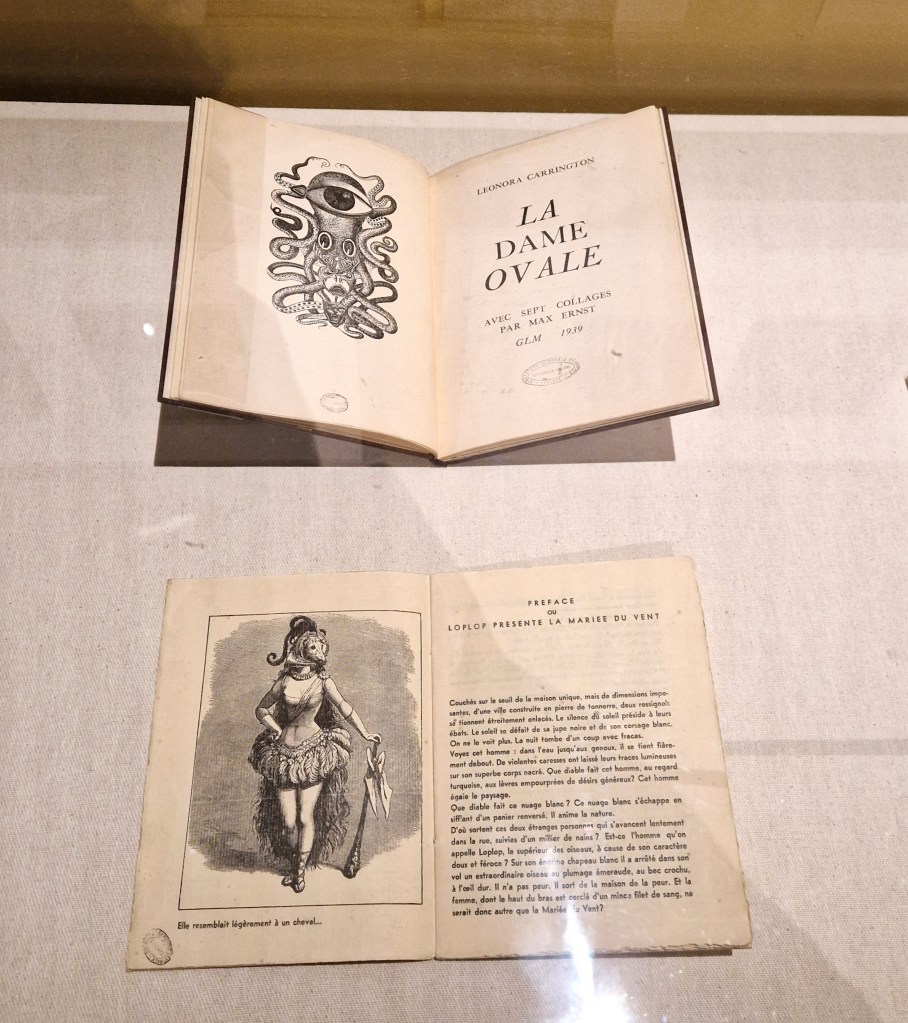
After Florence, Carrington moved to London to continue her studies, where she visited one of the first major exhibitions dedicated to Surrealism. Captivated by this artistic universe, she soon met Max Ernst, with whom she formed both a romantic and artistic partnership. They moved together to Paris, then the epicentre of the Surrealist movement. The second section of the exhibition focuses on this period, presenting Carrington’s works alongside some paintings by Ernst, as well as her books and writings. Immersed in the Surrealist circle, Carrington encountered key figures such as Lee Miller, Man Ray, and Nusch Éluard. This intense period came to an abrupt end with the outbreak of the Second World War. As a German, Ernst was imprisoned, while Carrington fled to Spain. There, she suffered severe trauma caused by violence, followed by a psychological breakdown that led to her confinement in the psychiatric hospital of Santander. She later recounted this experience in her book Down Below (1944). Eventually, she managed to escape to the Americas, first to New York and then to Mexico, where she would live for the rest of her life until she died in 2011.
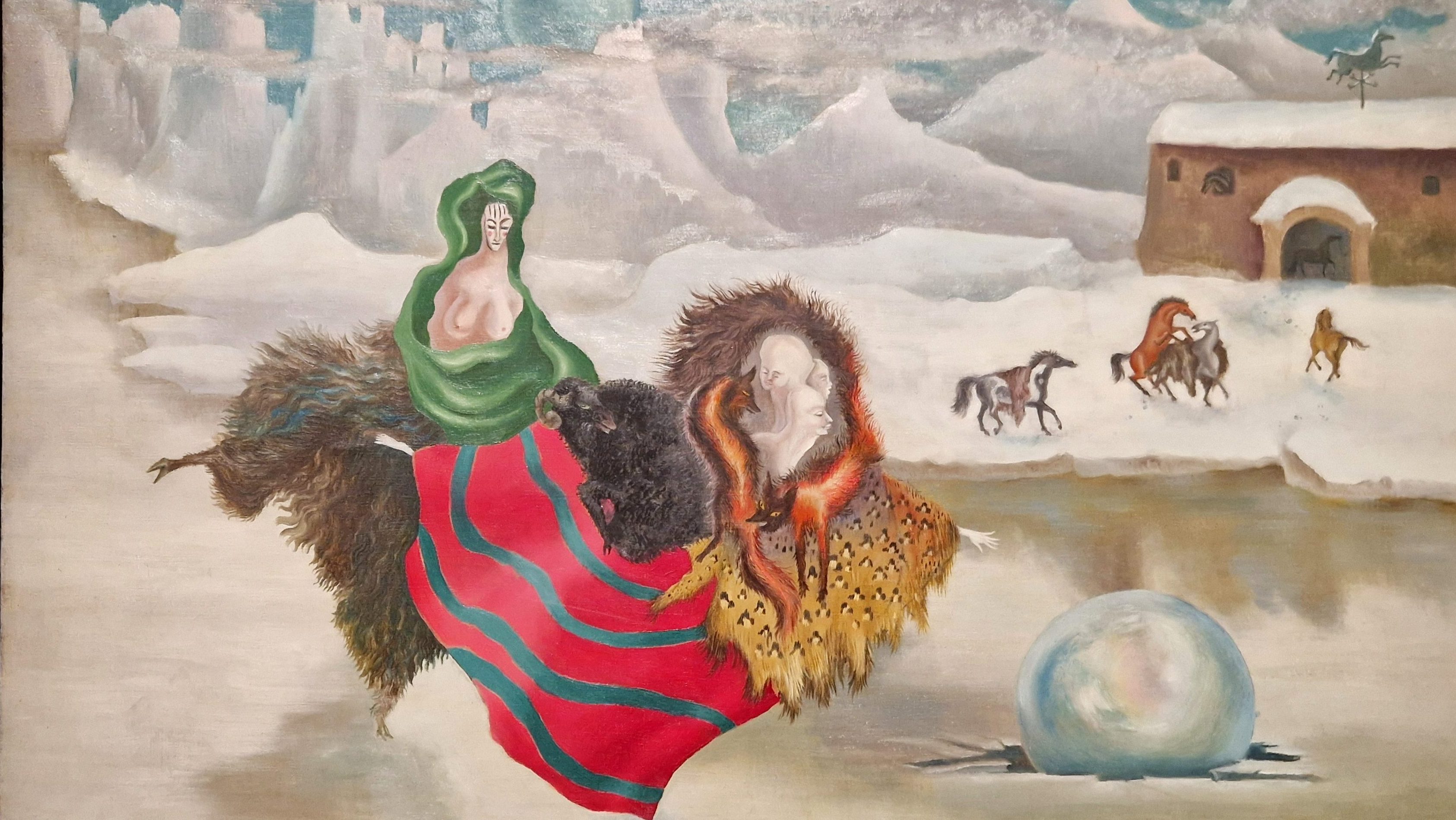
Mexico proved to be a crucial turning point in Carrington’s life and work. During the war, the country became a refuge for many European artists, including Surrealists such as Luis Buñuel and, most importantly, Remedios Varo, whose friendship deeply influenced Carrington. This period marks a more mature phase in her practice, without abandoning her recurring themes. The third section of the exhibition focuses on the importance of storytelling and folklore in her imagination. Upon arriving in Mexico, Carrington developed a sense of double identity, suspended between her distant homeland and her new life. Childhood tales resurfaced and were transformed into a sophisticated pictorial language, visible in major works such as Las tentaciones de San Antonio (1945). Her early education also remains evident in her choice of supports and formats, such as predellas and tempera painting, clear echoes of her Florentine years and her fascination with Renaissance art.
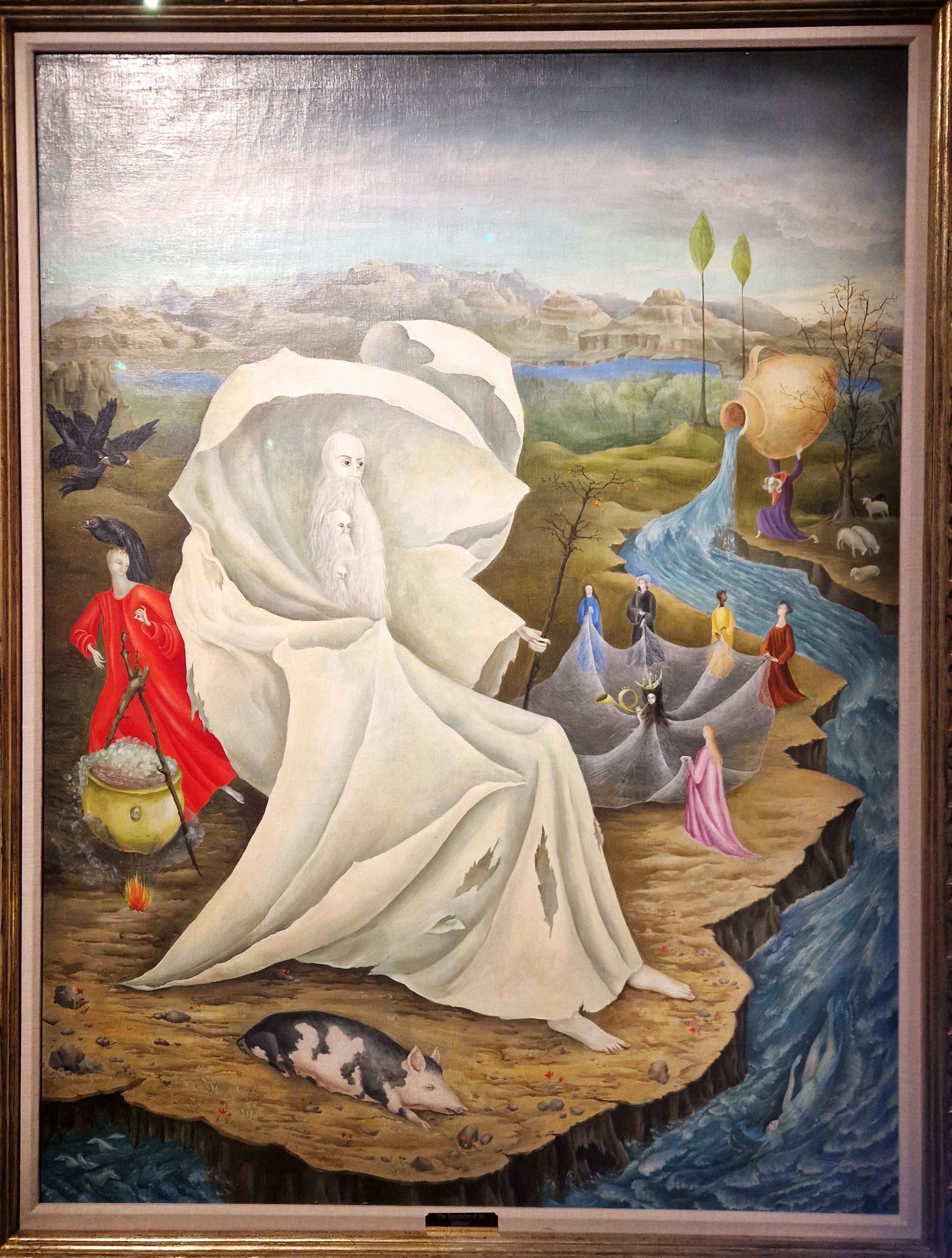
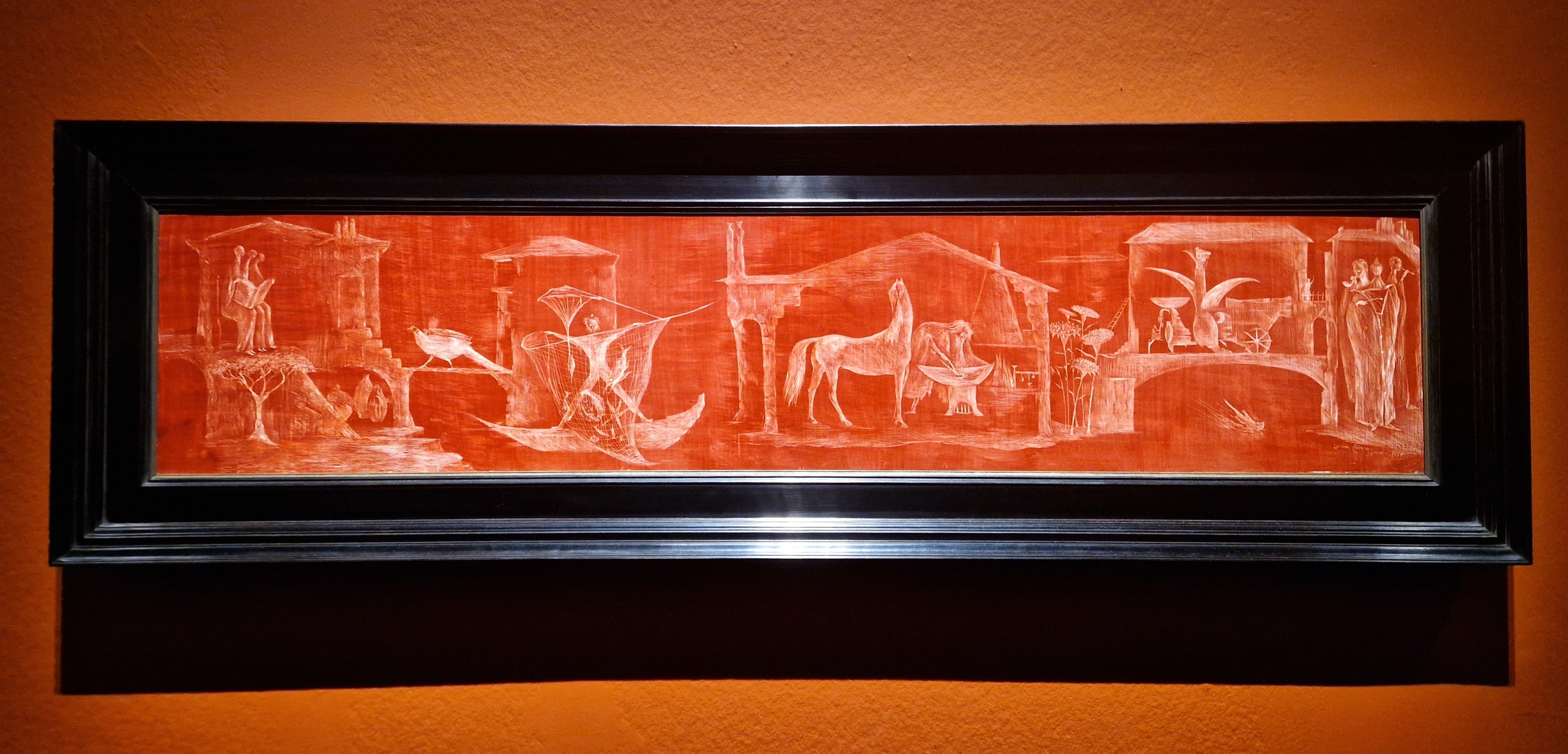
The final sections of the exhibition give prominence to mythological figures and alchemy, recurring motifs in Carrington’s work. Drawing from a wide range of spiritual and magical traditions, she constructed hermetic, mystical scenes that invite slow and attentive viewing, encouraging the visitor to decipher their dense symbolism. The kitchen, frequently depicted as a site of alchemical rituals, becomes a powerful symbol: traditionally associated with female domestic confinement, it is here reimagined as a space of transformation and empowerment. This imagery is also rooted in Carrington’s experience in Mexico, where new culinary traditions, ingredients, and herbal knowledge brought her closer to ancestral forms of magic and ritual.
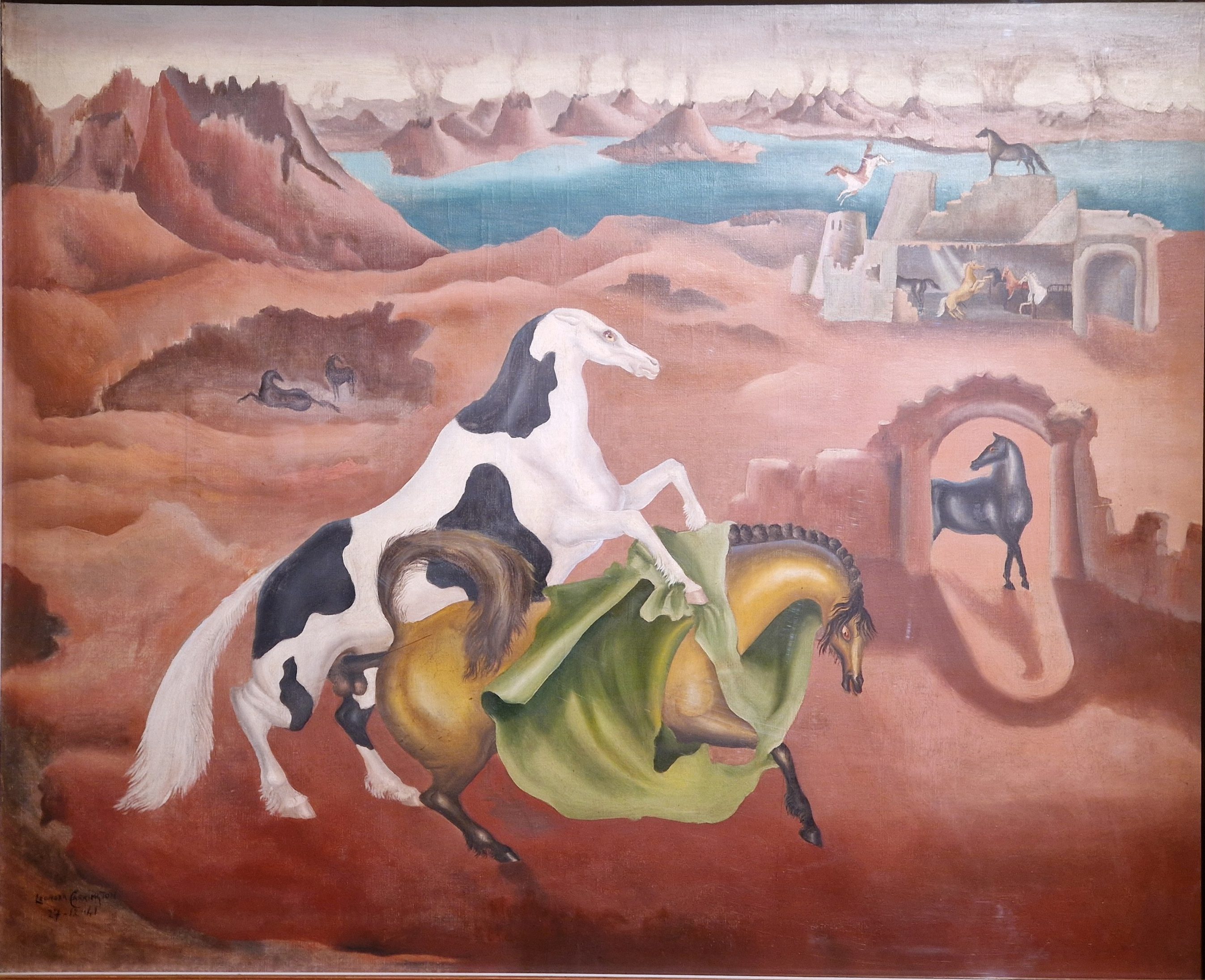
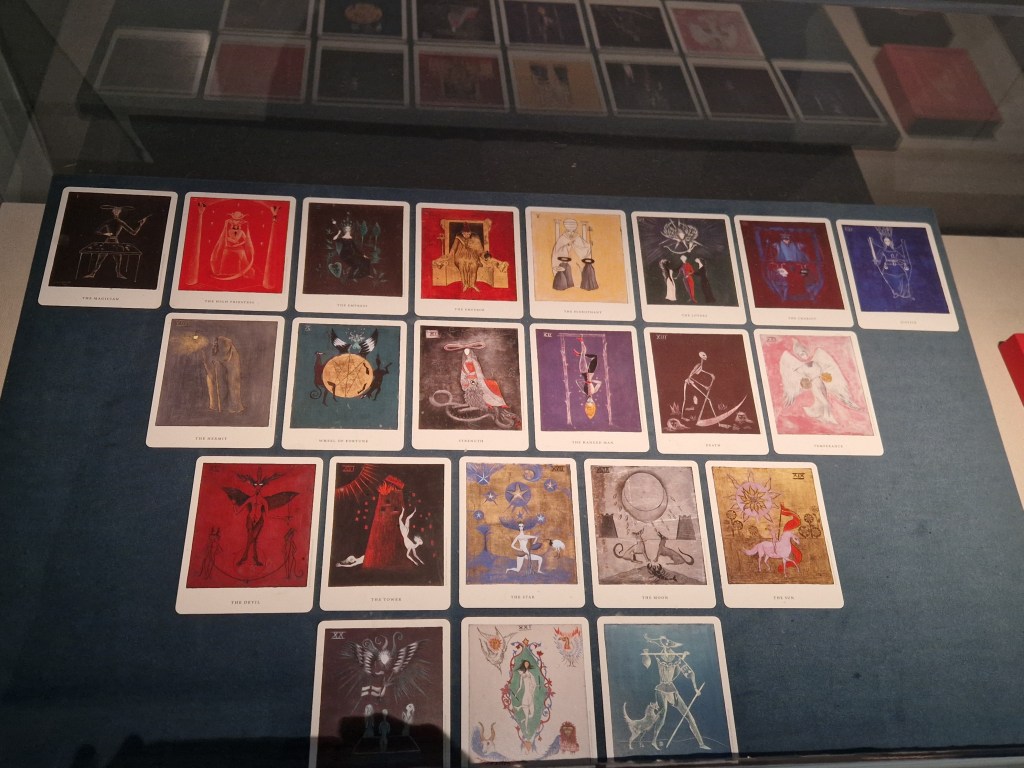
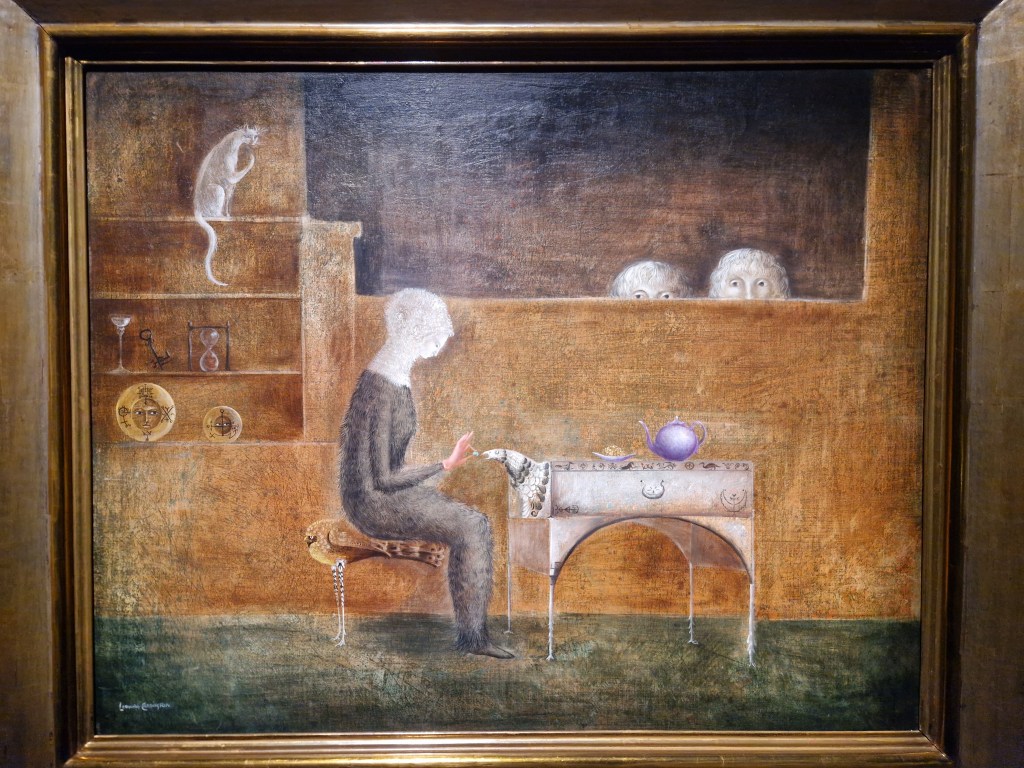
The exhibition remains accessible without being reductive. Its concise format successfully sparks curiosity through the distinctive qualities of Carrington’s work: densely detailed compositions, imaginary landscapes, and hybrid female figures that challenge conventional representations. This retrospective offers a compelling portrait of an artist whose life and work resist categorisation, and it firmly situates itself within the broader contemporary reassessment of crucial women artists who have long been marginalised in art history.
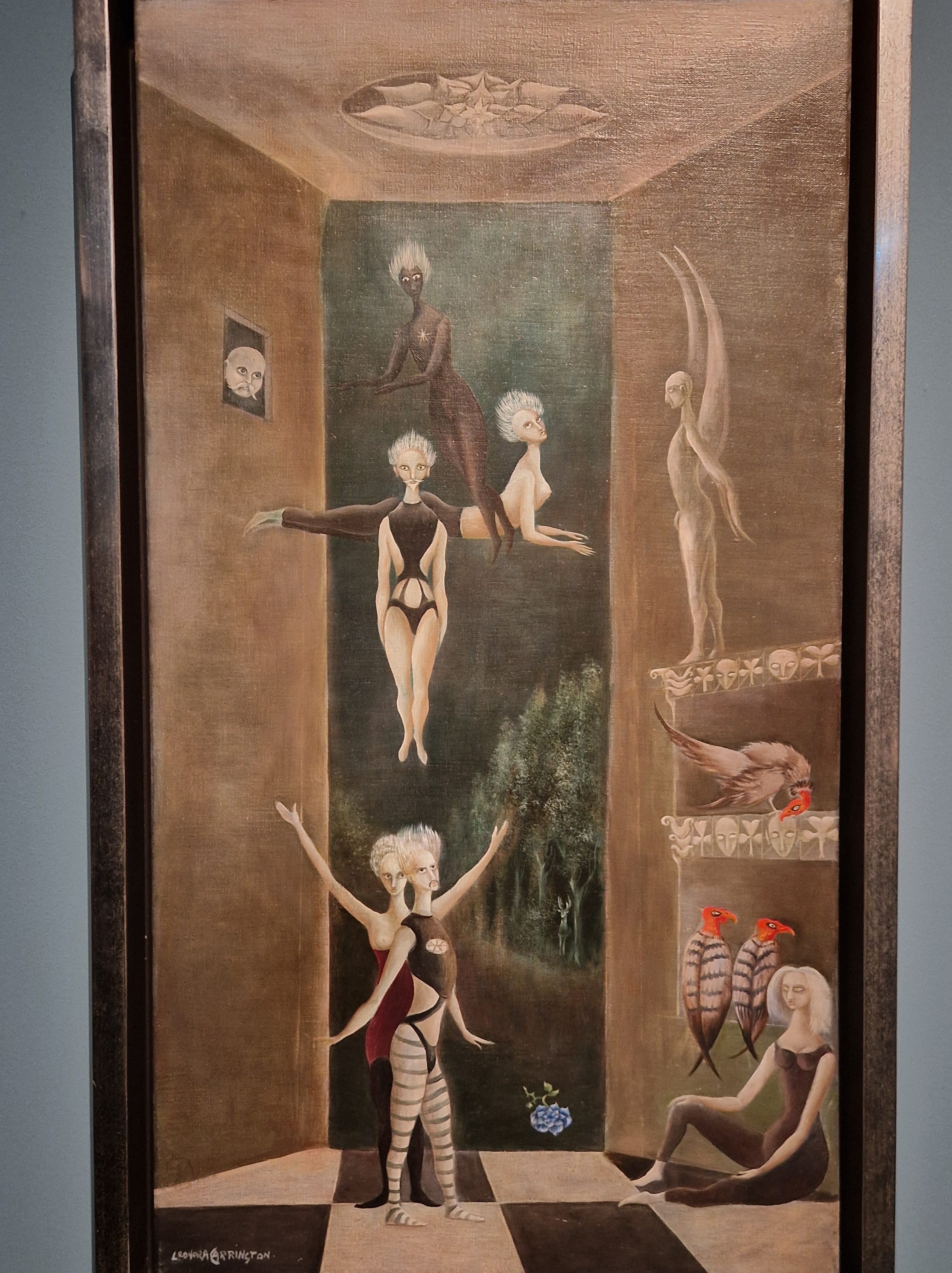
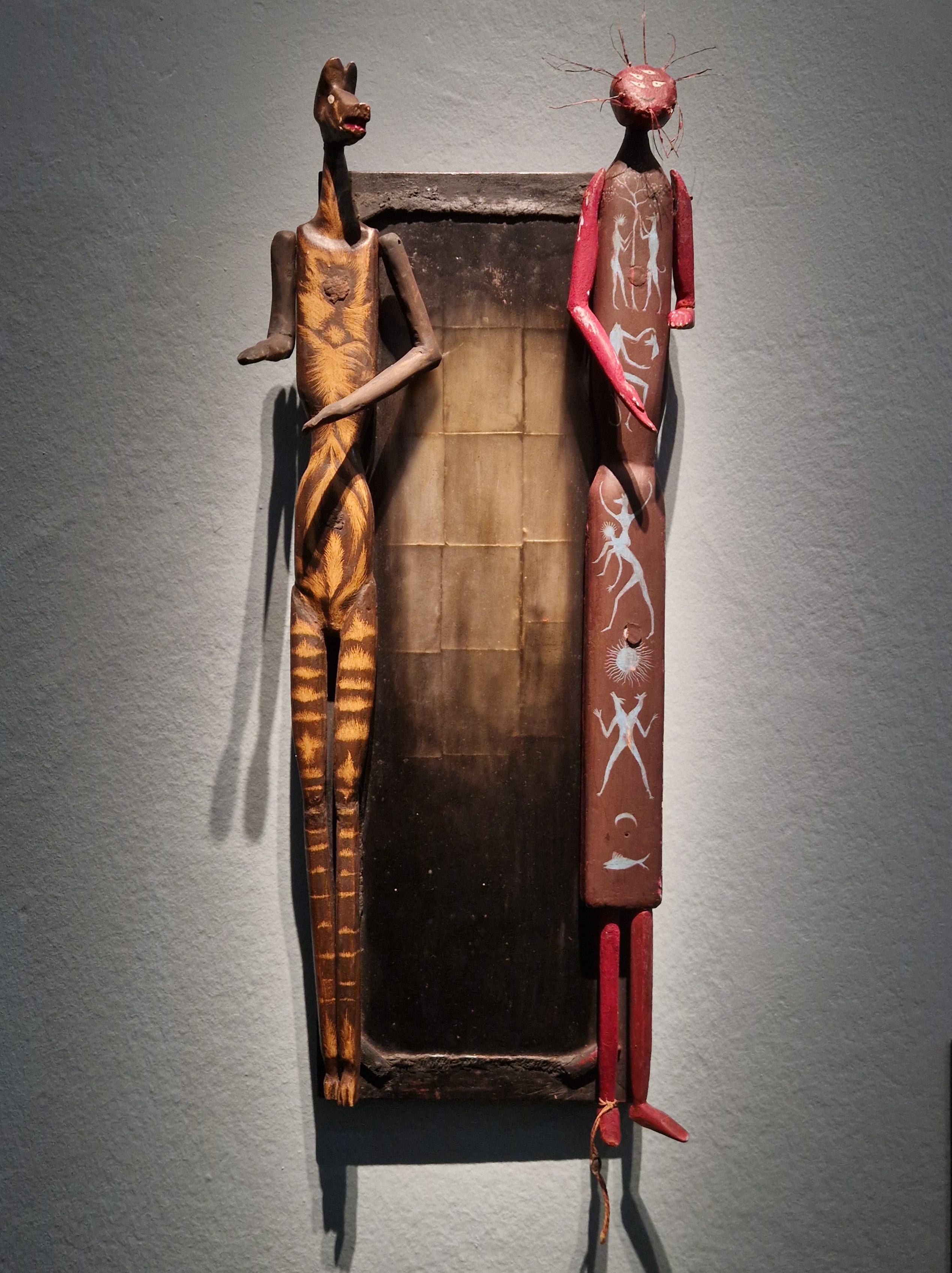
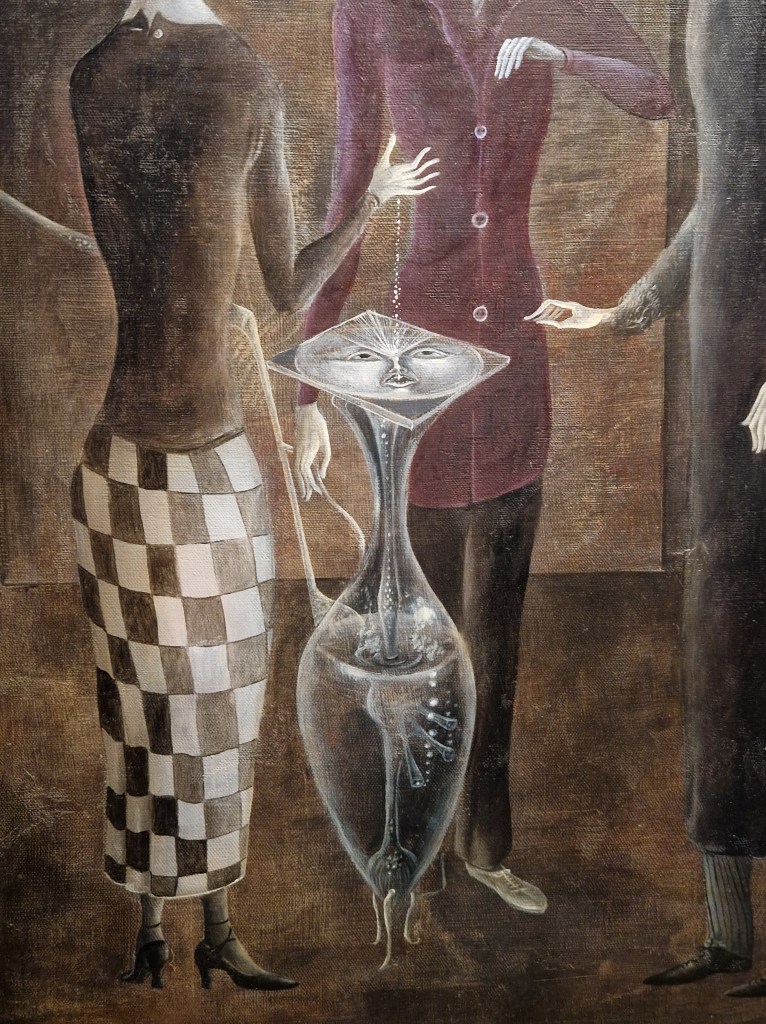
My personal highlights:
- Sous la rose des vents, 1955
- Mars Red Predella, 1946
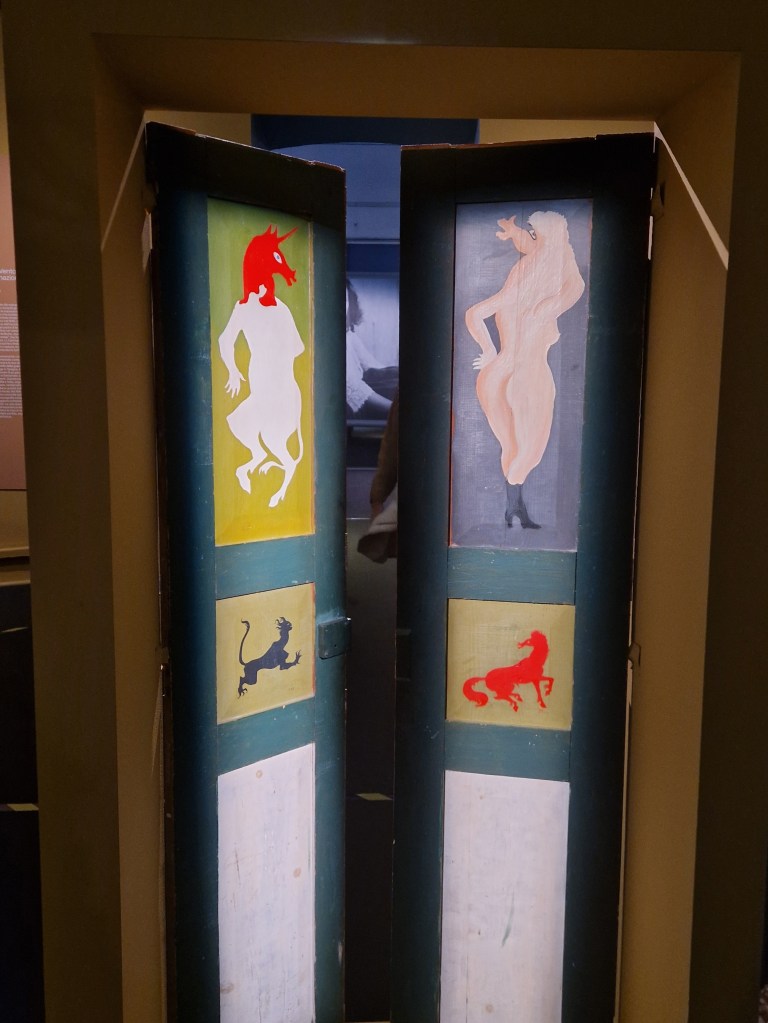
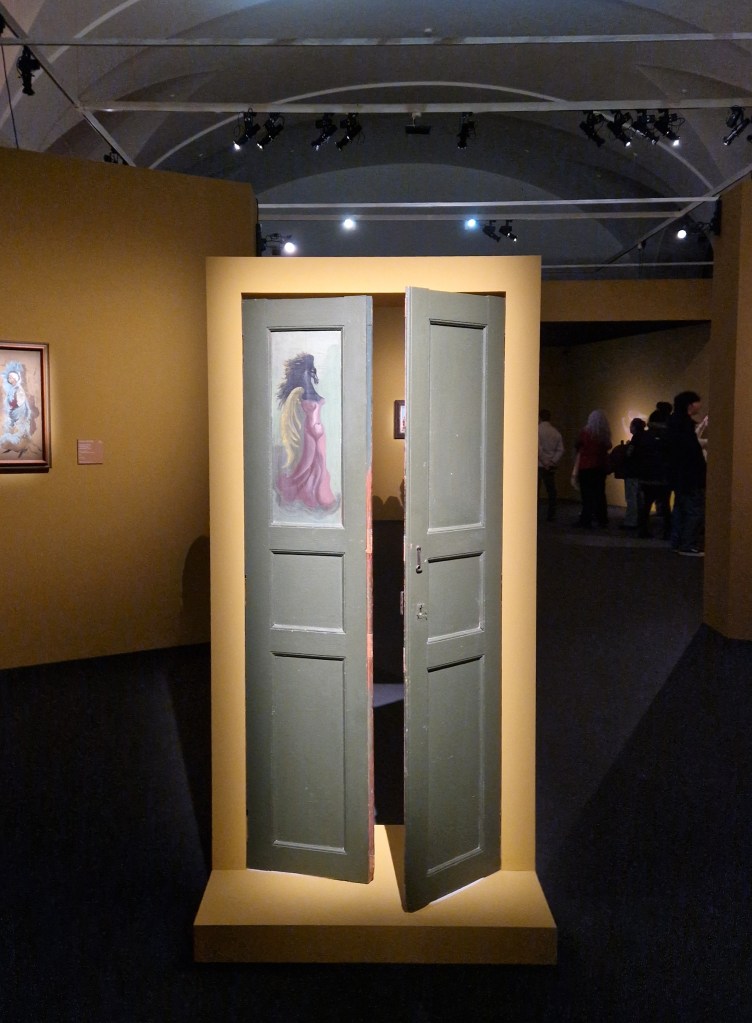
- Cupboard doors at Saint-Martin-d’Ardèche, 1938
- La joie de patinage, 1941
 MUSEmemoirs