Info:
- Dates: 24.03.26 – 26.07.26
- Curator: Claudine Grammont
- Where: Grand Palais
- Price: 19 euros/ 16 euros reduced
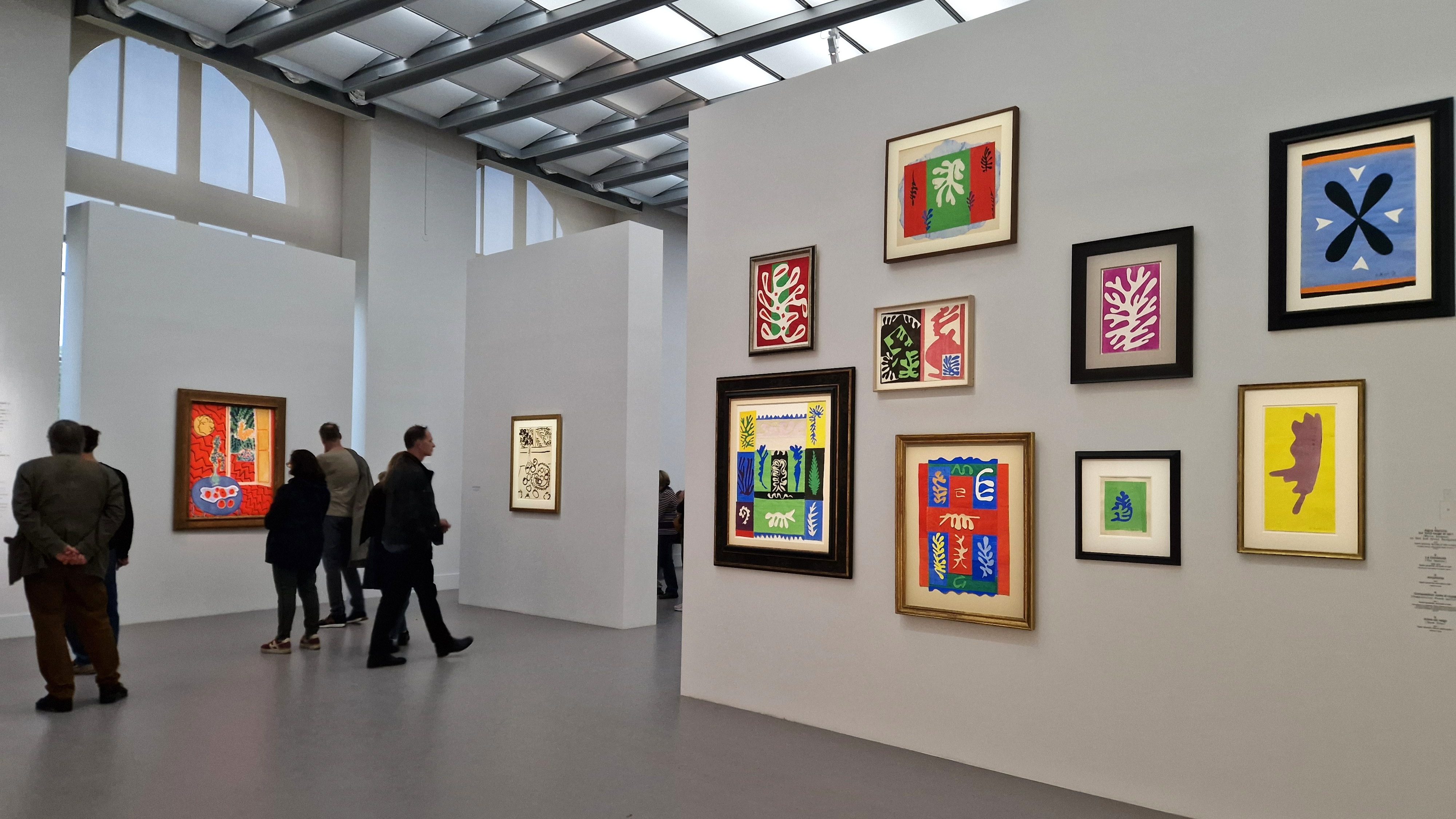
Through this comprehensive exhibition, the Grand Palais highlights a crucial phase in the long artistic career of Henri Matisse, placing particular emphasis on the final years of his production. Bringing together more than 300 works, the exhibition immerses the visitor in the artist’s creative process through paintings, drawings, papiers découpés, illustrated books, and archival material. Above all, the show highlights the remarkable vitality and constant reinvention that characterised Matisse’s practice, even in the last decade of his life.
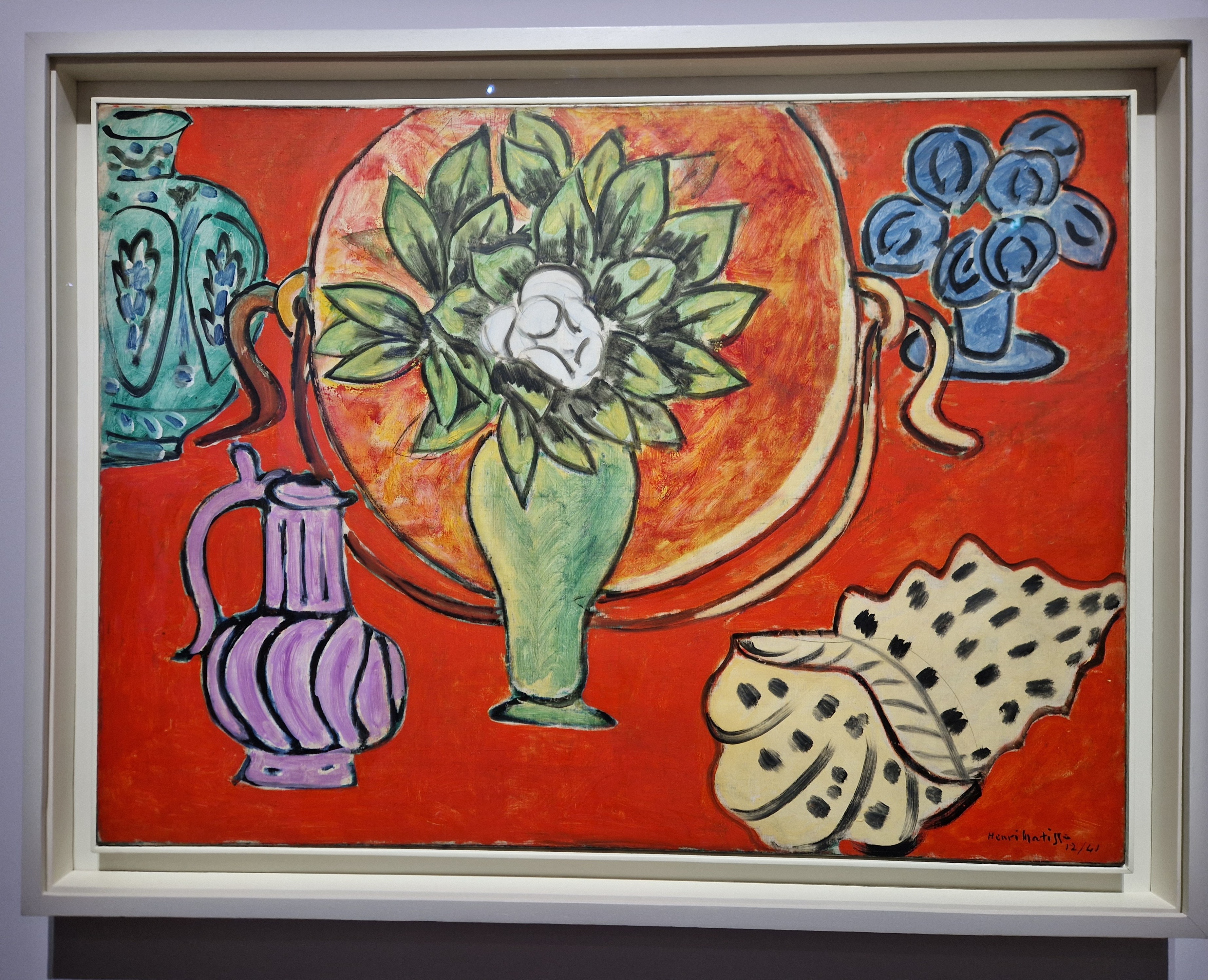
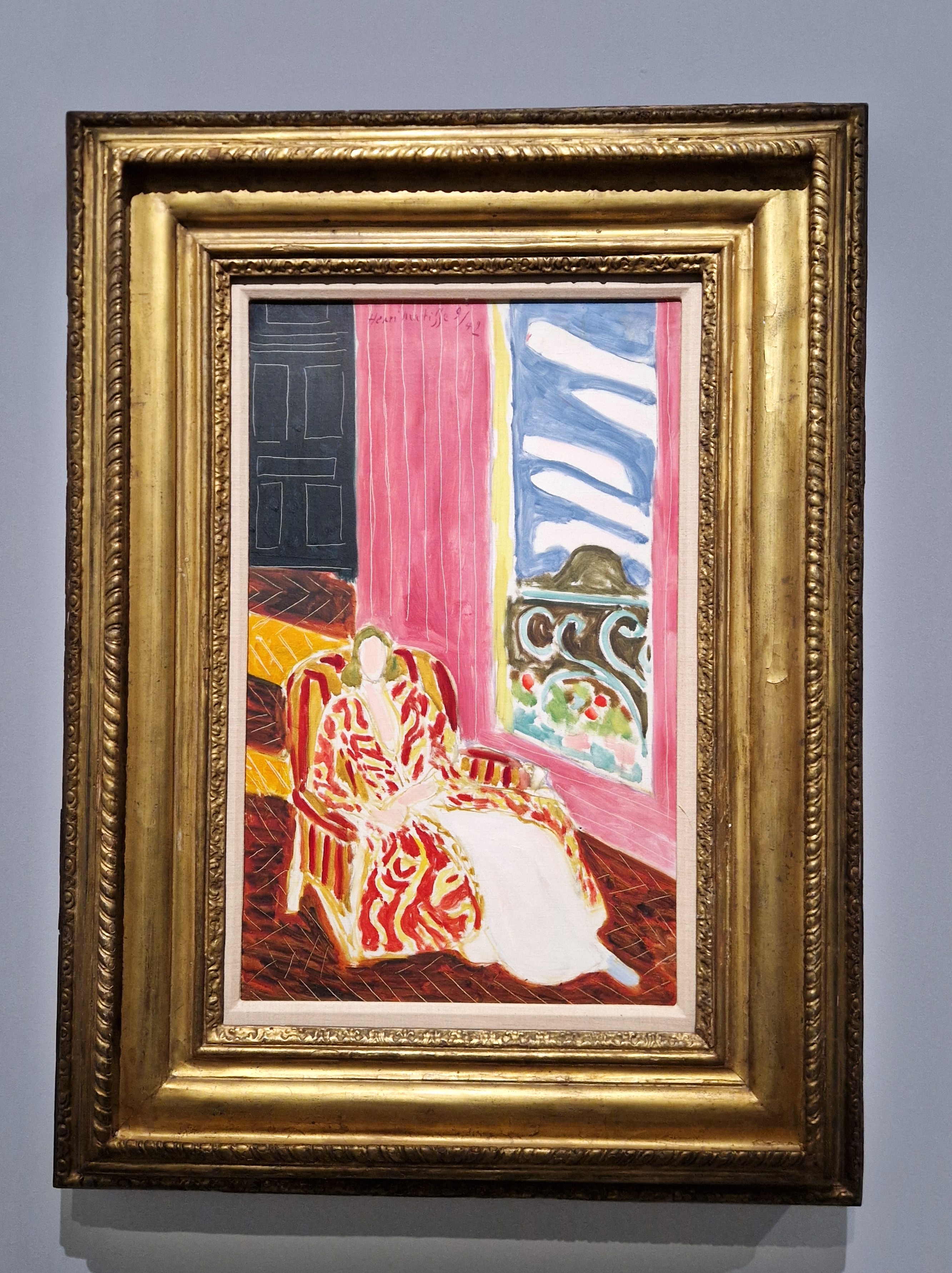
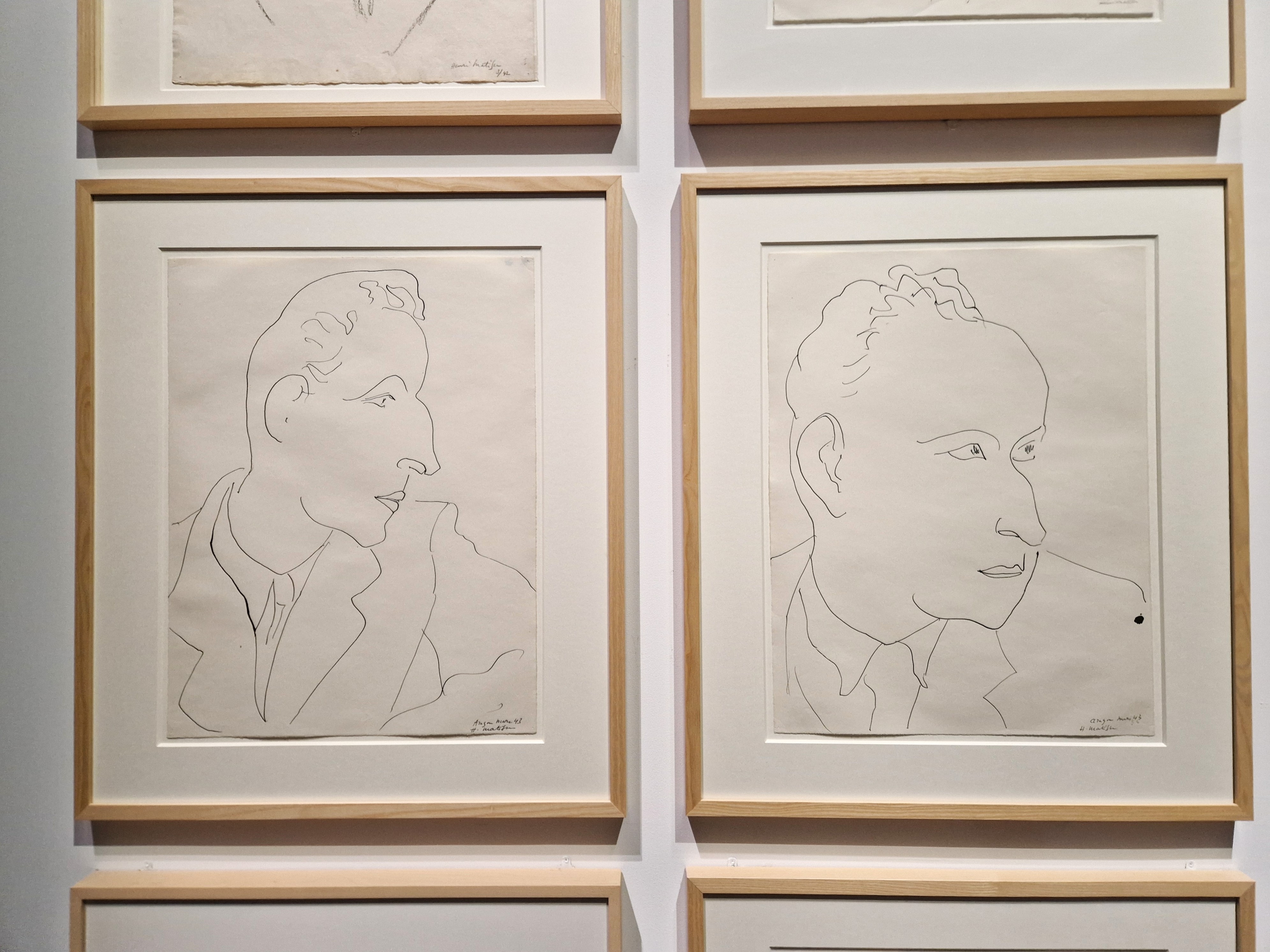
The exhibition opens with a historical contextualisation, focusing in particular on the artist’s position during the outbreak of the Second World War. Unlike many artists and intellectuals of the time, Matisse chose to remain in France, settling mainly in Nice rather than fleeing to the United States. During these years, he maintained close ties with intellectual figures openly opposed to the regime, among them Louis Aragon, whom Matisse portrayed several times and with whom he also collaborated directly.
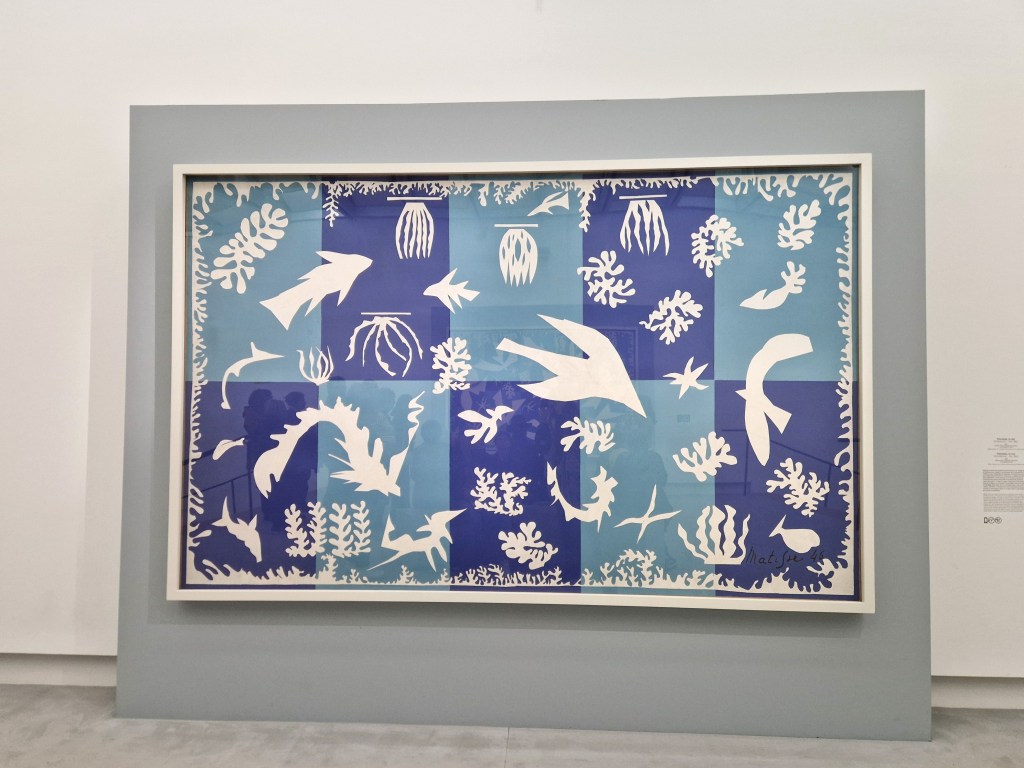
One of the central focuses of the exhibition is the attention devoted to the famous papiers découpés, a technique that Matisse increasingly embraced during this period, partly due to his declining health and reduced mobility. This new medium allowed him to push further his lifelong exploration of colour and form, arriving at an essential and highly distilled visual language. The walls of his studio in Vence, the Villa Le Rêve, became a testament to this prolific practice, covered with cut-out compositions inspired by the surrounding nature and by memories of his travels to Tahiti decades earlier.
“There is no separation between my old paintings and my cut-outs, except that with greater completeness and abstraction, I have attained a form filtered to its essentials.”
-Henri Matisse, 1952
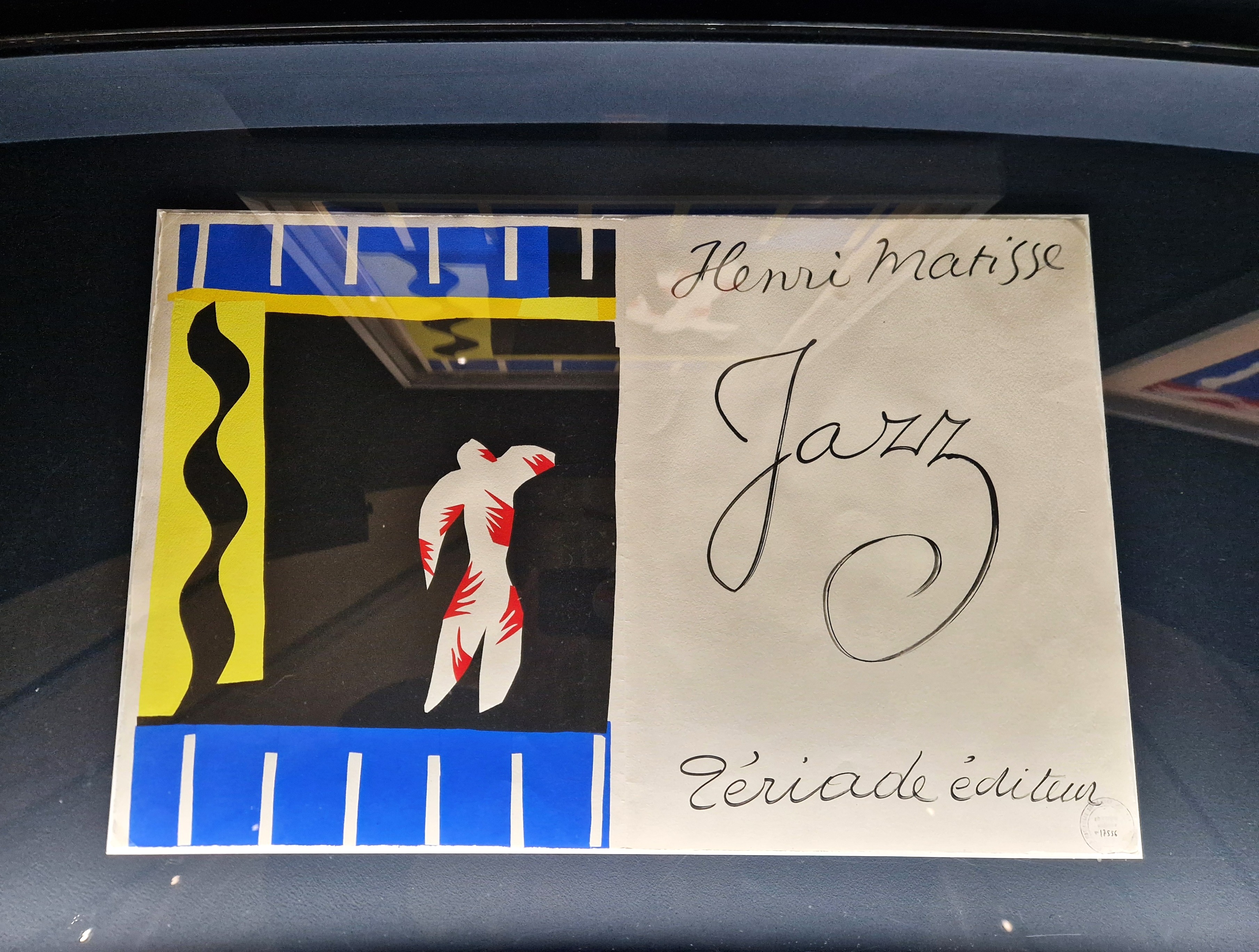
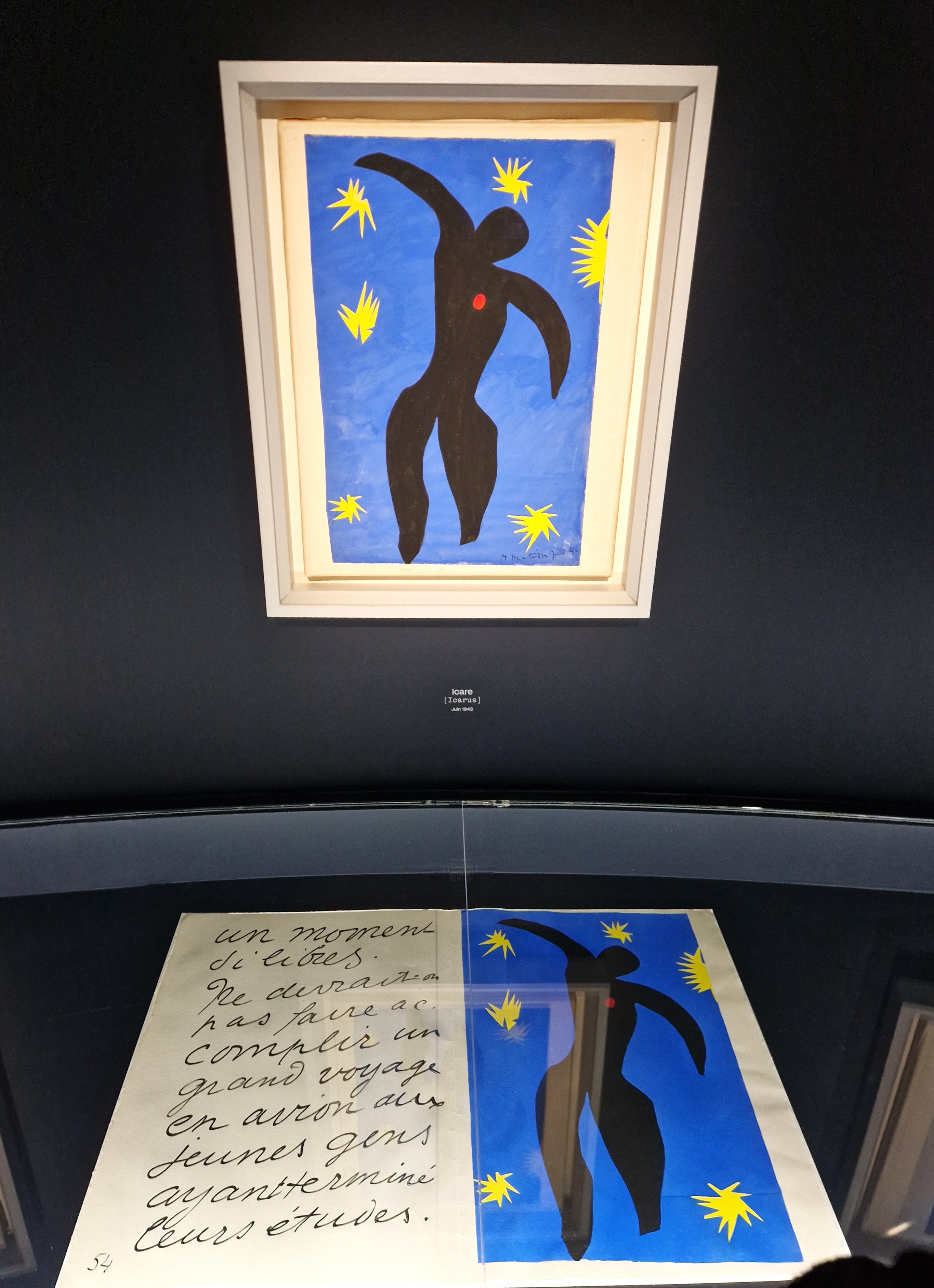
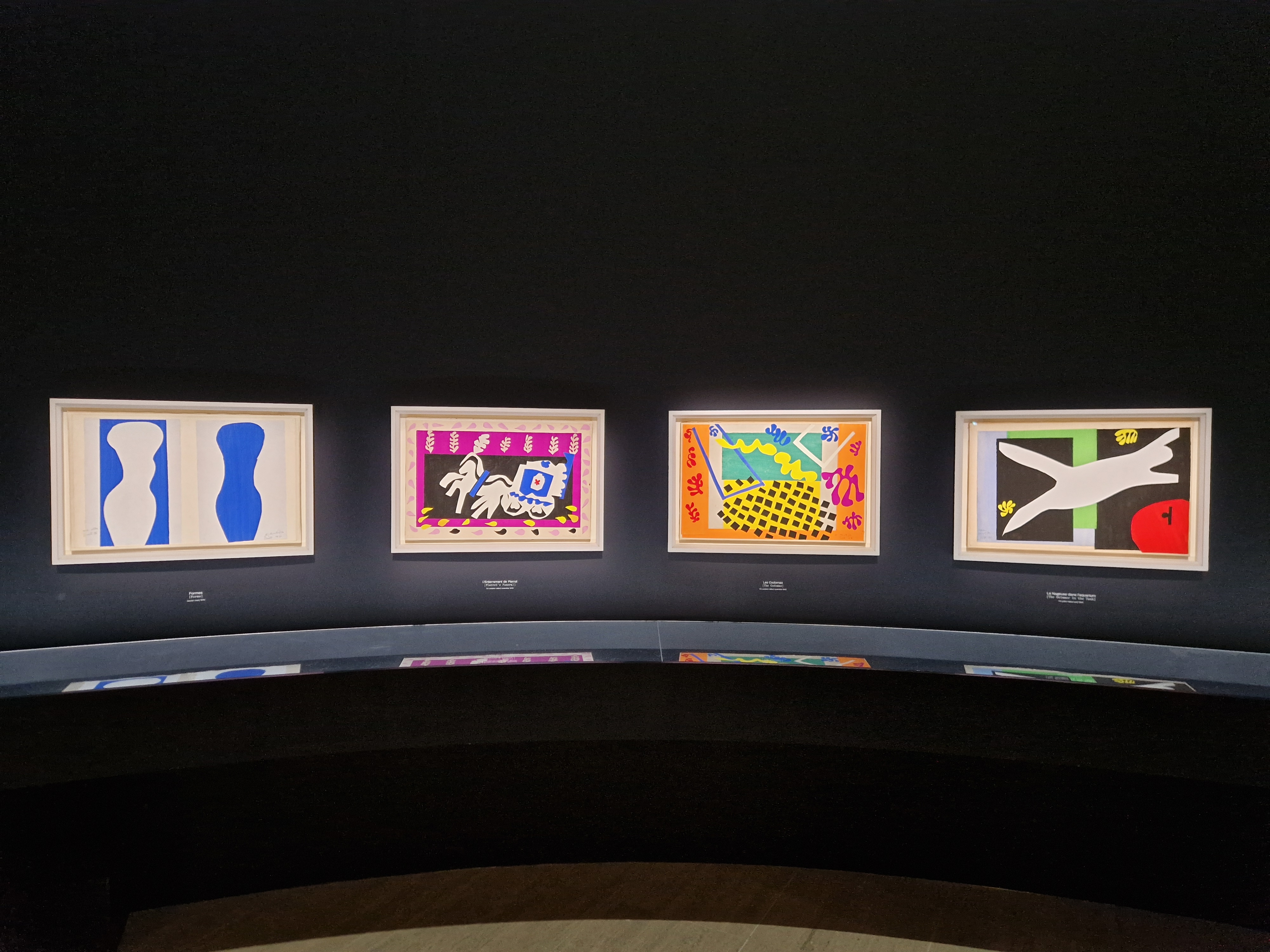
This period is also marked by the creation of the celebrated artist’s book Jazz, which is particularly well presented in the exhibition through original plates, preparatory material, and editions of the publication itself. Published in 1947 by Tériade, Jazz remains one of the most emblematic artist books of the 20th century, with certain images – such as Icarus – having acquired an iconic status of their own. While the circus serves as a recurring motif throughout the book, its title evokes the spirit of improvisation, rhythm, and creative freedom that animated Matisse’s practice.
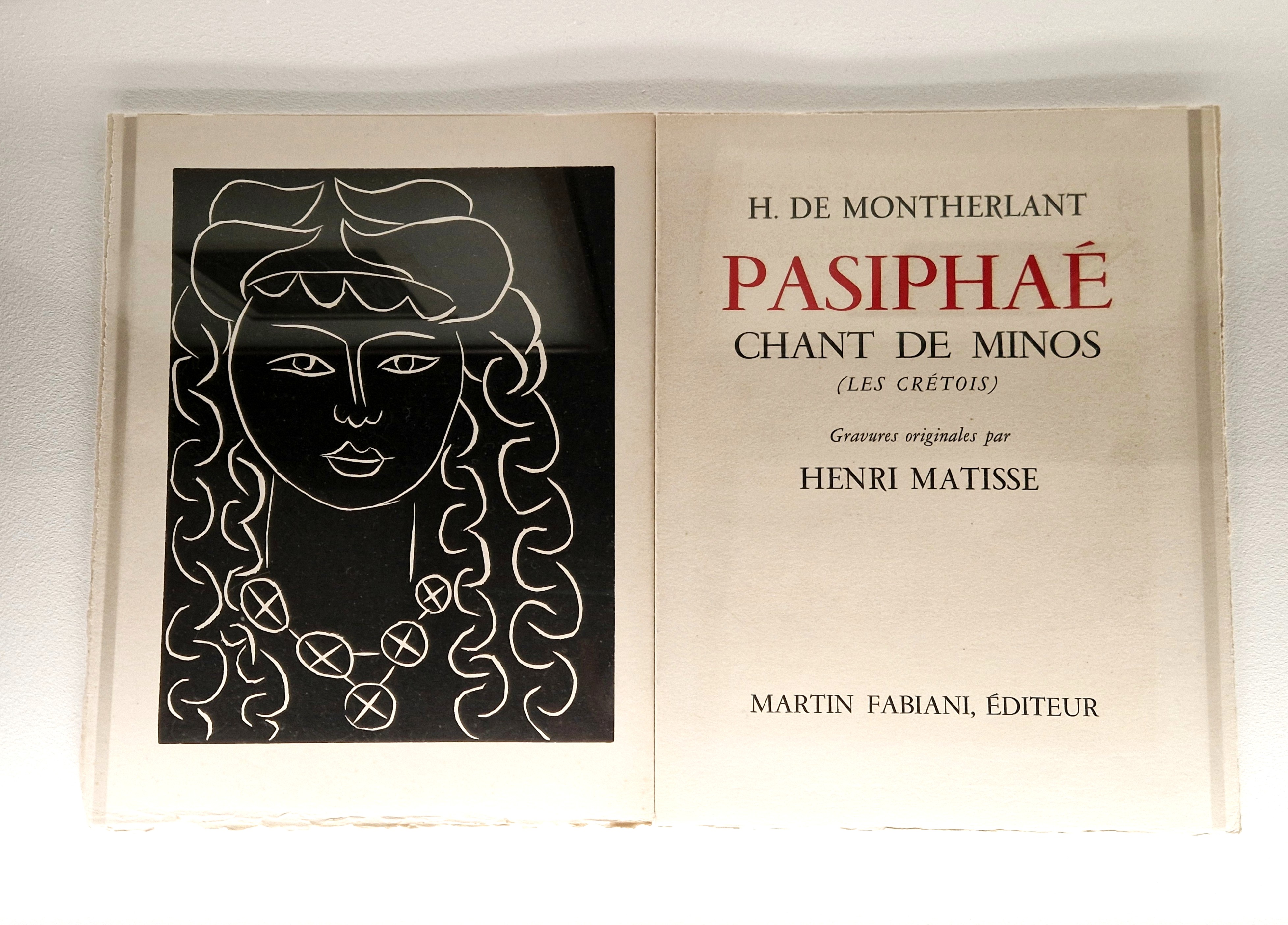
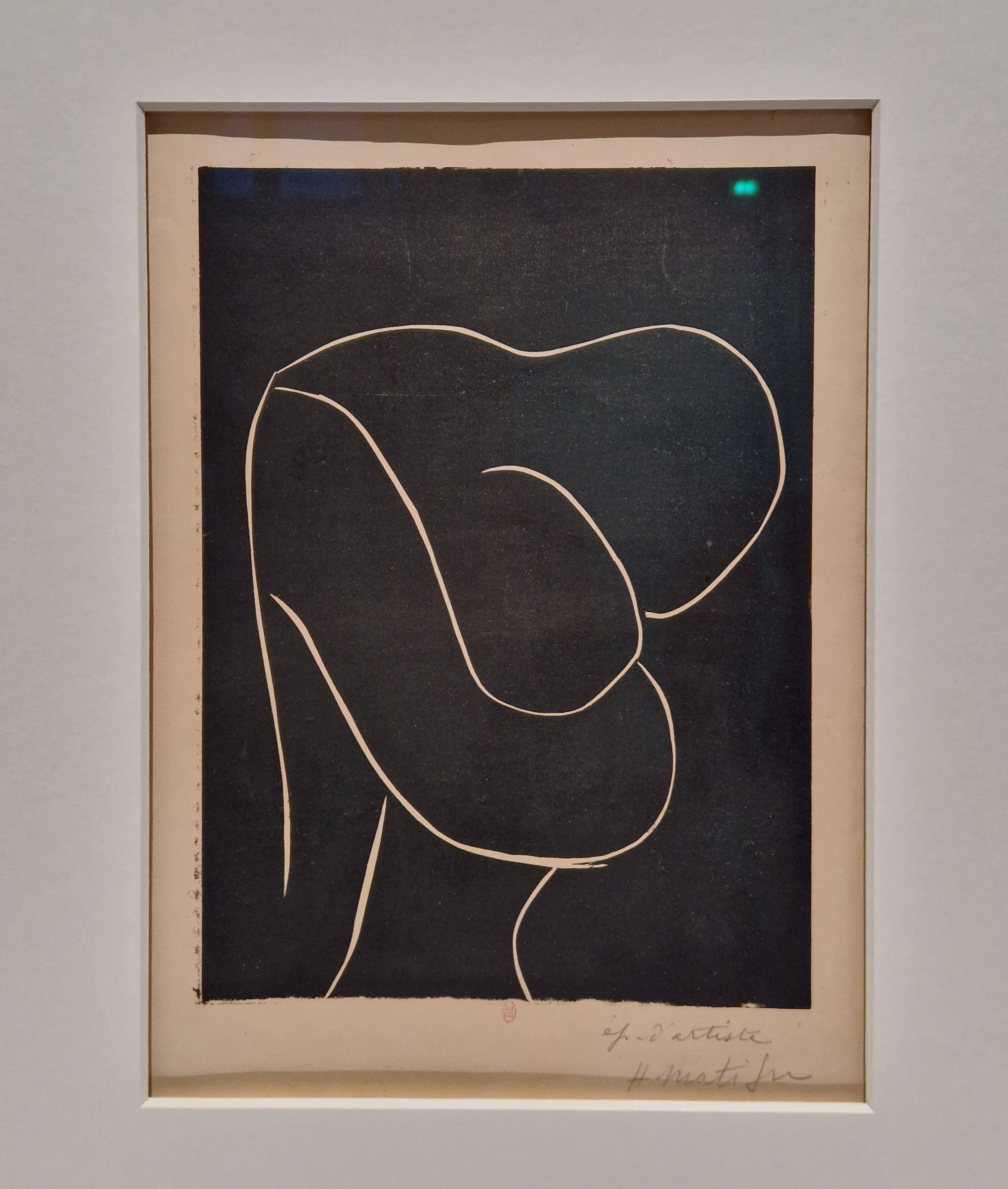
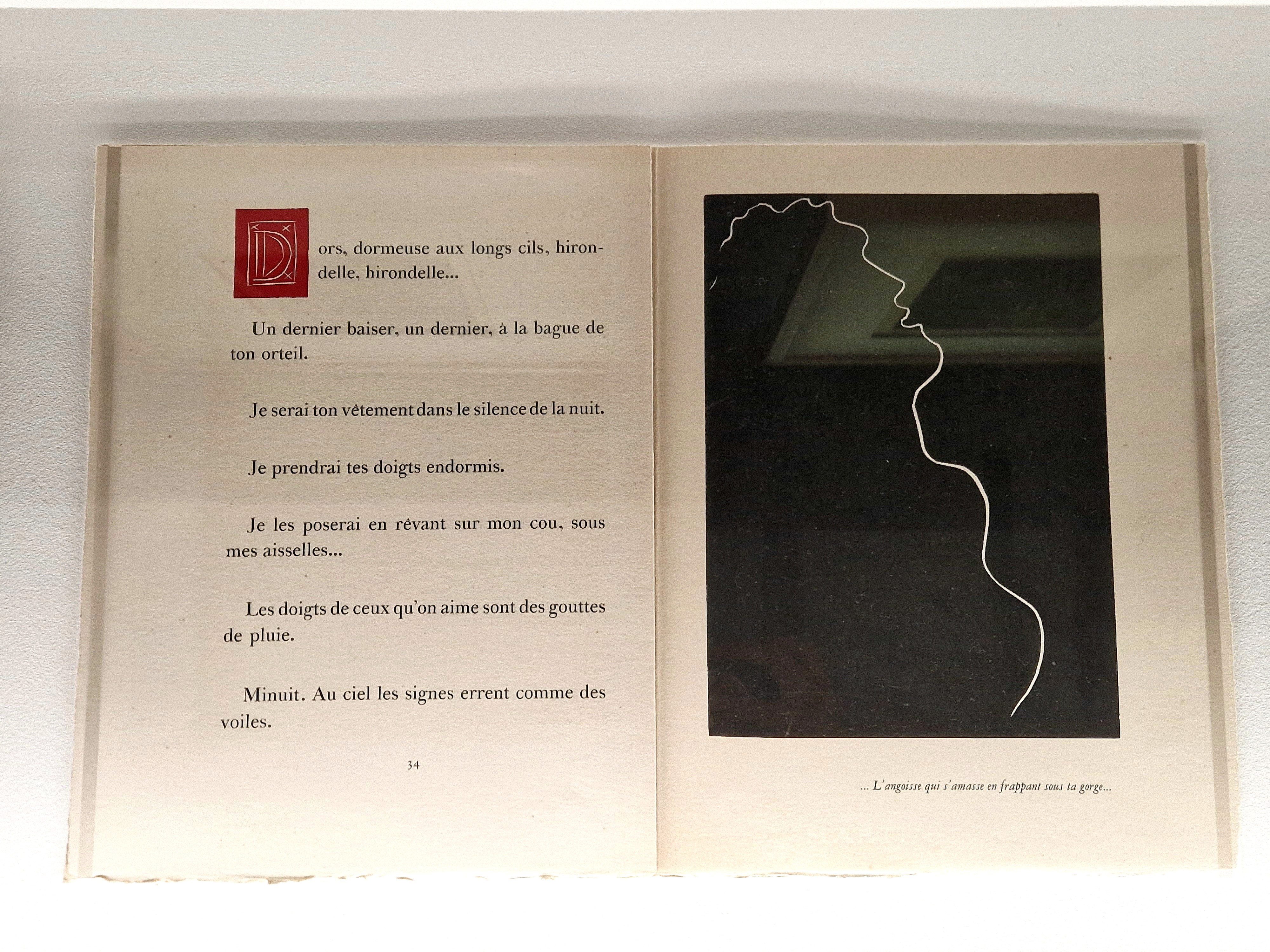
One of the most interesting aspects of the exhibition is the diversity of artistic forms presented. Significant space is dedicated to the artist’s notebooks, as well as to the illustrated books he produced in collaboration with poets and writers, including Stéphane Mallarmé’s Poésies and Henry de Montherlant’s Pasiphaé, Chant de Minos. For Matisse, illustration was never merely decorative; rather, it constituted a visual extension of the text itself, and he frequently took an active role in the design and editing of the final publication. The exhibition also includes several maquettes for the coloured glass of some chapels, notably those conceived for the Chapelle du Rosaire. Matisse was deeply fascinated by this medium and by the transformative relationship between colour and light created through glass.
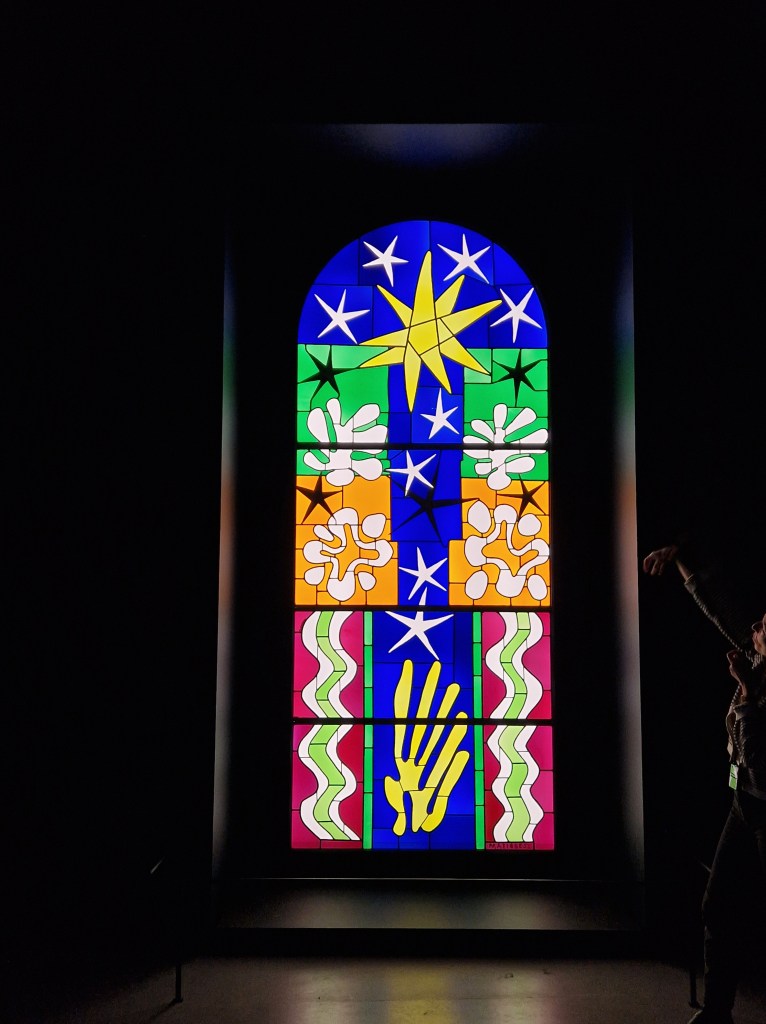
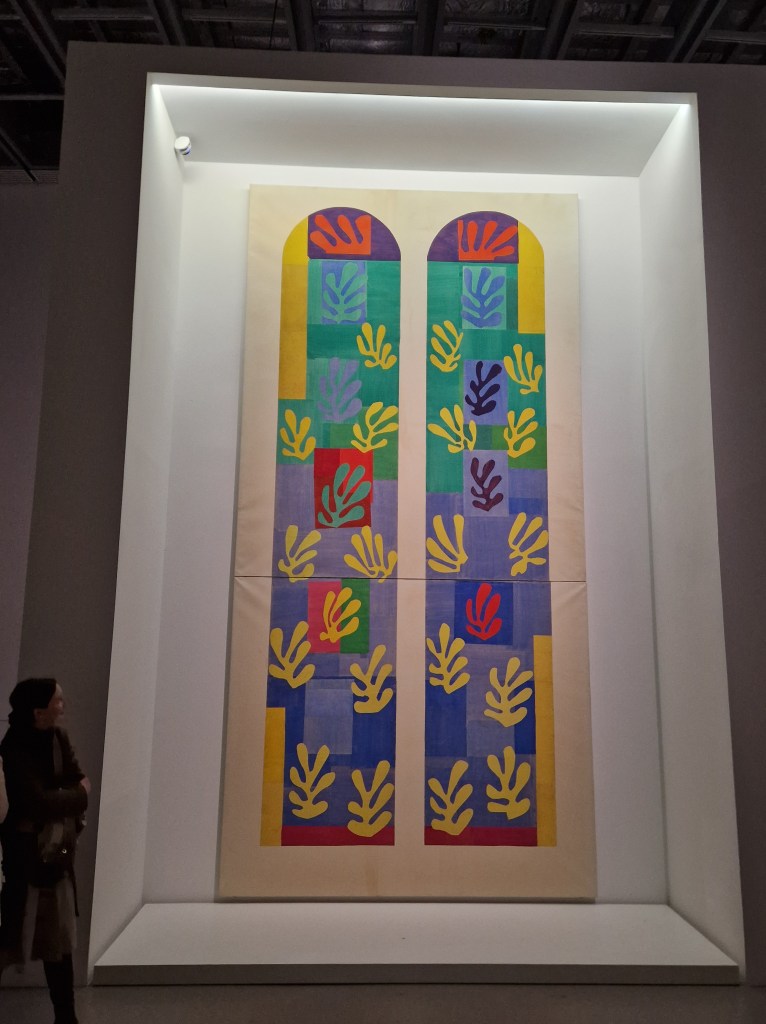
Bringing together both iconic works and lesser-known drawings and studies, the exhibition offers a rich overview of Matisse’s late universe, emphasising the diversity of practices that became inseparable from his artistic identity. When he died in 1954, Matisse left behind an immense body of work expressed through multiple forms and techniques. Since then, he has remained one of the defining figures of modern art, whose influence continues to shape contemporary visual culture. Although centred on little more than a decade of production, this exhibition powerfully conveys the extraordinary inventiveness and prolific energy that characterised his career.
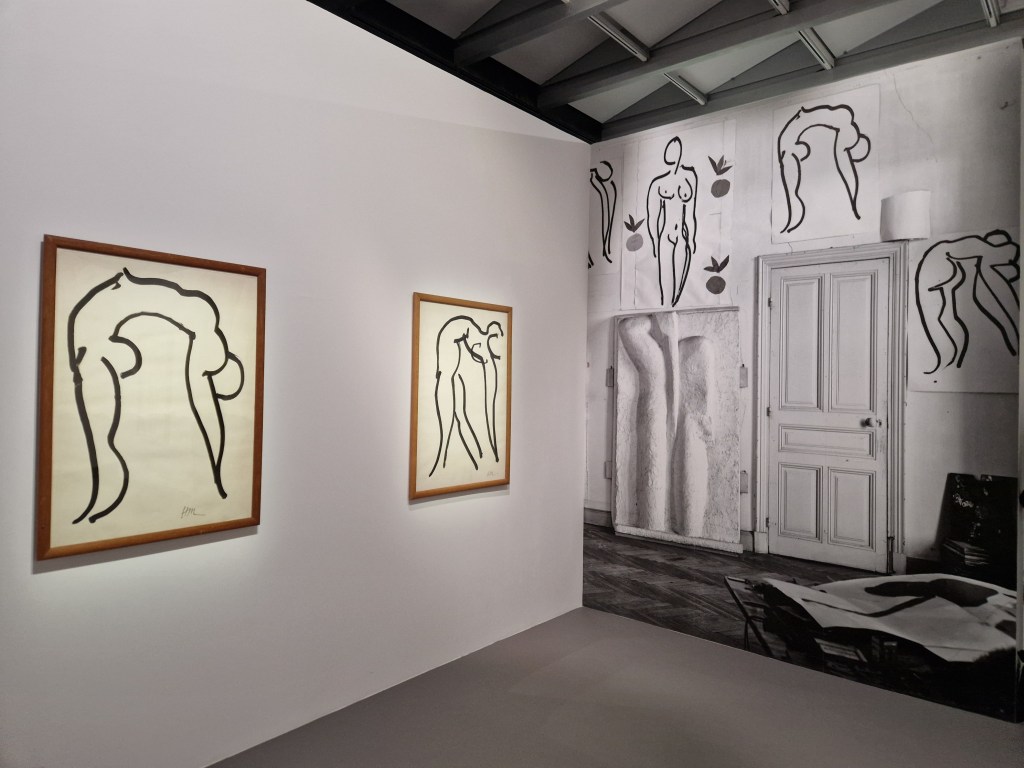
My personal highlights:
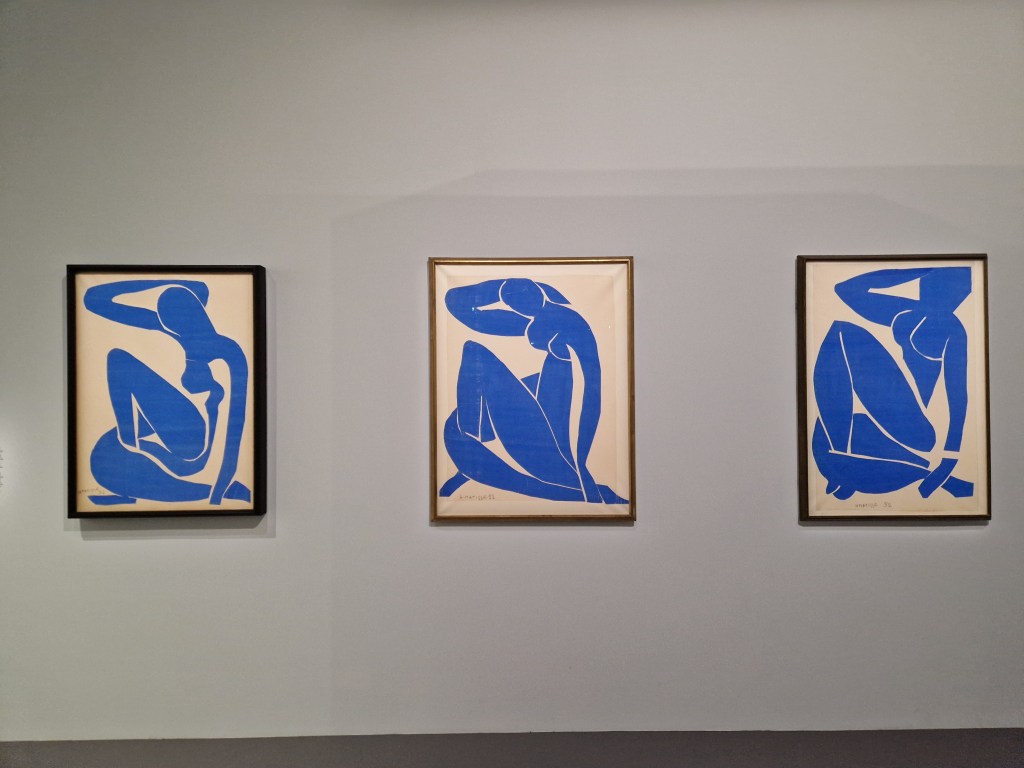
- Blue Nude I, II, III, 1952
- Illustrated books
- Original maquettes for Jazz, 1943-44
- La blouse roumaine, 1940

