Info:
- Dates: 13.03.26 – 27.09.26
- Curator: Aurélie Clemente-Ruiz & Camille Roth
- Where: Fondation EDF
- Price: free
* Me and the others – Artists’ look on our online life
This collective exhibition at Fondation EDF draws attention to a highly relevant contemporary topic: our lives online. The exhibition reflects on how profoundly our lives have changed since the advent of the internet, particularly social media, and explores how these tools influence the way we perceive ourselves and the world around us. Divided into three sections, the exhibition aims to shed light on the digital ecosystem in which we live, an environment shaped by social networks, trends, algorithms, and dependencies. The invited artists come from a wide range of backgrounds, including several well-established figures, and employ a variety of media to approach these questions from multiple perspectives.
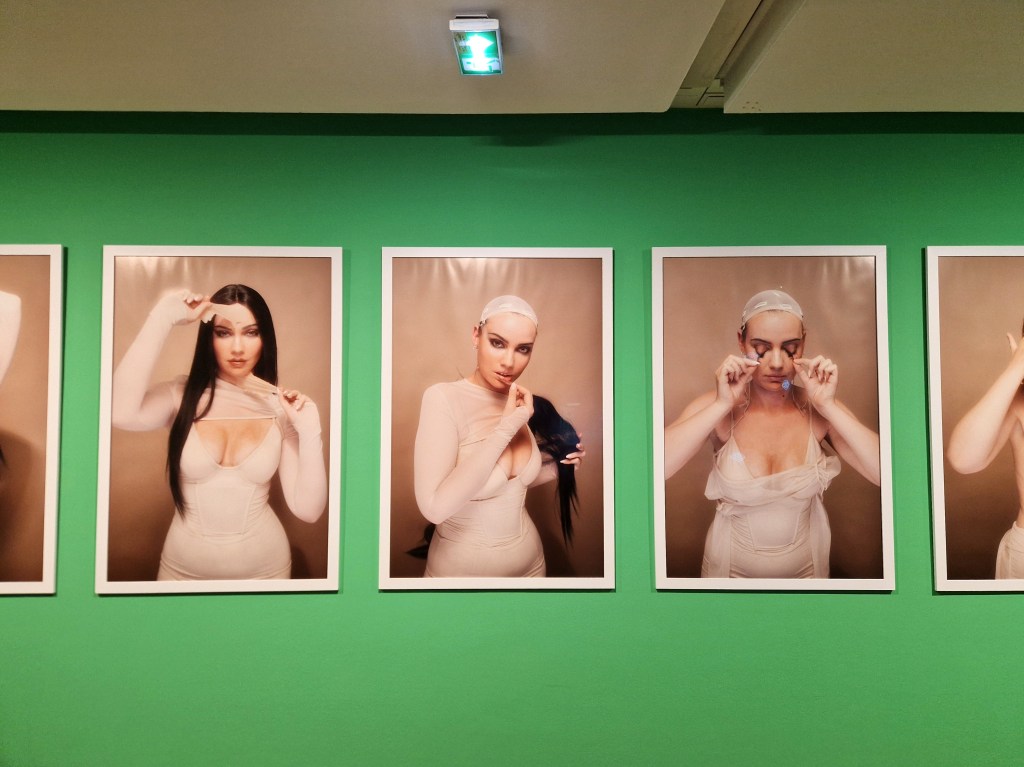
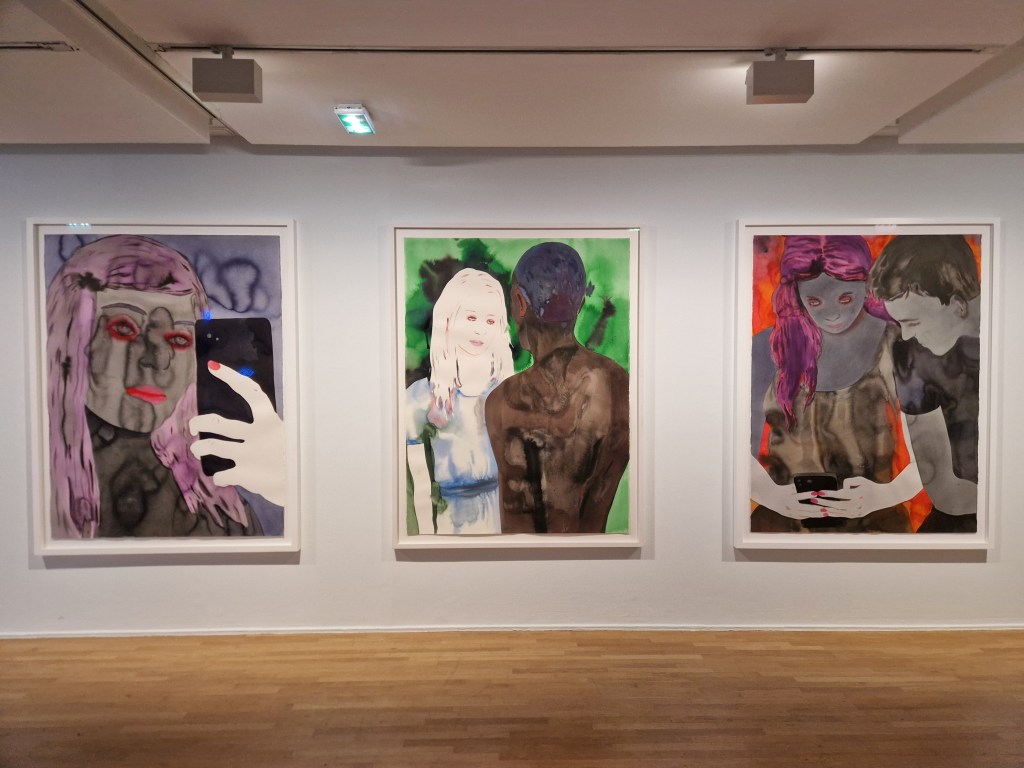
The ground floor hosts the first section of the exhibition, Ego. As its title suggests, this part focuses on the effects of social media on the self: how have our habits changed? How much time do we spend on our smartphones? Some works are deliberately provocative, such as Marilou Poncin’s photographic series Être belle comme elles. The photographs depict the artist progressively removing her makeup after having transformed herself into Kim Kardashian. Through this gradual unveiling, the series reflects on the influence of social media in establishing idealised beauty standards that we are often unconsciously encouraged to follow. Other works address equally important social issues, such as the phenomenon of hikikomori, explored in Katherine Longly’s digital installation.
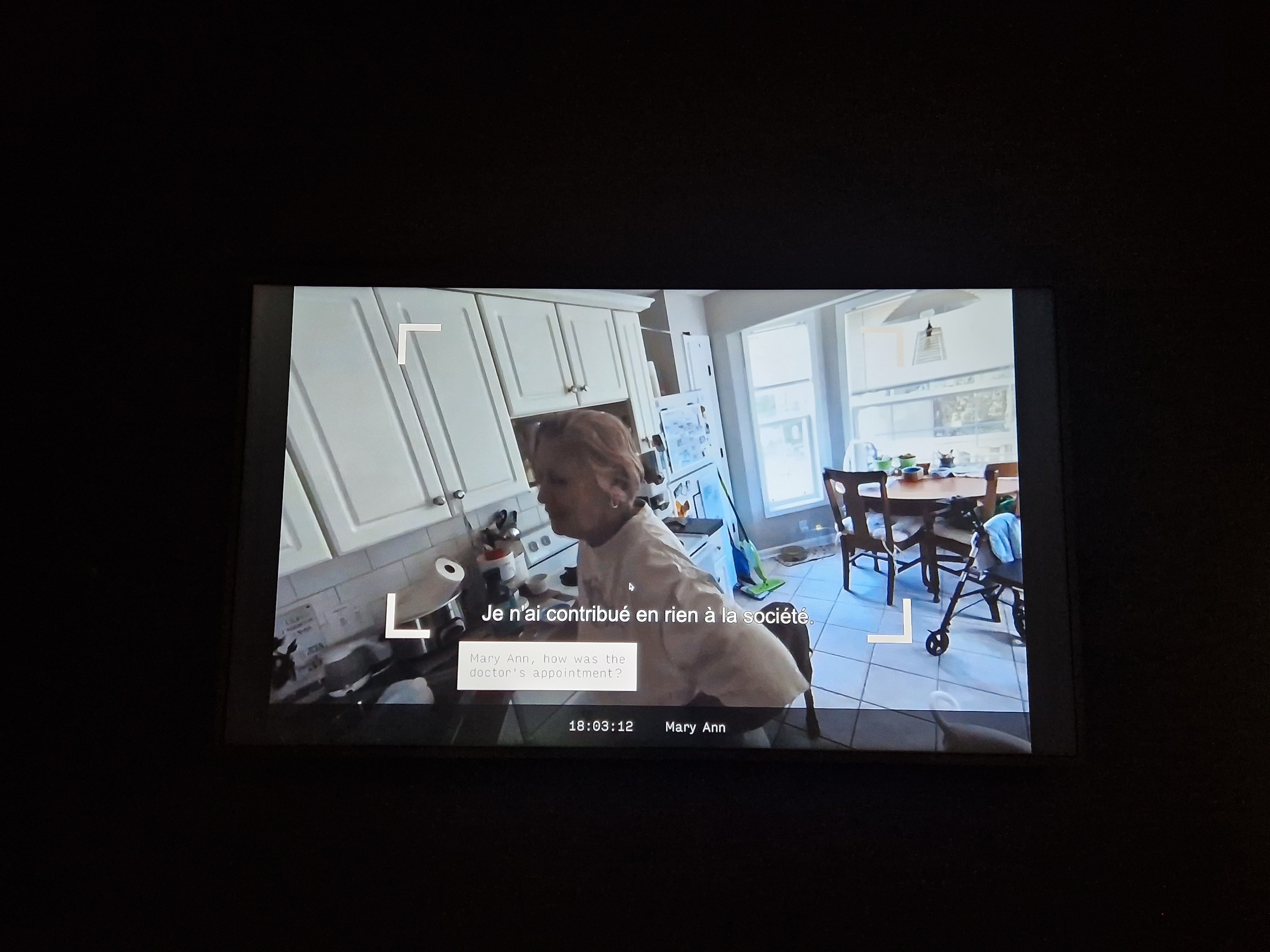
On the first floor, the exhibition develops a second theme, Alter, dedicated to the figure of the other and our perception of others in the age of technology. Here, the artists examine a variety of issues, from our compulsive need to check notifications to the opportunities offered by technological innovation. An example of the latter is A.I. Suzie by Lauren Lee McCarthy and Denny Leonard. Presented as a video installation, the work documents a social experiment in which the artists impersonated “Suzie”, an artificial intelligence designed to assist elderly people. Over the course of a week, they interacted remotely with an older woman, gradually becoming part of her daily life. The project raises questions about the ageing of contemporary societies and the growing role that artificial intelligence may play in addressing future care needs.
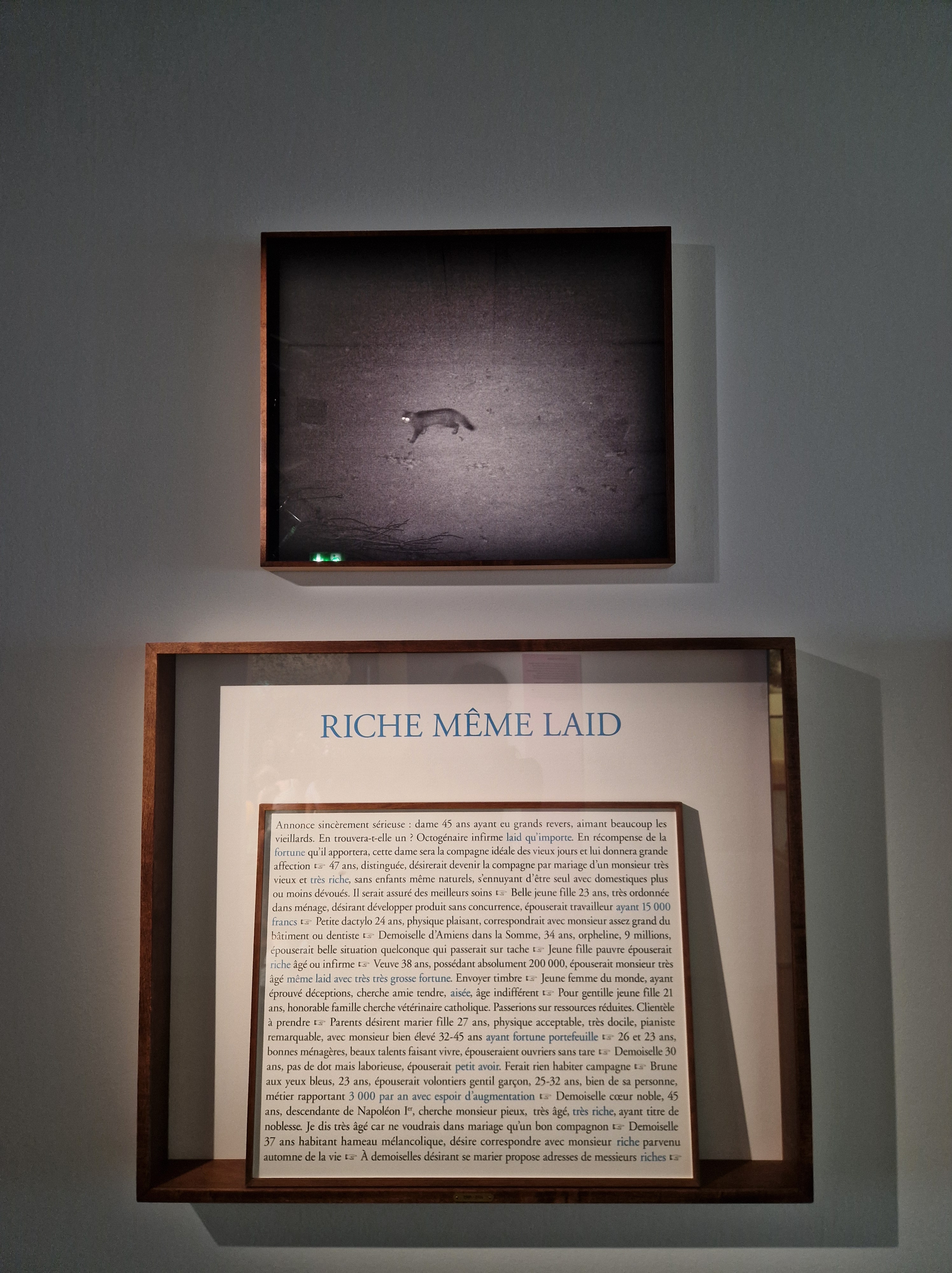
Part of this section is also devoted to online dating and relationships. The exhibition creates an interesting dialogue between generations’ approaches, beginning with Sophie Calle’s work À l’Affût (2017–2024). In her characteristic ironic style, the series presents a collection of matrimonial advertisements published throughout the twentieth century in the magazine Le Chasseur Français. These concise announcements reveal the expectations, desires, and sometimes unrealistic standards people bring to the search for a partner. The exhibition draws a parallel between these historical forms of matchmaking and contemporary dating applications, where the constant possibility of finding someone “better” often shapes interactions. These dynamics are further explored in works by Valentina Peri and Lauren Lee McCarthy.
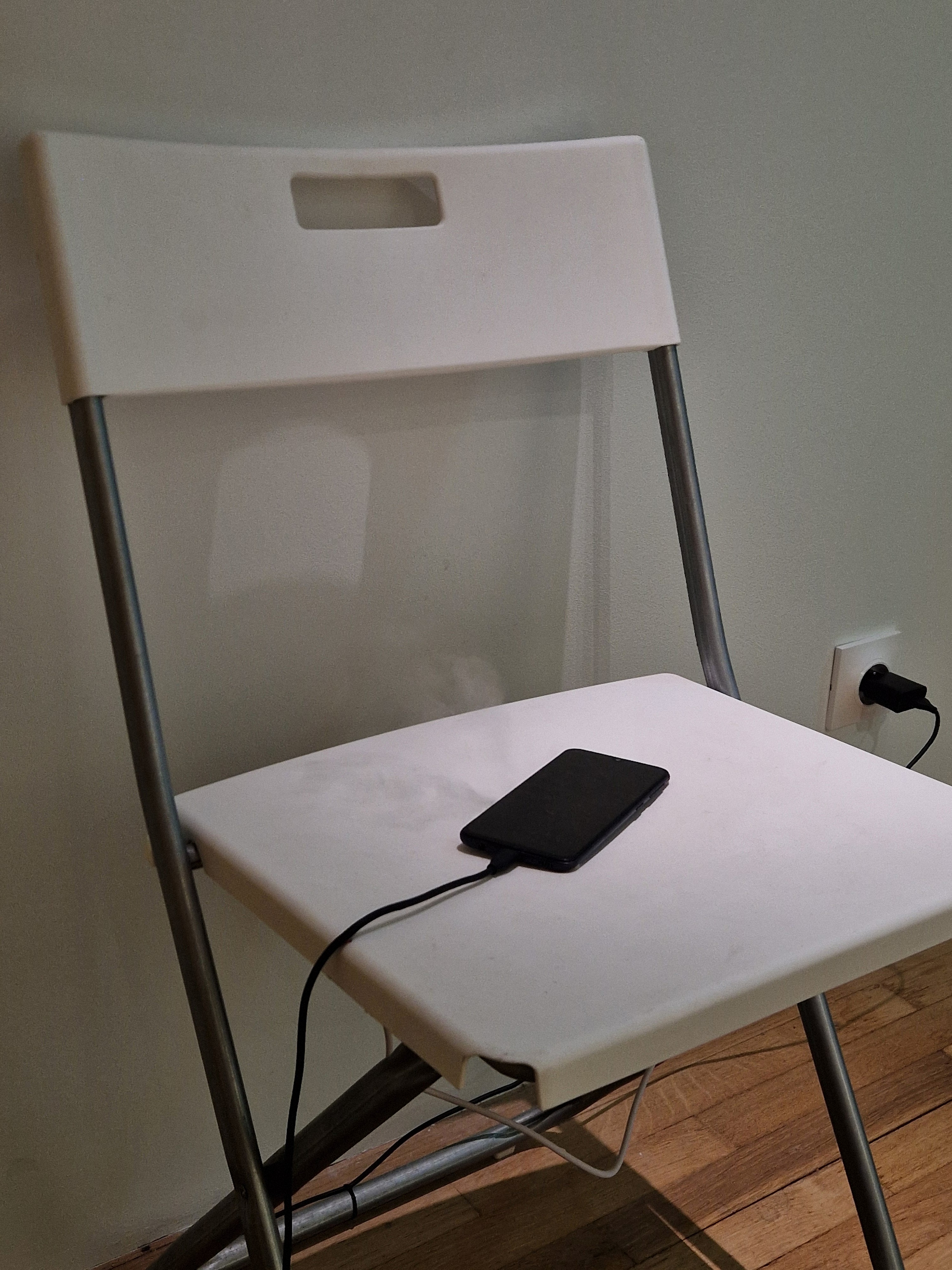
The final section, Holo, broadens the perspective to reveal an interconnected world governed by networks and data flows. The artists presented here examine the invisible systems that structure our digital lives, showing how we are constantly observed, tracked, or influenced by algorithms. Several works challenge the mechanisms of online visibility and surveillance, notably those by Ben Grosser. Others highlight the pressure for constant growth, visibility, and excess that characterises contemporary digital culture. This critique appears with irony in Aram Bartholl’s installation and in a more direct manner in Grosser’s video work.
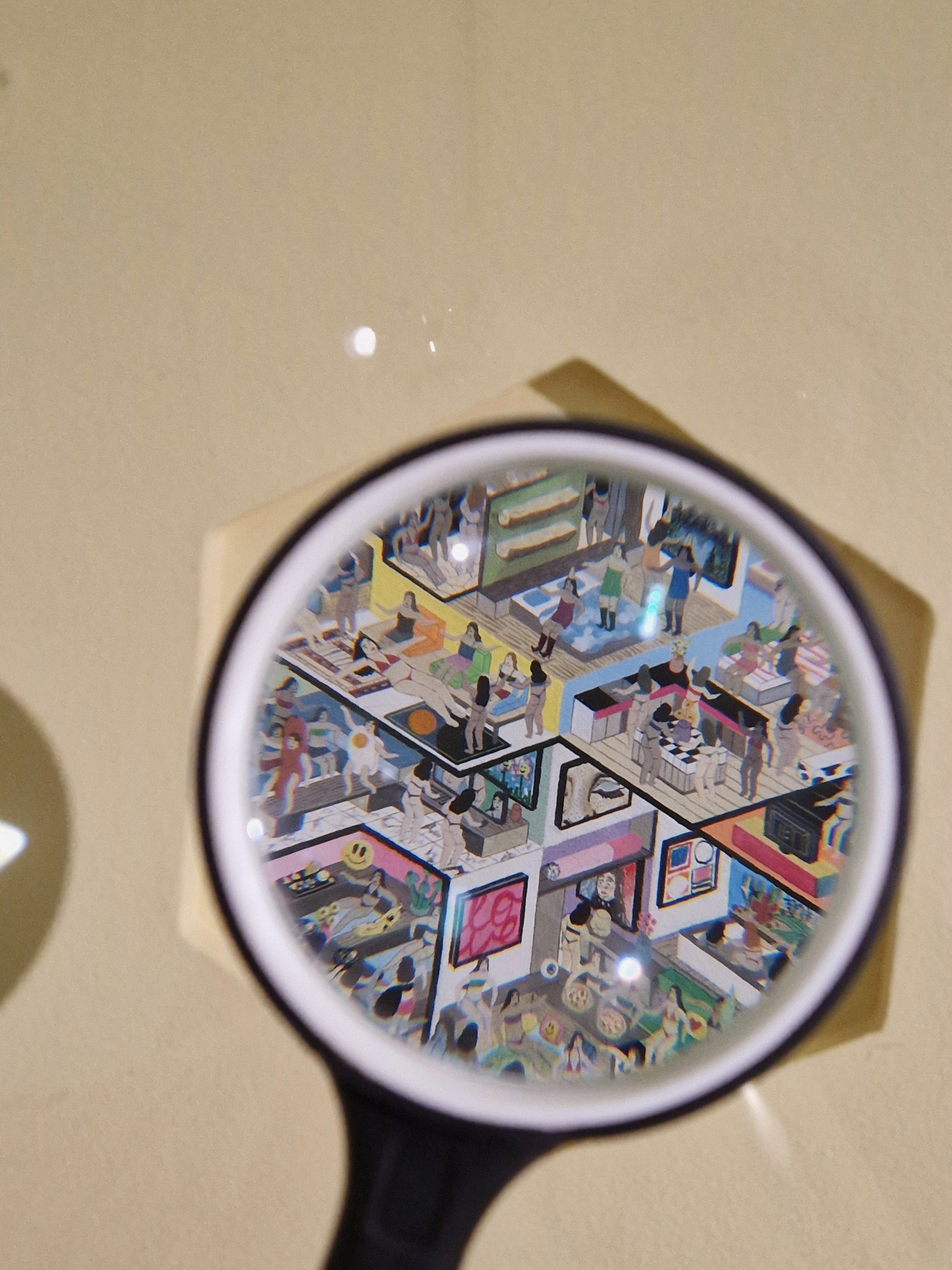
The exhibition remains highly accessible and addresses questions that resonate with a broad audience. It is complemented by a series of short videos featuring experts who share insights into topics ranging from social behaviour to technological transformations. The diversity of the artworks contributes to maintaining the visitor’s engagement throughout the parcours, while the variety of perspectives offered by the selected artists encourages reflection on a subject that has become inseparable from contemporary life. Rather than adopting a purely critical stance, the exhibition invites visitors to question their own relationship with digital technologies and the increasingly blurred boundaries between online and offline existence.
My personal highlights:
- Marilou Poncin, Être belle comme elles (2023)
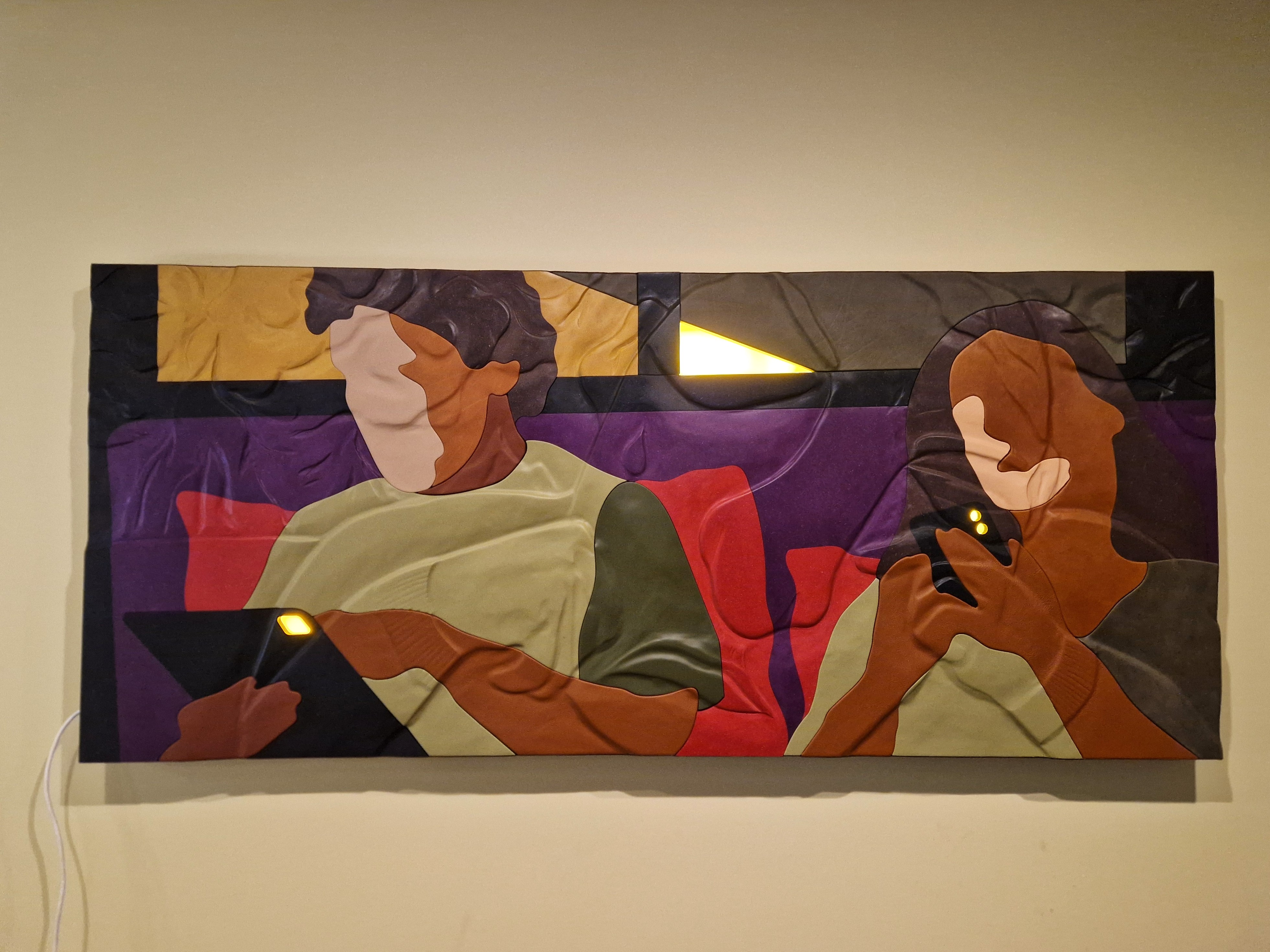
- Françoise Pétrovitch, Selfie (2023)
- Lauren Lee McCarthy and Denny Leonard (2019)
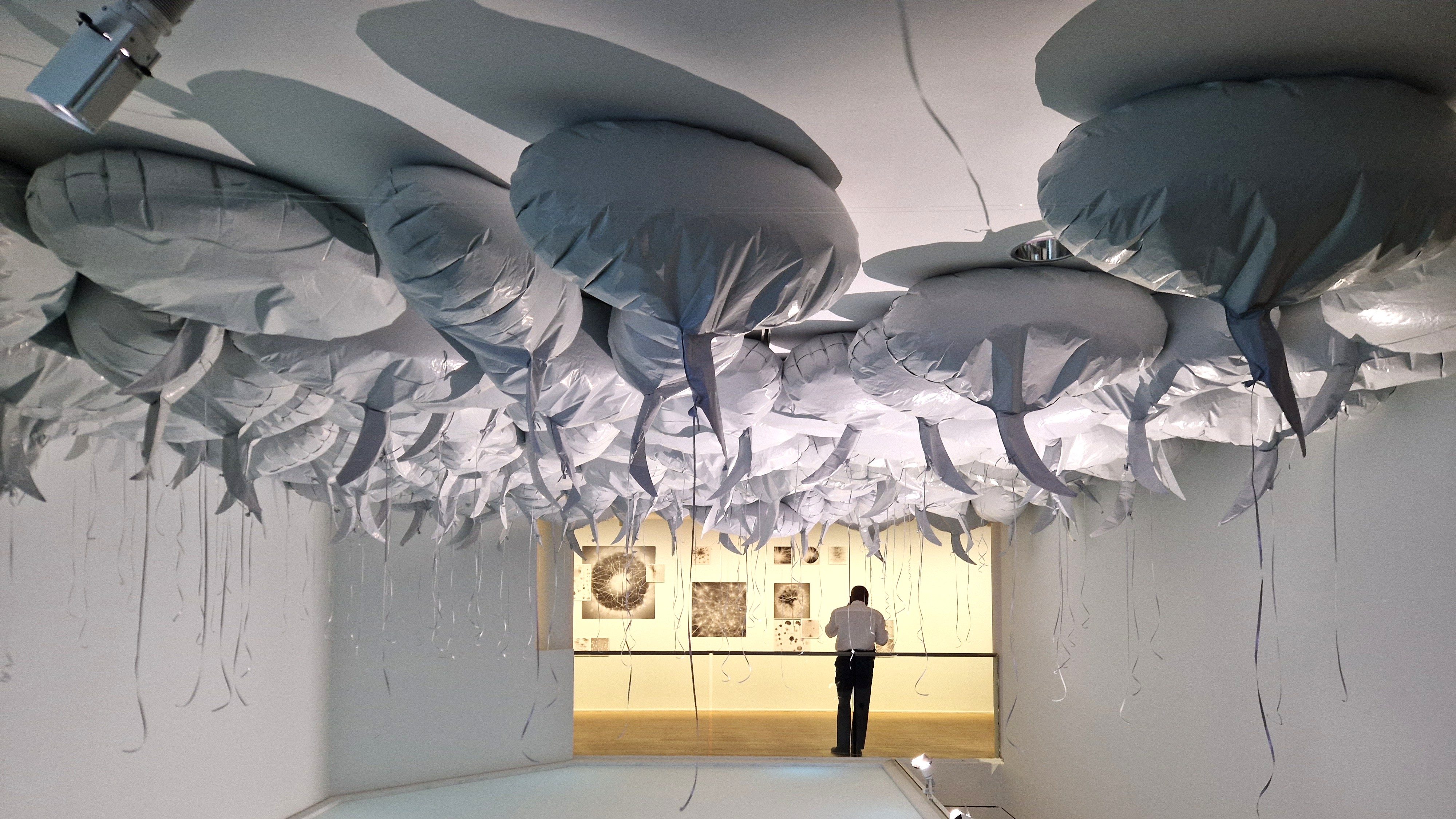
- Aram Bartholl, On the brink (2024)
- Ben Grosser, Order of magnitude (2019)

